
Technical Articles & Industry Resources

TRANSFORMER ENGINEERING BLOG

Insights, Technical Guides & Manufacturing Innovations from AFP Transformers Corp.

0%

The 2026 global market for Custom Electrical Reactors is becoming more technically demanding. Manufacturers now serve renewable energy plants, industrial drives, data centers, and utility substations. Each application requires careful control of current, voltage, heat, insulation, and electromagnetic stress.

A reactor may look simple. Its copper winding, steel core, cooling path, and enclosure must work together under difficult conditions. Harmonic filtering, inrush limitation, motor starting, and fault-current control require different designs. Small specification errors can create audible noise, excessive temperature rise, or unexpected system losses. That matters.

Power-quality specialist Dr. J. C. Das offers a useful engineering principle: “A reactor must be evaluated as part of the complete power system, not as an isolated component.” This view helps buyers examine more than rated inductance. They should review short-circuit performance, thermal class, impedance tolerance, insulation coordination, testing procedures, and after-sales support.

The leading Custom Electrical Reactors manufacturers worldwide increasingly provide simulation reports, factory test records, and application-specific prototypes. Some also combine air-core and iron-core technologies for demanding grid conditions. Others focus on compact dry-type units for indoor industrial installations. Performance claims still require careful verification. A polished brochure is not proof.

This guide compares major manufacturers through technical capability, production experience, customization depth, certification practices, delivery reliability, and field reputation. It also considers practical details, such as terminal design, vibration control, cabinet access, and maintenance space. The ranking cannot capture every regional strength. That limitation deserves acknowledgment. Local service quality may matter as much as global scale.
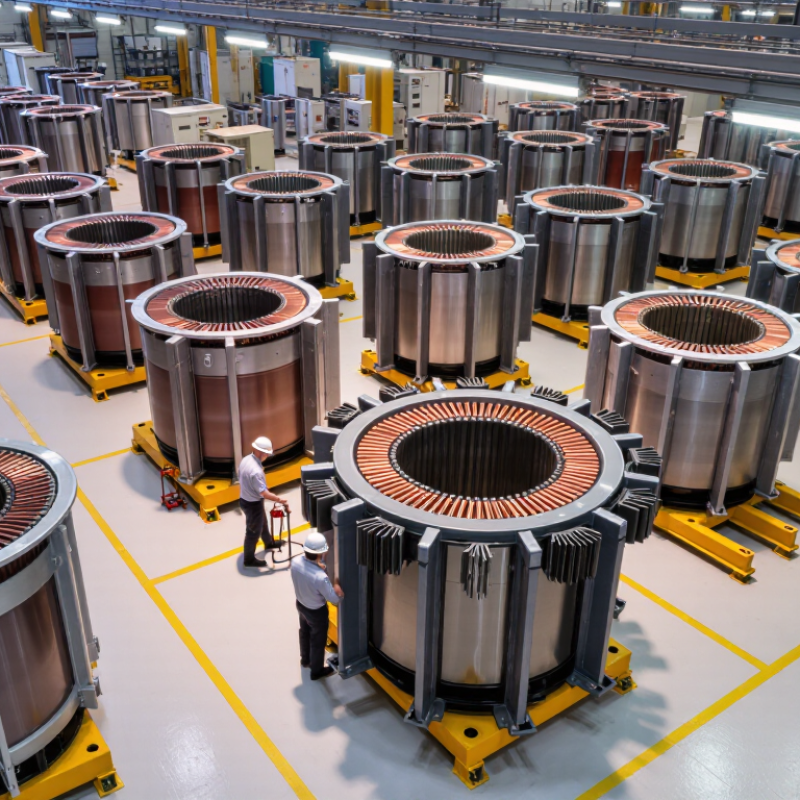
2026 Top Custom Electrical Reactors Manufacturers Worldwide

What Custom Electrical Reactors Are and How They Work

2026 Top Custom Electrical Reactors Manufacturers Worldwide

A custom electrical reactor is an inductor designed for a specific power system. It is not just a coil. Engineers choose its inductance, current rating, insulation, cooling method, and physical size for the application. The unit may reduce inrush current, limit fault stress, smooth converter output, or suppress harmonic distortion. Its design depends on voltage, frequency, load behavior, and installation conditions.

When alternating current flows through the winding, the magnetic field stores energy. Any rapid change in current creates an opposing voltage, called inductive reactance. This opposition becomes stronger as frequency or inductance increases. Current changes more slowly. That is the working principle. In a harmonic filter, the reactor works with capacitors to resist selected unwanted frequencies. In a motor drive, it can reduce switching stress and protect connected equipment.

Reliable customization requires more than selecting a catalog size. Engineers should check RMS current, peak current, short-circuit conditions, temperature rise, insulation level, and possible core saturation. Copper loss and magnetic loss also create heat, so ventilation and enclosure design matter. Testing should include inductance, resistance, withstand voltage, and operation under representative load. A drawing may look correct and still miss real-world heat behavior. That mistake is worth revisiting before production. Good engineering records explain assumptions, test limits, and the reasons behind each specification.

Key Types of Custom Electrical Reactors Available in 2026

Custom electrical reactors in 2026 are designed around voltage, current, frequency, and installation conditions. The main types include line reactors, load reactors, shunt reactors, series reactors, and detuned reactors. Each type solves a different power-quality problem.

Line reactors reduce current spikes near variable-speed drives. Load reactors protect long motor cables from reflected-wave stress. Shunt reactors help control voltage on lightly loaded transmission systems. Series reactors limit fault current and support safer switching performance. Detuned reactors work with capacitor banks to reduce harmonic resonance. Air-core and iron-core designs also offer different thermal and magnetic behaviors.

In field reviews, small details often decide whether a reactor performs well. A compact enclosure may overheat in a dusty plant. That is easy to miss.

Tips: Confirm continuous current, short-time withstand ratings, insulation class, cooling method, and sound limits before ordering. Check the actual cable length and harmonic spectrum, not only the nominal load. Ask for temperature-rise data and routine test records. A custom reactor should fit the system, not merely match its catalog voltage. Rechecking the design after commissioning is wise, because measured harmonics can differ from early estimates.

How to Evaluate Global Electrical Reactor Manufacturers

2026 Top Custom Electrical Reactors Manufacturers Worldwide

Evaluating global electrical reactor manufacturers requires more than comparing prices. Start with application knowledge. Confirm the reactor’s voltage, current, inductance, frequency, insulation class, and cooling method. A reliable manufacturer should explain how these values support your actual load profile, not just provide a generic datasheet.

Request design drawings, material specifications, routine test reports, and temperature-rise results. Check winding construction, core quality, enclosure protection, and harmonic performance. For demanding installations, ask about short-circuit strength and partial-discharge testing. Factory traceability also matters. You should be able to identify critical materials and production stages. Certification claims deserve verification through valid documents and independent testing where practical. A polished website is not proof of engineering depth.

Tips: Compare at least three technically suitable suppliers. Audit one facility if the project is critical. Speak with recent customers about delivery accuracy, documentation, and field support. Review how the manufacturer handles design changes and failed tests. Fast replies help, but precise replies matter more. No scoring model is perfect. I would leave room for unexpected installation conditions, because actual heat, dust, and harmonics can differ from the original specifications. Evaluate warranty limits carefully, especially for custom dimensions, outdoor service, and continuous overload conditions. A dependable partner should discuss these risks openly instead of promising effortless performance.

Leading Custom Electrical Reactor Manufacturers Worldwide in 2026

Leading custom electrical reactor manufacturers worldwide in 2026 are judged by engineering depth, not catalog size. They design air-core and iron-core reactors for harmonic control, motor starting, filtering, and power quality. Experienced teams begin with load profiles, fault levels, enclosure limits, and installation conditions. They ask difficult questions about heat, noise, vibration, and future expansion. That discipline separates a workable reactor from an expensive prototype. Field evidence matters.

Reliable manufacturers translate specifications into traceable production steps. They document conductor materials, insulation systems, winding tension, core losses, and thermal margins. Factory testing may include resistance checks, inductance verification, dielectric tests, temperature-rise evaluation, and acoustic inspection. Independent certification and calibrated instruments strengthen confidence. Yet paperwork alone proves little. Engineers should compare test records with witnessed measurements and actual site conditions. Small gaps can create major commissioning delays.

Worldwide custom reactor suppliers also need responsive project management. Clear drawings, revision control, export packing, and realistic lead times protect complex installations. A capable partner explains trade-offs instead of promising everything. Lower losses may increase cost or dimensions. Quieter operation may require additional shielding. No manufacturer gets every design right on the first draft. The best teams review failures openly, adjust calculations, and improve future units. This attitude builds durable technical trust.

2026 Top Custom Electrical Reactors Manufacturers Worldwide

Typical percentage impedance ranges used in common electrical reactor applications. Values are indicative engineering ranges and do not represent any individual company or brand.

Impedance selection depends on voltage level, short-circuit capacity, harmonic requirements, motor characteristics, thermal duty, and the required fault-current limitation. Custom reactor designs should be validated against the applicable electrical standards and system study.

Applications, Standards, and Selection Considerations

In 2026, custom electrical reactors support grid stability, renewable integration, motor starting, and harmonic control. The IEA Electricity 2024 report expects global electricity demand to grow by an average 3.4% annually from 2024 to 2026. Meanwhile, IRENA reported about 585 GW of renewable capacity additions in 2024. These trends increase the need for reactors that manage voltage variation and current distortion.

Applications determine the design. Air-core reactors suit high-current harmonic filters because they avoid magnetic saturation. Iron-core units often provide compact solutions for reactive-power compensation.

Engineers should verify rated voltage, frequency, short-circuit duty, insulation level, temperature rise, and permissible noise. A 11 kV capacitor-bank reactor, for example, needs careful detuning to prevent resonance near dominant fifth or seventh harmonics.

Standards provide a reliable baseline. IEC 60076-6 addresses power reactors, while IEC 60076-1 supports general transformer requirements. IEEE guidance can assist with harmonic assessment and system coordination. Selection should also consider enclosure protection, cooling conditions, installation altitude, maintenance access, and expected overload duration. Request measured losses and impedance tolerances, not only catalog estimates. Small errors matter.

A spreadsheet can still mislead.

Real systems contain uncertain loads, future generation, and imperfect measurements. Manufacturers should validate simulations through factory tests, including winding resistance, insulation checks, impedance verification, and thermal evaluation. The best custom specification is not always the smallest unit; it is the one that remains stable under realistic operating conditions.

FAQS

What is a custom electrical reactor?

It is an inductor designed for a specific power system. Engineers select inductance, current rating, insulation, cooling, and size.

How does an electrical reactor work?

Alternating current creates a magnetic field inside its winding. Rapid current changes create opposing voltage. This slows unwanted current variation.

Where are custom reactors commonly used?

Line reactors reduce current spikes near variable-speed drives. Load reactors protect motors connected through long cables. Series reactors can limit fault current.

How do detuned reactors support capacitor banks?

They work with capacitors to resist selected harmonic frequencies. This reduces resonance risk and improves power quality.

What information is needed before ordering?

Provide voltage, frequency, continuous current, peak current, load behavior, and installation conditions. Cable length and harmonic measurements are useful, too.

Which technical checks are important?

Engineers should review short-circuit conditions, temperature rise, insulation level, and possible core saturation. Copper and magnetic losses create heat.

Can a compact enclosure cause problems?

Yes. A small enclosure may overheat in a dusty plant. Ventilation, cooling method, sound limits, and enclosure conditions need careful review.

What testing should a custom reactor receive?

Testing may include inductance, resistance, withstand voltage, and temperature rise. Representative-load testing can reveal behavior that drawings miss.

How should suppliers be evaluated?

Review engineering depth, traceable production records, calibrated instruments, and realistic lead times. Compare factory records with witnessed measurements.

Is the first design always correct?

Not always. Measured harmonics may differ from early estimates. Rechecking after commissioning is wise, and some assumptions may need revision.

Conclusion

Custom Electrical Reactors are engineered magnetic components used to control current, limit short-circuit levels, filter harmonics, stabilize voltage, and improve the safety and efficiency of electrical systems. This article explains how reactors work through inductive impedance and reviews major types available in 2026, including line reactors, load reactors, harmonic filter reactors, detuning reactors, and grounding reactors. Each design can be customized according to voltage, current, frequency, thermal performance, installation environment, and operating conditions.

The guide also outlines how to evaluate global electrical reactor manufacturers by examining engineering capability, material quality, testing procedures, production consistency, customization services, certifications, and technical support. It discusses applications in industrial facilities, renewable energy systems, power distribution, motor drives, and energy storage infrastructure. Finally, the article highlights important standards, safety requirements, lifecycle considerations, and selection factors to help buyers compare solutions and choose reliable Custom Electrical Reactors for their specific operational needs.

Isabelle

Isabelle

Isabelle is a dedicated marketing professional with a deep understanding of her company's offerings and a passion for showcasing their unique advantages. With years of experience in the industry, she adeptly combines creativity and strategy to craft compelling blog posts that not only highlight the......