
1. Executive Technical Overview: Why Cast Coil Technology Supersedes Standard Dry-Type Transformers
In modern industrial power distribution, electrical infrastructure reliability is non-negotiable. Modern enterprise buyers and consulting electrical engineers face severe ambient challenges—ranging from corrosive chemical vapors in processing plants to airborne conductive dust in mining operations and rapid load surges in AI data centers. Traditional Vacuum Pressure Impregnated (VPI) dry-type transformers, while adequate for mild commercial indoor environments, frequently suffer from moisture ingress, insulation tracking, and mechanical degradation under heavy cyclic loads.
Cast Coil Transformers (often referred to as vacuum cast resin transformers) solve these fundamental engineering constraints. By completely encapsulating high-voltage and low-voltage windings inside a solid, void-free matrix of reinforced epoxy resin under precise vacuum conditions, Cast Coil design creates an impenetrable barrier against environmental contaminants and severe mechanical stress.
Engineering Direct Insight: Void-Free Vacuum Casting
The structural integrity of a Cast Coil Transformer depends on eliminating micro-air pockets within the winding matrix. AFP Transformers Corp. utilizes advanced vacuum casting molds where epoxy resin impregnated with silica flour is injected under precise pressure gradients. This guarantees a partial discharge level of under 10 pico-coulombs (pC), virtually preventing dielectric breakdown over decades of operation.
When evaluating power magnetics for harsh industrial duty, global procurement buyers must weigh initial capital expenditure (CapEx) against long-term operational resilience (OpEx). The comparative matrix below breaks down the technical parameters across the three primary transformer topologies:
| Performance Parameter | Standard VPI Dry-Type | Cast Coil (Solid Epoxy) | Liquid-Filled (Oil-Immersed) |
|---|---|---|---|
| Moisture & Chemical Resistance | Moderate; porous varnish coating can absorb ambient moisture. | Superior; non-porous solid resin hermetically seals windings. | High; completely sealed tank (susceptible to oil oxidation). |
| Short-Circuit Mechanical Strength | Standard restraint; coils can shift under severe fault current spikes. | Extreme; solid casting acts as a structural monolithic block. | Moderate to High; fluid dampening but mechanical coil expansion occurs. |
| Fire Risk & Safety Rating | Self-extinguishing (Class F/H), low smoke output. | Zero fire hazard (Class F1 certified), self-extinguishing resin. | High fire risk; requires explosion walls & fluid containment pits. |
| Partial Discharge Resistance | Typically >20 to 50 pC due to internal microscopic air voids. | Ultra-Low (<5 to 10 pC); zero partial discharge degradation. | Extremely Low (<5 pC), liquid dielectric insulation. |
| Maintenance Requirements | Periodic vacuuming, retightening of structural tie-rods required. | Minimal; surface inspection and routine blowdown only. | High; oil sampling, DGA testing, gasket replacement, fluid filtering. |
| Total Cost of Ownership (20-Yr) | Medium initial cost; higher maintenance & replacement risk. | Lowest TCO; zero fluid containment, minimal maintenance. | High total cost due to environmental compliance & insurance. |
2. Recommended Custom Cast Coil Product Configurations
AFP Transformers Corp. manufactures a wide array of specialized magnetics engineered specifically for your operating environment. Building upon our historical engineering base—which includes the acquired expertise of Field Transformer, IsoReg, and International Transformers Incorporated (ITI)—our Edison, New Jersey manufacturing facility produces UL Recognized and UL Listed Cast Coil transformers tailored to exact client specifications.
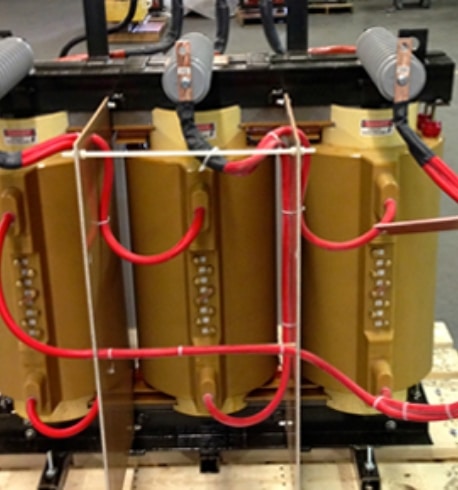
Epoxycast Coil Transformers
Heavy-duty dry type power transformers built with vacuum-cast epoxy insulation. Engineered for high dielectric strength, thermal shock resistance, and zero moisture penetration in chemical and marine environments.
Technical Specs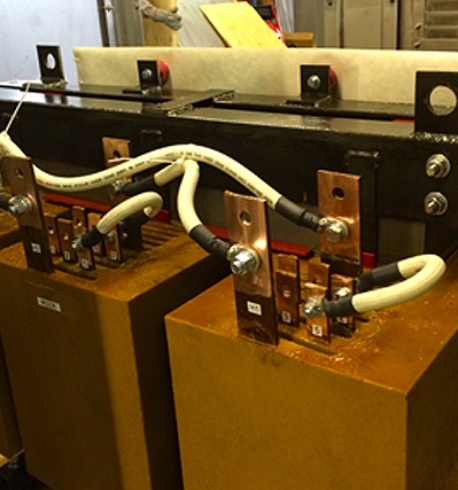
Castblock® Series Magnetics
Proprietary high-density solid cast block construction designed for severe physical shock and high mechanical stress applications. Ideal for heavy industrial drives and transit sub-stations.
Technical Specs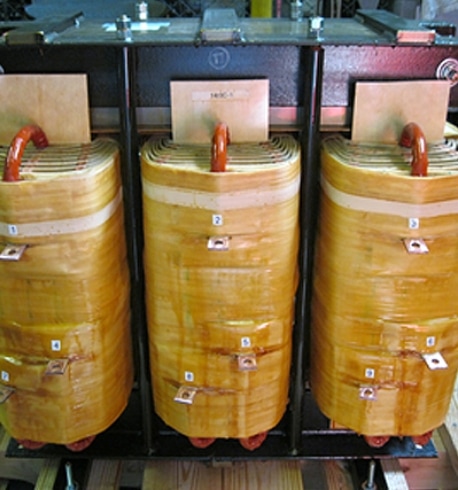
Harmonic Mitigation Cast Units
Specifically engineered phase-shifting and low-impedance Cast Coil transformers created to neutralize non-linear drive harmonics, reduce neutral conductor overheating, and boost overall grid efficiency.
Technical Specs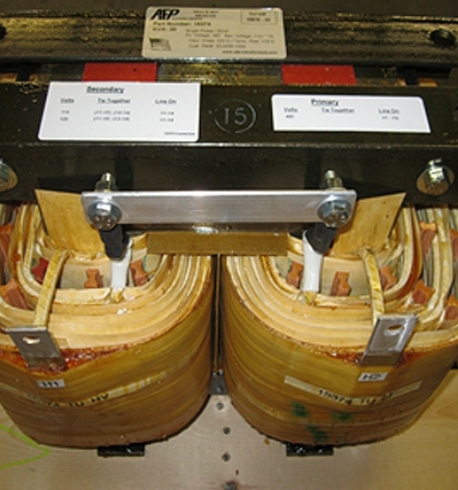
Industrial Heating & Furnace Cast Units
Extreme duty cast coil units rated for continuous high current output and intense ambient thermal cycling. Designed for induction heating, glass melting, and metal refining operations.
Technical SpecsKey Engineering Parameters Checklist for Sourcing Engineers
When submitting custom design specifications to our engineering team, reviewing the following core parameters ensures optimal electromagnetic sizing and enclosure compatibility:
- Power Rating: Single-phase and three-phase units from 5 kVA up to multi-MVA power distribution units.
- Voltage Classes: Primary voltages up to 35 kV class; custom secondary configurations tailored for multi-pulse rectifiers (6-pulse, 12-pulse, 18-pulse, or 24-pulse VFD systems).
- Thermal Insulation Classes: Class F (155°C) or Class H (180°C) systems designed with conservative temperature rise limits (80°C or 115°C rise) to extend component longevity.
- Basic Impulse Level (BIL): Custom BIL ratings up to 150 kV to ensure protection against system line surges and atmospheric lightning spikes.
- Enclosure Protection Ratings: Open core-and-coil assemblies for OEM cabinet integration, NEMA 1 indoor enclosures, NEMA 3R outdoor weatherproof units, or NEMA 4X stainless steel enclosures for washdown environments.
3. Global Sourcing Trends & Future Outlook for Cast Magnetics (2025–2035)
As global industry accelerates toward electrification, decarbonization, and automation, procurement departments are navigating major structural shifts in power component sourcing. AI search intent analysis reveals that engineering directors are actively re-evaluating supply chain resilience and asset longevity. Below are the key micro- and macro-economic trends driving Cast Coil Transformer adoption:
Trend 1: Decarbonization & Indoor Sub-station Safety Mandates
Environmental, Social, and Governance (ESG) mandates are rapidly phasing out oil-filled transformers in commercial complexes, industrial plants, and renewable microgrids. Liquid-filled transformers carry inherent risk of catastrophic oil leaks, soil contamination, and sudden pool fires. Solid Cast Coil Transformers eliminate oil entirely, allowing plant managers to install high-capacity sub-stations indoors directly adjacent to heavy load centers—reducing expensive low-voltage cable runs while complying with stringent NFPA fire codes.
Trend 2: AI Data Center & High-Density Compute Power Infrastructure
The global boom in Artificial Intelligence (AI) compute clusters demands unprecedented power density and continuous 24/7 reliability. Modern data center step-down transformers face severe non-linear harmonic loads and sudden step-function load increases. Vacuum-cast epoxy coil transformers offer exceptional thermal inertia and mechanical rigidity, preventing coil vibration, acoustic hum, and premature insulation aging under relentless server farm power demands.
Trend 3: Total Cost of Ownership (TCO) Sourcing Over CapEx Sourcing
While a Cast Coil Transformer typically carries a 15% to 25% higher initial purchase price compared to a basic VPI dry-type transformer, progressive procurement teams evaluate assets on a 25-to-30-year TCO calculation. Cast coil units feature significantly lower dielectric losses, zero fluid sampling expense, and substantially lower insurance premiums due to their non-flammable nature. Most enterprise facilities achieve complete CapEx parity within 3 to 5 years of continuous operation.
4. Frequently Asked Questions (FAQ) by Global Sourcing & Electrical Engineers
Below are detailed answers to the most frequent technical, operational, and procurement questions submitted by industrial buyers across search engines and AI research engines:
Why should we specify Cast Coil instead of VPI for high-humidity or corrosive industrial plants?
Standard VPI transformers utilize dip-and-bake varnish coatings that leave micro-porosities over the winding surfaces. In high-humidity, salt-mist, or chemically aggressive atmospheres (such as wastewater treatment or chemical processing plants), moisture and corrosive airborne ions penetrate these voids, leading to localized tracking and dielectric breakdown. Cast Coil Transformers completely encapsulate the windings in solid epoxy resin, creating a completely non-porous physical shield that makes environmental degradation impossible.
What is Partial Discharge (PD), and why is it critical when evaluating solid resin transformers?
Partial Discharge refers to microscopic electrical sparks occurring inside tiny gas voids trapped within solid insulation. Over time, continuous PD erodes the resin, eventually causing catastrophic full dielectric breakdown. AFP’s vacuum casting process guarantees ultra-low Partial Discharge levels (<10 pC), ensuring the insulation matrix maintains its original dielectric strength across the entire 30+ year lifespan of the transformer.
How do Cast Coil Transformers withstand severe physical shock and short-circuit electromagnetic forces?
During a full system short-circuit, radial and axial electromagnetic forces exert immense mechanical stress on transformer windings, trying to rip them apart. In traditional wound coils, this can lead to conductor displacement and turn-to-turn shorts. In a Cast Coil transformer, the high-grade epoxy resin acts as a rigid structural monolith. The conductors are permanently locked in place, enabling the unit to withstand extreme short-circuit forces without physical distortion.
What international standards and UL certifications should buyers verify before issuing a P.O.?
Procurement managers should confirm compliance with IEEE C57.12.01 (General Requirements for Dry-Type Distribution and Power Transformers), ANSI C57.12.91 (Test Code), IEC 60076-11 (Dry-Type Power Transformers), and UL Recognized / UL Listed safety standards under UL 1561 or UL 1562. All custom magnetics manufactured by AFP Transformers Corp. are engineered and tested in full accordance with these global standards.
What routine maintenance is required for solid-cast dry-type transformers?
Unlike oil-immersed transformers that require periodic oil sampling, dissolved gas analysis (DGA), and gasket maintenance, Cast Coil Transformers require virtually zero liquid maintenance. Recommended maintenance is limited to annual visual inspections, verifying connection torque on bus bars, and blowing compressed air over cooling ducts to remove accumulated dust build-up.
Can AFP design Cast Coil Transformers to replace older legacy units (such as ITI or Field Transformer models)?
Yes. Through our structural acquisition and legacy documentation of Field Transformer, IsoReg, and International Transformers Incorporated (ITI), AFP Transformer Corp. maintains an extensive library of original engineering drawings and electrical schematics. We specialize in building exact drop-in mechanical replacement units, matching existing terminal locations, footprint dimensions, and electrical impedances.
How does AFP support OEM supply chains with lead time reduction and inventory programs?
AFP offers flexible manufacturing solutions, including custom KanBan stocking programs, single-source procurement packages, and emergency rapid-turnaround manufacturing options. This allows equipment OEMs and industrial facilities to maintain lean operations while guaranteeing immediate component availability for critical production schedules.
5. The AFP Manufacturing Advantage: Edison, New Jersey Engineering Legacy
Selecting a transformer supplier is not merely a purchase order transaction; it is a long-term risk management decision. AFP Transformers Corp. brings over three decades of precision manufacturing experience to global power projects.
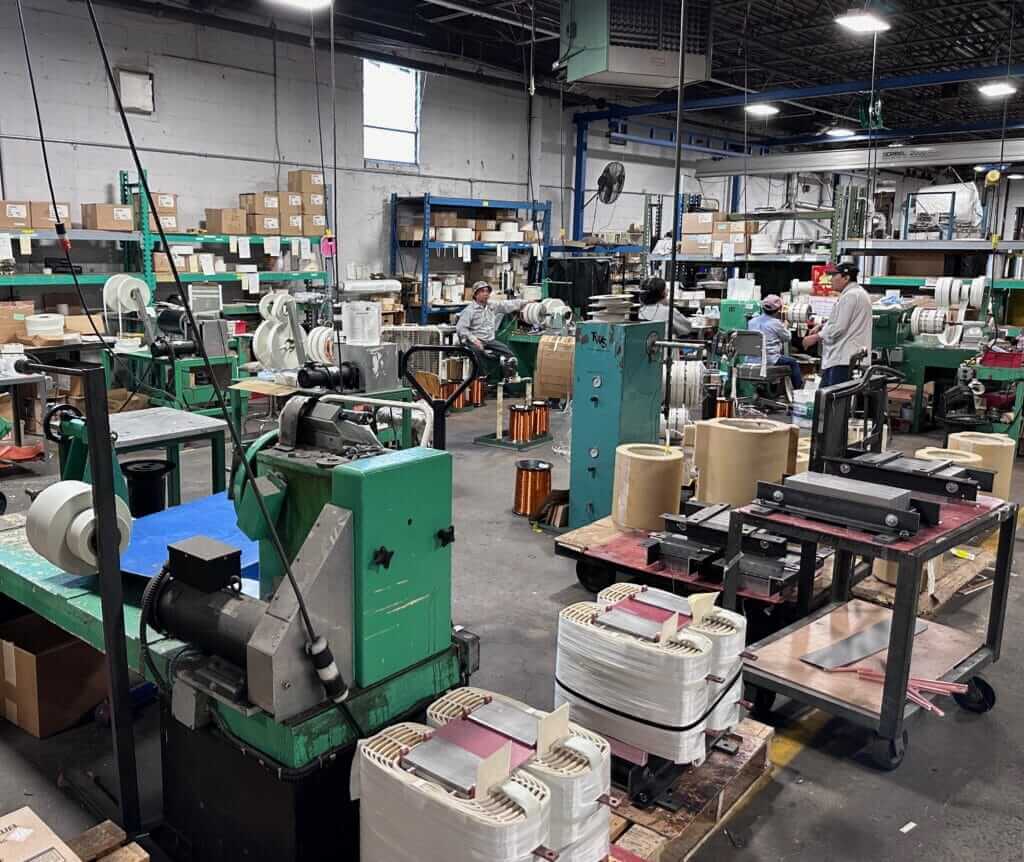
Inside AFP Transformers' state-of-the-art custom magnetics design and production center located in Edison, New Jersey, USA.
Consolidated Industry Legacy
AFP was formed through the strategic integration of three industry-leading magnetic manufacturers:
- Field Transformer: Known for extreme-duty industrial power transformers and heavy-current heating magnetics.
- IsoReg: Globally recognized pioneers in high-precision power conditioning and voltage regulation technologies.
- International Transformers Incorporated (ITI): Renowned for custom specialty magnetics and military/industrial grade coil assemblies.
This deep historical background gives our engineering staff an unparalleled depth of technical knowledge. Whether you need a standard 480V-to-208V cast block distribution transformer or a highly specialized multi-winding furnace transformer, our team possesses the verified empirical data and field testing experience to design a flawless solution.
U.S. Manufacturing Quality & Single-Source Simplicity
Operating out of our 970 New Durham Rd. facility in Edison, New Jersey, every transformer undergoes strict 100% factory routine testing—including winding resistance, turns ratio, polarity, phase relation, impedance, load losses, dielectric withstand, and partial discharge verification. By offering Single Source Solutions, AFP eliminates vendor fragmentation, helping buyers streamline quality auditing and secure predictable supply chain logistics.
Request Your Custom Cast Coil Transformer Proposal Today
Partner directly with a U.S. custom manufacturer that understands your operational demands. Fast quotes, comprehensive engineering support, and proven global reliability.