Epoxycast Coil Transformers: High-Reliability Custom Magnetics for Harsh Industrial Environments
An authoritative engineering breakdown of Epoxycast Coil Transformers—evaluating solid resin encapsulation technology, environmental resilience, partial discharge mitigation, total cost of ownership (TCO), and global procurement trends for mission-critical industrial power applications.
1. Engineering Definition & Structural Mechanics of Epoxycast Coil Transformers
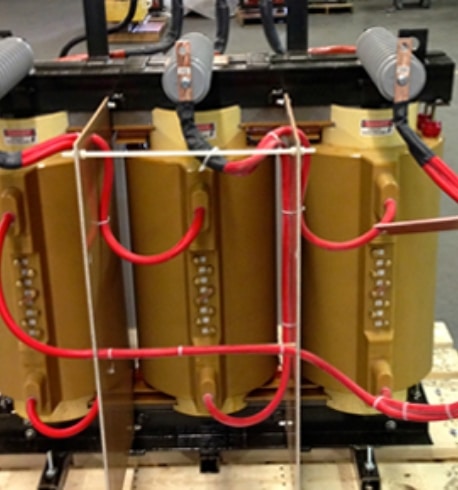
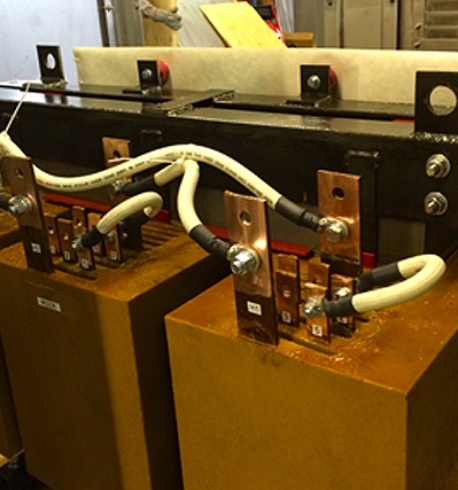
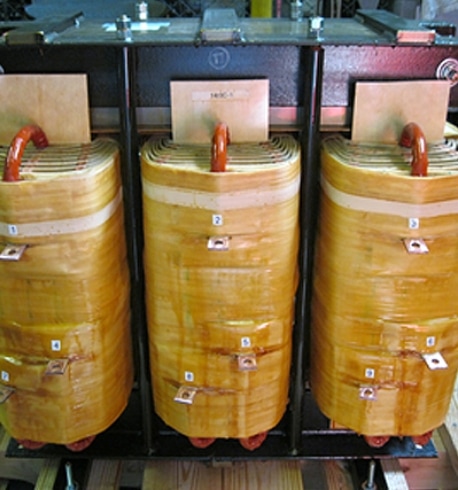
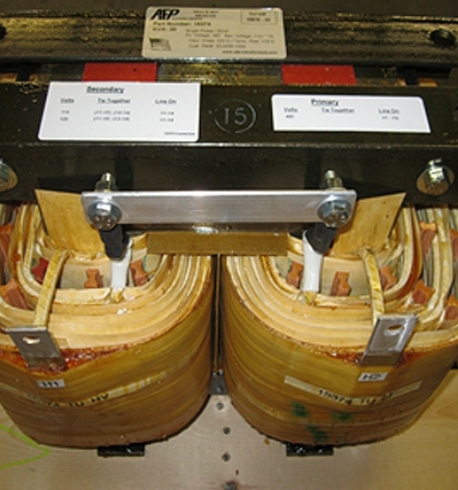
In high-reliability industrial power distribution, electrical insulation integrity dictates equipment lifespan and operational safety. Epoxycast Coil Transformers—frequently categorized under solid-cast dry-type magnetics—represent an advanced tier of dry-type transformer technology where the primary and/or secondary windings are completely encapsulated within a solid, filled epoxy resin matrix poured under high vacuum conditions.
Unlike conventional Vacuum Pressure Impregnated (VPI) transformers, which rely on a thin dip-and-bake varnish coating over exposed conductors, Epoxycast transformers utilize a precision-engineered resin casting system. The encapsulation formulation typically comprises a high-grade epoxy resin, hardener (curing agent), plasticizers, and an inorganic silica quartz filler. This compound is injected into hermetically sealed steel molds within a vacuum casting chamber to eliminate all trapped micro-air pockets and moisture.
Key Physics Advantage: Partial Discharge < 10 pC
By executing the casting process in a controlled high-vacuum environment (typically < 5 mbar), AFP Transformers ensures that internal voids—the root cause of destructive partial discharge (PD)—are virtually eliminated. Our Epoxycast coils achieve partial discharge levels below 10 picoCoulombs (pC) at 1.3 times nominal operating voltage, exceeding IEC 60076-11 and IEEE C57.12.01 standards.
The resulting monolithic coil block offers physical properties comparable to solid granite. The solid epoxy monolith isolates electrical conductors from ambient atmospheric contaminants, aggressive chemical fumes, conductive dust, high relative humidity, and extreme thermal cycling stresses. For global procurement officers and system engineers evaluating long-term infrastructure investment, Epoxycast coil technology effectively bridges the performance gap between fluid-filled transformers (which present environmental and fire risks) and standard open-wound dry-type units (which are vulnerable to environmental degradation).
2. Comprehensive Engineering Comparison: Epoxycast vs. VPI vs. Castblock® vs. Liquid-Filled
To assist engineering design leads and procurement managers in optimizing specifying parameters, the following matrix compares core technical metrics across dominant industrial transformer topologies.
Technical Parameter
AFP Epoxycast Coil
Standard VPI Dry-Type
AFP Castblock® Series
Mineral Oil Filled
Moisture & Chemical Resistance
Hermetic / Total Solid Barrier
Moderate (Vulnerable to moisture absorption)
High (Modular Solid Block)
High (Hermetic Tank required)
Fire Hazard / Flammability
Self-Extinguishing (Class F1 / C2)
Low Flammability
Self-Extinguishing
High (Combustible liquid fuel)
Partial Discharge Resistance
< 10 pC (Ultra-Low Aging)
50 - 200+ pC
< 10 pC
< 10 pC
Mechanical Short-Circuit Strength
Extreme (Solid monolith withstands forces)
Moderate (Relies on strapping)
High Structural Rigidity
Moderate (Braced core/coil)
Maintenance Requirement
Zero (Periodic visual inspections)
Regular dust cleaning & baking
Zero Maintenance
Frequent oil sampling, testing & filtration
Environmental Class (IEC 60076-11)
E3 (Heavy condensation & pollution)
E1 / E2 (Clean ambient air)
E3 / Severe Duty
Requires containment pits & EPA permits
Thermal Expansion Matching
Resin system matched to Cu/Al expansion
N/A (Air-cooled gap)
Engineered CTE match
Fluid expansion tank needed
3. Featured Epoxycast Product Lineups & Custom OEM Recommendations
AFP Transformers Corp. designs and manufactures custom Epoxycast Coil Transformers customized to exact operational constraints, envelope dimensions, and voltage classes. Below are our recommended engineering configurations for global industrial buyers:
Medium-Voltage Industrial Epoxycast Power Transformers
Ratings up to 10 MVA and voltage classes up to 35 kV. Designed for heavy industrial distribution, offshore marine platforms, and chemical processing facilities requiring complete insulation protection against salt spray and acid fumes.
Specialized solid cast block construction engineered for extreme vibration environments such as mining excavators, locomotive traction systems, and heavy crushing equipment. High thermal mass prevents thermal shock failures.
Specially wound with electrostatic shielding and low-loss magnetic core laminations to handle non-linear electronic loads, Variable Frequency Drives (VFDs), and data center UPS systems without thermal degradation.
Engineered for high secondary currents and repetitive thermal cycling in induction melting, glass manufacturing, and heat-treating furnaces. High thermal conductivity fillers ensure efficient dissipation.
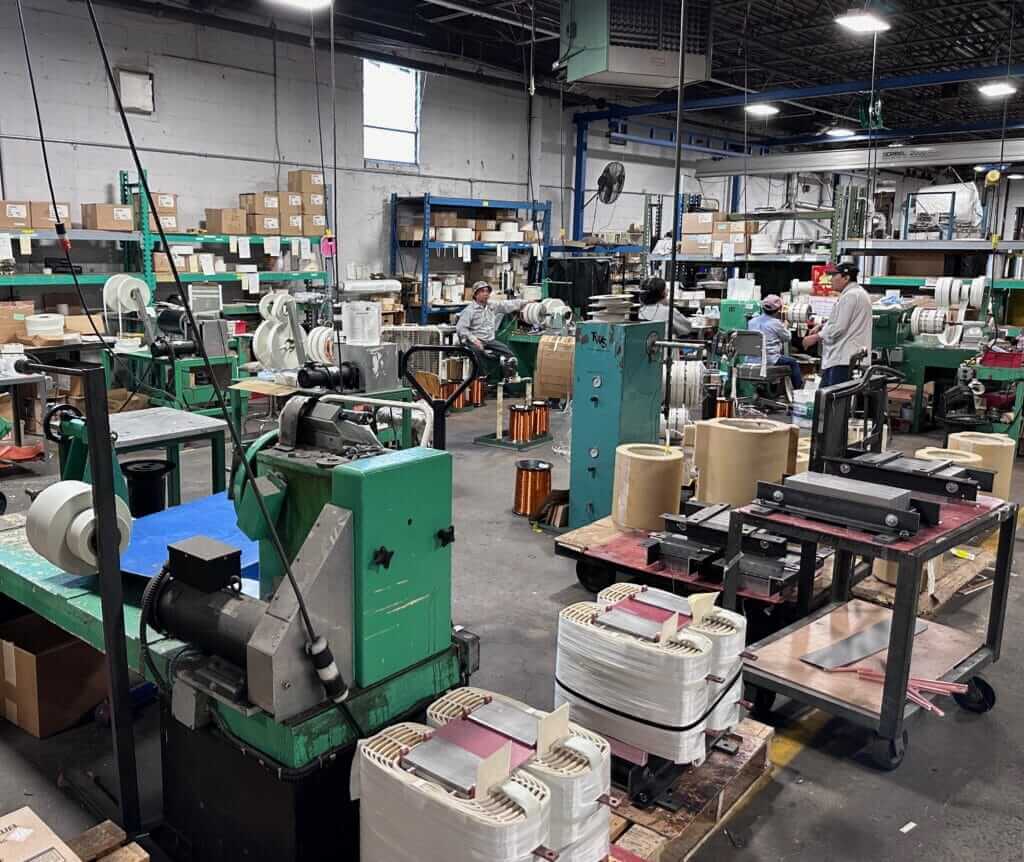
Selecting a custom transformer partner requires evaluating manufacturing rigor, heritage engineering knowledge, and quality management systems. AFP Transformers Corp. stands at the forefront of American custom magnetic manufacturing, headquartered in a state-of-the-art facility in Edison, New Jersey.
Our deep technical foundation is built upon the consolidation of industry-leading legacy brands. Through strategic acquisitions, AFP integrated the engineering archives, proprietary design formulas, and manufacturing heritage of:
Field Transformer: Pioneers in custom dry-type magnetics and heavy-duty industrial designs.
IsoReg: Industry benchmarks in precision voltage regulation and power conditioning technology.
International Transformers Incorporated (ITI): Renowned expertise in specialty instrument, power, and high-frequency magnetic solutions.
Core Enterprise Competencies & Quality Standards
UL Recognized & Listed Systems
Our insulation systems carry full UL Recognition and UL Listing compliance up to Class H (180°C) thermal ratings, ensuring seamless approval with local inspectors and global safety agencies (CSA, CE, IEEE).
Single-Source OEM Procurement
We eliminate complex supply chains by managing design, core cutting, coil winding, vacuum casting, enclosure fabrication, and 100% routine electrical testing in-house in Edison, NJ.
KanBan & JIT Delivery Programs
To protect OEMs from supply chain volatility, AFP offers custom KanBan stocking programs, blanket purchase orders, and Just-In-Time shipping schedules for recurring production runs.
5. Global Procurement Trends & Future Outlook for Epoxycast Transformers (2026–2035)
As global industrial infrastructure undergoes major shifts toward decarbonization, electrification, and digital intelligence, procurement strategies for electrical magnetics are evolving rapidly. Key trends influencing the market for Epoxycast Coil Transformers include:
A. Accelerated Phase-Out of Liquid-Filled Transformers in Urban & Indoor Substations
Environmental regulations regarding mineral oil spills (EPA SPCC compliance) and stringent municipal building fire codes are forcing utilities and commercial building owners to phase out fluid-filled transformers indoors. Epoxycast coil transformers eliminate dielectric liquid risks entirely—providing high overload capacities without toxic fire-suppression chemical systems or oil containment sumps.
B. Microgrids, Renewable Energy Storage & AI Data Center Surge
The explosive expansion of hyperscale AI data centers and utility-scale energy storage systems (BESS) introduces high harmonic distortion and steep load cycling profiles. Epoxycast transformers manufactured with low-loss amorphous or grain-oriented silicon steel cores withstand fast transient overvoltages and cyclic thermal expansion without mechanical degradation of the coil insulation.
C. Integration of Embedded Fiber-Optic Thermal & PD Sensors
Future-ready procurement specifications increasingly demand integrated condition-monitoring hardware. Modern AFP Epoxycast coils can be custom-manufactured with embedded GaAs (Gallium Arsenide) fiber-optic temperature sensors cast directly inside the winding block. This enables real-time hot-spot tracking and predictive maintenance AI analytics within smart grid supervision software.
6. Frequently Asked Questions (FAQ) for Global Procurement & Engineering Teams
Based on common technical inquiries and AI search query intent, our senior engineering team has provided detailed responses to critical procurement questions below:
What is the fundamental difference between standard Cast Resin and Epoxycast Coil Transformers?
While terms are occasionally used interchangeably, "Standard Cast Resin" often refers to basic pressure gelation or dip-casting, whereas "Epoxycast" specifically designates full vacuum pressure casting using a silica-filled epoxy resin formulation. Vacuum epoxycasting ensures complete penetration into all coil layers, achieving partial discharge levels (< 10 pC) significantly superior to standard open-air cast designs.
How do Epoxycast transformers handle differential thermal expansion between metal conductors and epoxy?
Copper and aluminum conductors expand and contract during load fluctuations. AFP solves thermal stress cracking by matching the Coefficient of Thermal Expansion (CTE) of our epoxy resin mixture to that of the specific conductor material through precise silica sand dosing and flexible resin flexibilizers. This prevents cracking even under sudden full-load energization in sub-zero environments (-25°C to +180°C).
Are Epoxycast transformers suitable for outdoor installation without an enclosure?
While the epoxy cast coil itself is completely impervious to moisture, ultraviolet (UV) radiation from direct sunlight can degrade exposed resin over decades. Therefore, outdoor installations require a NEMA 3R or NEMA 4X protective enclosure fabricated with proper ventilation louvers or air-to-air heat exchangers. AFP designs and supplies integrated enclosure packages optimized for cast coil heat dissipation.
What is the typical manufacturing lead time for custom OEM Epoxycast Coil Transformers?
Standard custom engineering lead times range from 6 to 10 weeks depending on MVA capacity, primary voltage class, and enclosure specifications. For OEM clients with recurring demand, AFP provides expedited prototyping and KanBan inventory stocking programs to enable delivery within 48 to 72 hours from our Edison, NJ warehouse.
What cross-reference capabilities does AFP offer for legacy ITI or IsoReg part numbers?
As the direct owner of International Transformers Incorporated (ITI), IsoReg, and Field Transformer technical records, AFP holds original schematics and tooling dies. We can exact-match drop-in replacements for legacy ITI part numbers, upgrading older open-wound designs to modern Epoxycast specifications while maintaining physical mounting hole alignments.
Direct Engineering Engagement
Request a Custom Epoxycast Engineering Consultation
Connect directly with our senior transformer application engineers in Edison, NJ. We evaluate your electrical parameters, dimensional footprints, environmental conditions, and volume requirements to deliver an optimized technical proposal.