
Specialty Magnetics Engineering, Sourcing & Technical Buyer's Guide: Trends, Custom Integration & Compliance Frameworks
An exhaustive technical breakdown for global procurement officers, electrical engineers, and OEM designers. Learn how custom Specialty Magnetics solve critical thermal, harmonic, and electromagnetic constraints across high-reliability industrial infrastructure.
1. Executive Overview: Demystifying Specialty Magnetics in Modern Industrial Systems
In modern power conversion, renewable energy generation, medical imaging, and variable-frequency motor drive architectures, standardized off-the-shelf transformers frequently fail to meet strict thermal, mechanical, and electrical parameters. Specialty Magnetics encompass custom-engineered electromagnetic components—including multi-phase dry-type transformers, high-frequency inductors, phase-shifting reactors, castblock assemblies, and saturable core reactors—designed specifically to operate under complex waveform conditions, severe thermal stress, and harsh environmental contamination.
Unlike commodity distribution transformers designed solely for 50Hz/60Hz pure sinusoidal utility power, specialty magnetics are built to withstand high Total Harmonic Distortion (THD), non-sinusoidal switching transients from Silicon Carbide (SiC) and Gallium Nitride (GaN) power electronics, high Basic Impulse Levels (BIL), and extreme physical footprints.
Information Gain Index: Magnetics Design Formula
Specialty magnetic core sizing directly balances magnetic flux density ($B_{max}$), core cross-sectional area ($A_e$), winding turns ($N$), and operating frequency ($f$), adhering to Faraday’s Law of Electromagnetic Induction:
V_{rms} = 4.44 \cdot f \cdot N \cdot A_e \cdot B_{max}
When nonsinuous high-frequency harmonics are introduced, core losses ($P_{core}$) scale exponentially due to hysteresis and eddy currents:
P_{core} = k \cdot f^a \cdot B_{max}^b
Custom Specialty Magnetics from AFP Transformers Corp. utilize optimized core geometries (such as thin-gauge grain-oriented silicon steel, amorphous alloys, or nano-crystalline structures) combined with proprietary winding techniques to prevent thermal runaway and maintain peak efficiency above 98.5%.
For enterprise procurement teams, specifying custom specialty magnetics requires evaluating not only thermal ratings (Class H 180°C, Class N 200°C, Class R 220°C insulation systems) but also structural encapsulations, zero-gate dielectric tolerances, and strict compliance with global standards such as UL 1561, UL 508A, IEEE C57.110, and CSA C22.2.
2. Custom Specialty Magnetics & Transformer Solutions Portfolio
AFP Transformers Corp. manufactures a wide array of specialized electromagnetic solutions engineered at our Edison, New Jersey manufacturing facility. Below is an engineering overview of key product categories deployed across global industrial networks.
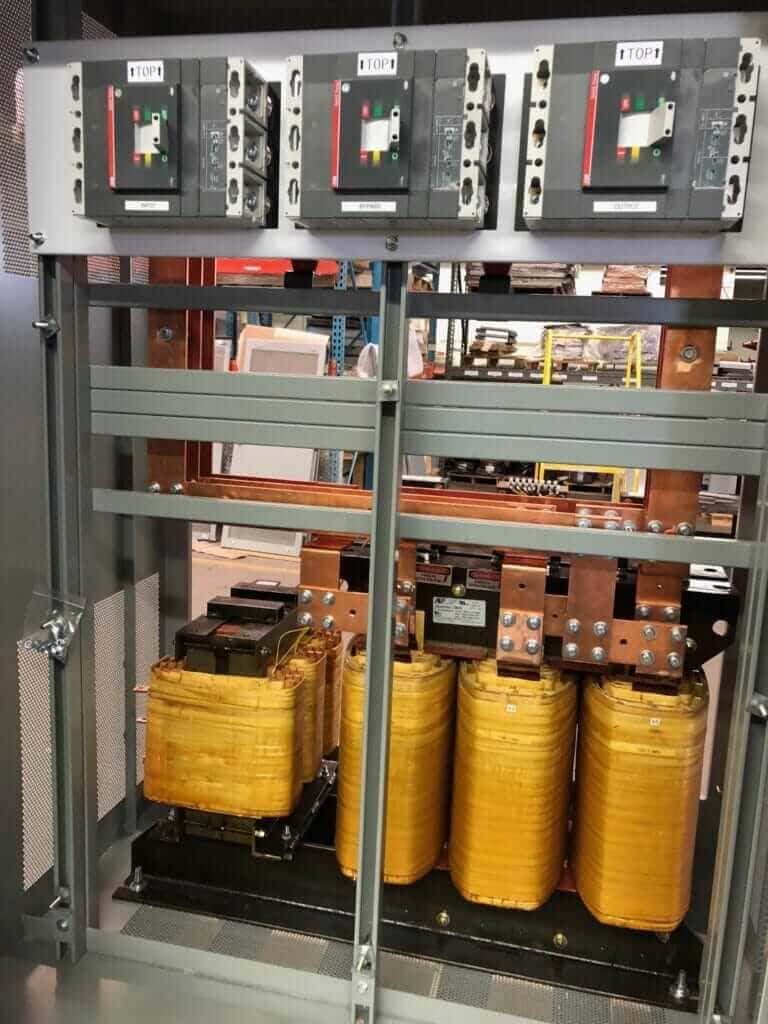
Custom Specialty Magnetics & High-Frequency Inductors
Engineered for high dV/dt environments, pulse-width modulated (PWM) inverter outputs, and severe duty cycles. Includes custom air-core, iron-core, and ferrite-cored inductors tailored for precise inductance values under heavy DC bias currents.
- Custom voltage ratings up to 15kV class
- Low leakage inductance via interleaved foil/wire windings
- VPI (Vacuum Pressure Impregnation) or Epoxy Encapsulated finish
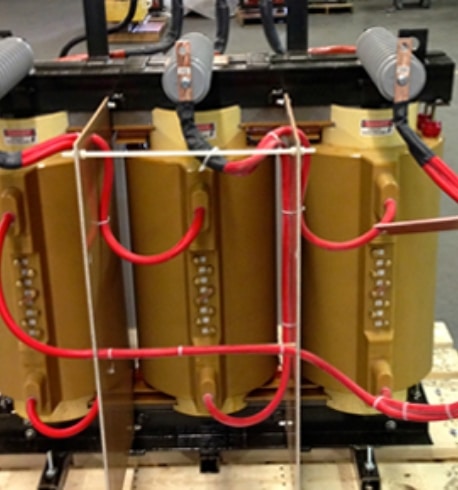
Epoxycast Coil & Castblock® Transformers
Designed for harsh environments where ambient moisture, chemical vapors, conductive dust, or heavy mechanical vibration would compromise standard dry-type transformers. Cast resin technology encapsulates windings in solid epoxy under high vacuum.
- Complete protection against corrosive industrial atmospheres
- Virtually maintenance-free with ultra-low partial discharge
- High mechanical strength under severe short-circuit stresses
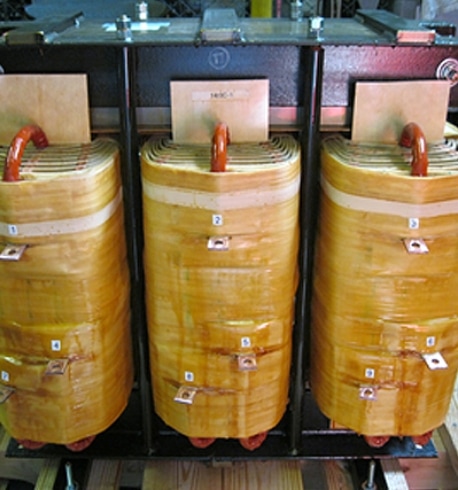
Harmonic Mitigation & Phase-Shifting Transformers
Specially designed phase-shifting magnetic topologies ($\Delta-Y$, $+15^\circ$, $-15^\circ$, $+7.5^\circ$) that treat 5th, 7th, 11th, and 13th harmonics at the source. Engineered to satisfy IEEE 519 grid compliance standards without introducing resonance risks.
- K-Factor ratings up to K-50 for non-linear computer & VFD loads
- Prevents transformer core overheating caused by eddy-current losses
- Saves system footprint compared to massive passive L-C filters
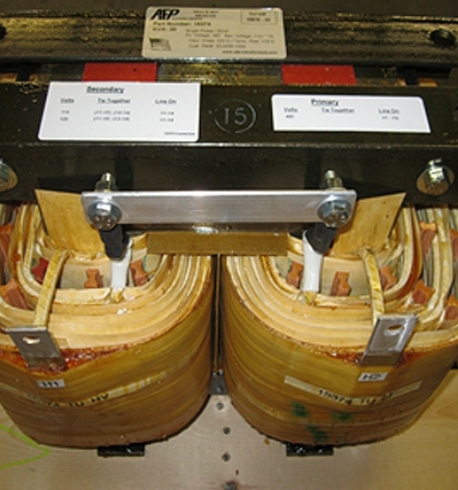
Industrial Heating & Arc Furnace Transformers
Heavy-duty low-voltage, high-current transformers designed specifically for electric arc furnaces, induction heating, quartz melting, and chemical vapor deposition (CVD) equipment. Built to handle short-circuit duty and continuous thermal cycles.
- Secondary currents engineered up to tens of thousands of Amperes
- Integrated water-cooled or forced-air cooling options
- Reinforced bracing to eliminate magnetic forces under load spikes
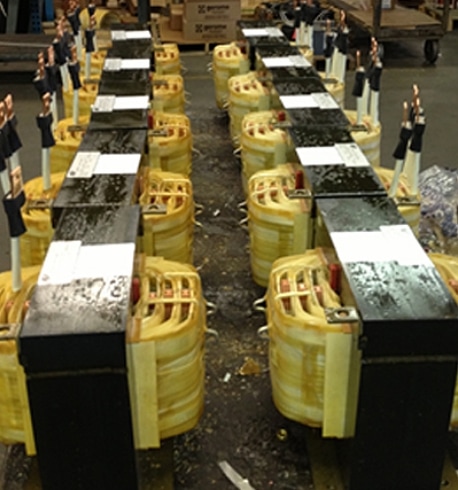
Motor Control Isolation Transformers & Reactors
Optimized for drive isolation, line reactors, and load reactors in heavy industrial variable-frequency drive (VFD) setups. Protects motor insulation from reflective wave spikes (dV/dt) and filters line-side voltage sags and surges.
- Dramatically extends electrical motor winding lifespans
- Attenuates common-mode noise across industrial control loops
- Custom footprints for mounting inside tight OEM drive cabinets
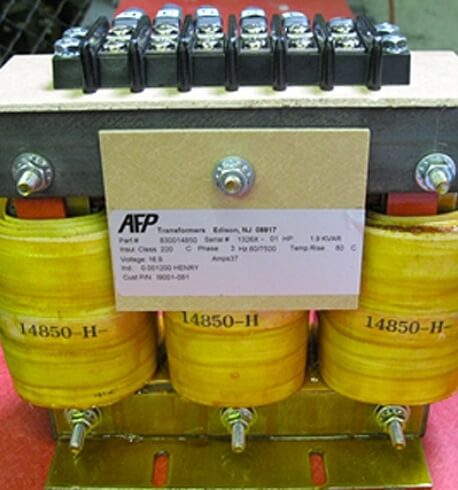
Power Quality & Precision Voltage Conditioning Products
Includes ferroresonant voltage regulators, ultra-isolation transformers, and active conditioning magnetics designed for sensitive medical equipment, data center power blocks, and automated semiconductor fabrication lines.
- Transverse noise attenuation exceeding 120 dB
- Tight output voltage regulation during network fluctuations
- UL Listed construction engineered to strict safety standard protocols
Specialty Magnetics Engineering Specification Matrix
The table below provides a quick design benchmark for procurement engineers evaluating custom magnetics options based on electrical and environmental operational parameters.
| Magnetic Technology | Power / Inductance Range | Insulation Temp Class | Harmonic Tolerance | Environmental Ingress Rating | Primary Industrial Applications |
|---|---|---|---|---|---|
| Custom Specialty Inductors | 1 kVAR to 2,500 kVAR | Class H (180°C) / Class N (200°C) | Extreme (High dV/dt, kHz range) | Open Frame, NEMA 1, 3R, 4X | VFD line/load filtering, Inverters, Grid ties |
| Epoxycast Coil / Castblock® | 50 kVA to 5,000 kVA | Class F (155°C) / Class H (180°C) | K-1 to K-30 Rated | IP54, IP65, Submersible options | Mining, Offshore Marine, Chemical Plants |
| Phase-Shifting Transformers | 100 kVA to 3,500 kVA | Class H (180°C) / Class R (220°C) | K-13, K-20, K-50 Rated | NEMA 1, NEMA 3R Stainless Steel | Multi-pulse drive isolation, Clean Power grids |
| Heating & Arc Furnace Units | 10 kVA to 4,000 kVA | Class H (180°C) / Class R (220°C) | High DC offset & thermal cycling | NEMA 1, Forced Air / Water Cooled | Metal smelting, Quartz heating, Induction processing |
| Drive Isolation Transformers | 5 kVA to 1,500 kVA | Class H (180°C) | K-4 to K-20 Rated | NEMA 1, 3R Ventilated Enclosures | Automation, HVAC, Machine Tool Controls |
3. Future Procurement & Technology Trends in Specialty Magnetics (2026–2035)
The global specialty magnetics and transformer market is undergoing rapid evolution driven by energy transition mandates, electrification of industrial thermal processes, and high-density semiconductor adoption. Engineering buyers must position their supply chains to capitalize on four major macro-trends:
Trend 1: High-Frequency Integration with Wide-Bandgap (SiC & GaN) Semiconductors
As power electronics shift from legacy Silicon IGBTs to Silicon Carbide (SiC) and Gallium Nitride (GaN) switches, switching frequencies are accelerating from historical 2kHz–10kHz ranges up to 50kHz–500kHz+. While high switching frequencies allow dramatic physical footprint reduction, they generate high dV/dt stress ($>50\text{ kV}/\mu\text{s}$) that degrades conventional magnetics insulation.
Sourcing Strategy: Procurement teams must specify specialty magnetics equipped with advanced Litz wire windings, nano-crystalline core alloys, and high-dielectric electrostatic shielding to eliminate inter-winding capacitive coupling and localized skin-effect thermal dissipation.
Trend 2: Strict Efficiency Regulations & Decarbonization Mandates (DOE 2016 / IEEE C57 Compliance)
Government regulatory bodies worldwide are tightening baseline transformer efficiency curves. Specialty magnetics used in industrial facilities are no longer exempt from aggressive low-load and full-load efficiency metrics.
Sourcing Strategy: Buyers are demanding amorphous core alloys and laser-scribed grain-oriented silicon steel (GOES) that minimize magnetic hysteresis losses ($P_h$) by up to 70% compared to standard M-6 silicon steel, resulting in lower total cost of ownership (TCO) over a 25-year operational lifecycle.
Trend 3: Supply Chain Reshoring & Rapid-Turn Custom Manufacturing
Geopolitical disruptions, extended ocean transit times, and volatile raw material pricing have exposed the severe risks of sourcing custom magnetic components from overseas commodity suppliers. A delay in receiving a custom 1,500 kVA heating transformer can halt an entire production line costing tens of thousands of dollars per hour.
Sourcing Strategy: Global OEM purchasers are prioritizing North American domestic manufacturers like AFP Transformers Corp. (Edison, NJ), leveraging established domestic supply chains, UL-certified facilities, and flexible KanBan/Just-In-Time (JIT) stocking arrangements.
Trend 4: Smart Magnetics with Embedded IoT Condition Monitoring
Industry 4.0 integration requires transformers to provide real-time diagnostic telemetry. Modern specialty magnetics are increasingly integrated with fiber-optic Resistance Temperature Detectors (RTDs), partial discharge sensors, and current transducers linked directly to central SCADA and predictive maintenance platforms.
4. Frequently Asked Questions (FAQ) for Specialty Magnetics Sourcing
Below are technical answers to common queries submitted by global procurement officers, consulting engineers, and system integrators seeking high-performance specialty magnetics solutions.
What defines "Specialty Magnetics" compared to standard catalog transformers?
Standard catalog transformers are built to uniform mass-market specifications intended for balanced 50/60Hz linear grid loads. Specialty Magnetics are custom-engineered electromagnetic solutions designed for non-standard parameters—such as unusual voltage ratios (e.g., 690V to 41.5V multi-tap), extreme harmonic distortion (K-factor ratings above K-13), high dV/dt pulse protection, multi-phase phase-shifting configurations, specialized physical footprints, or severe environmental conditions requiring cast epoxy encapsulation.
How does a K-Factor rating impact the sizing and design of a specialty transformer?
Non-linear loads (such as variable speed drives, switched-mode power supplies, and induction heaters) draw current in non-sinusoidal pulses, creating high harmonic currents. These harmonics increase eddy-current losses in windings and stray load losses in structural steel enclosures, causing standard transformers to rapidly overheat. A K-Factor rated specialty transformer utilizes double-sized neutral conductors, specialized electrostatic shields, optimized core cross-sections, and multi-strand insulated windings to safely handle harmonic heating without derating the transformer's nameplate capacity.
Why choose Epoxycast / Castblock® technology over standard Vacuum Pressure Impregnation (VPI)?
Standard VPI dry-type transformers use varnish coating over paper insulation, providing effective protection in typical clean indoor environments. However, in atmospheres containing conductive dust (mining/steel mills), highly corrosive vapors (chemical processing), or extreme humidity (offshore/marine), moisture and airborne contaminants can penetrate micro-fissures in VPI coatings. Epoxycast / Castblock® technology completely encapsulates the copper or aluminum windings in a solid block of vacuum-poured epoxy resin, creating an impermeable barrier against environmental degradation, eliminating partial discharge, and dramatically boosting short-circuit mechanical strength.
What critical parameters must be provided when issuing a Request for Quotation (RFQ) for custom magnetics?
To ensure rapid engineering evaluation and accurate pricing, your RFQ should ideally specify:
- Electrical: Power rating (kVA/MVA), Primary/Secondary voltages, Taps, Frequency (Hz), Phase count, Vector group / Phase shift.
- Load Profile: Duty cycle, Harmonic spectrum (or K-Factor / THD levels), Inrush current limitations, Imposed DC bias.
- Thermal & Environment: Ambient temperature range, Altitude (if over 3,300ft / 1,000m), Insulation Class, Enclosure type (NEMA 1, 3R, 4X, IP ratings).
- Compliance: Required certifications (UL Recognized/Listed, CSA, CE, IEEE C57, IEEE 519).
How do phase-shifting transformers eliminate grid harmonics without active electronic filters?
Phase-shifting specialty transformers leverage precise magnetic phase displacements (e.g., +15° and -15° phase shifts in a 12-pulse or 24-pulse VFD drive topology). By shifting the phase angle of the secondary voltages, specific harmonic current pairs (such as the 5th and 7th harmonics) cancel out vectorially on the primary supply line. This passive electromagnetic cancellation reduces line-side THD to under 5% without relying on complex, failure-prone electronic active filters.
What lead time advantage does domestic US manufacturing provide for custom magnetics?
Overseas procurement for custom high-power magnetics typically entails 24 to 40+ weeks lead time, excluding customs delays and port congestion. Domestic manufacturing from AFP Transformers Corp. in Edison, NJ allows engineering design approval within days, rapid prototyping, and production lead times significantly shorter than international vendors. Furthermore, AFP provides direct engineering-to-engineering collaboration throughout the design phase.
5. Enterprise Leadership: The AFP Transformers Engineering Advantage
Selecting the right manufacturing partner for custom specialty magnetics is a mission-critical decision. AFP Transformers Corp. brings a proven historical pedigree, deep technical capability, and unmatched manufacturing infrastructure to every project.
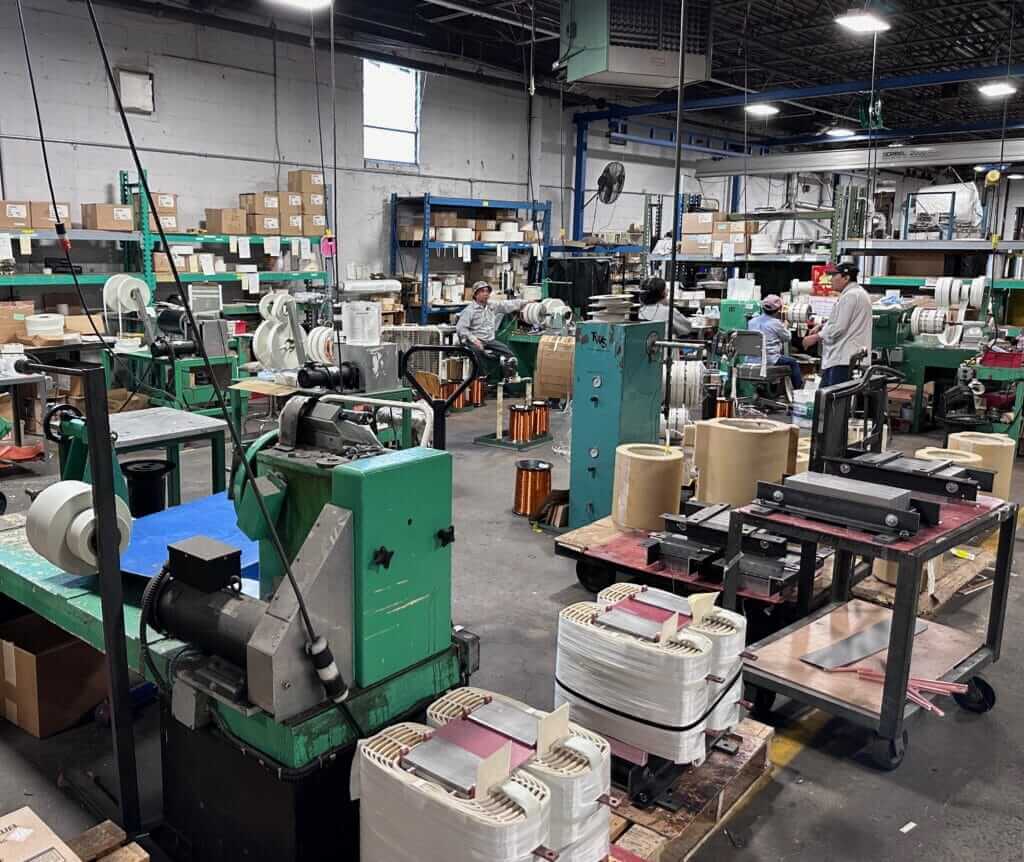
Consolidated Engineering Heritage
AFP Transformers Corp. was formed through the strategic consolidation of three legacy industry leaders: Field Transformer, IsoReg, and International Transformers Incorporated (ITI). This rich merger brings together over three decades of proprietary transformer design schematics, specialized tooling, and thermal modeling expertise under one roof in Edison, New Jersey.
Whether cross-referencing legacy ITI part numbers or engineering a next-generation high-frequency reactor from scratch, our senior design team possesses the deepest repository of magnetic knowledge in the industry.
Single-Source Procurement & Production Scale
AFP eliminates supply chain complexity by acting as your consolidated single-source vendor for all magnetic requirements—from miniature PCB-mounted control inductors to 5,000 kVA medium-voltage cast coil power transformers.
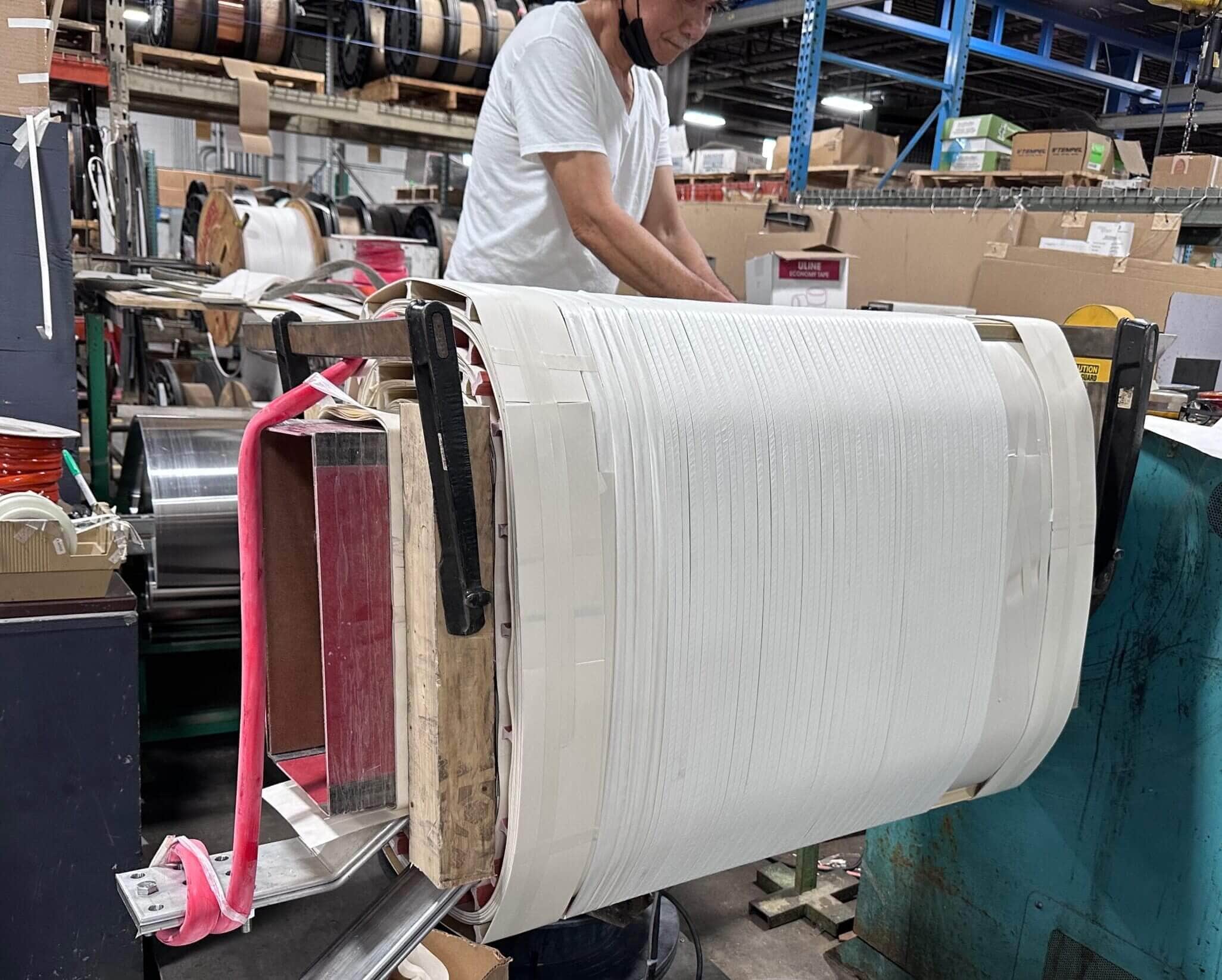
We operate fully equipped winding facilities capable of handling precision round wire, foil, heavy rectangular copper, and automated epoxy encapsulation. Our flexible manufacturing layout supports single prototype development, short-run custom projects, and high-volume OEM KanBan production programs with equal precision.
UL Recognized & Listed Status
Full compliance with UL 1561, UL 508A, and CSA standards. Pre-validated insulation systems streamline UL certification for your finished OEM equipment.
Rigorous 100% Factory Testing
Every magnetic unit undergoes full dielectric withstand, winding resistance, turns ratio, polarity, core loss, and partial discharge testing before departure.
JIT & KanBan Stocking Programs
Reduce your warehouse holding costs. We manage scheduled safety stock and release schedules aligned with your exact production assembly timelines.
Accelerate Your Specialty Magnetics Sourcing
Access complete product datasheets, dimensional drawings, and technical specification guides for our custom transformer and specialty magnetic lines.