
Blog

10 Best Medical Equipment Transformers for Hospitals
Hospitals rely on stable electrical power to support diagnostic equipment, patient monitors, imaging systems, and critical care devices. Behind many dependable installations are Medical Equipment Transformers selected for the actual load and clinical environment. A transformer may provide voltage conversion or electrical isolation, but its suitability depends on system design and equipment requirements. Small differences matter. Capacity, insulation, temperature rise, shielding, and enclosure design can affect performance, installation, and maintenance. The right choice is rarely just the unit with the highest rating. Details matter.
This guide introduces ten Medical Equipment Transformers for hospital applications and explains the practical features buyers should compare. It considers rated capacity, input and output voltage, isolation design, monitoring options, service access, and documented compliance information. Facilities teams should match each model to the connected load, local electrical conditions, and the manufacturer’s instructions. An attractive specification sheet cannot replace a site assessment. Not every model fits. Before purchase, confirm compatibility with biomedical equipment, installation requirements, and applicable standards with qualified electrical and clinical engineering professionals. Also review warranty terms and parts availability; downtime can matter as much as purchase price. The rankings are a starting point, not a substitute for engineering review. Some details may be easy to overlook. That is worth remembering.
Read more »
 By:Isabelle
- October 29, 2026

Top 10 Power Quality Products for Global Buyers
For global buyers, unstable electricity can damage equipment, interrupt production, and quietly increase operating costs. This guide examines the Top 10 Power Quality Products used across factories, offices, data centers, hospitals, and commercial facilities. The selection includes surge protection devices, uninterruptible power supplies, voltage stabilizers, harmonic filters, power conditioners, isolation transformers, capacitor banks, active power filters, monitoring systems, and automatic transfer equipment.
Real purchasing decisions require more than a product catalogue. A reliable solution must match the site’s voltage, frequency, load profile, fault level, and operating environment. For example, a CNC machine may need harmonic control, while a server room may prioritize battery runtime and bypass reliability. Temperature, dust, maintenance access, and local electrical standards also influence performance. Small details matter.
Not every popular product suits every market. That is worth remembering.
This overview draws on practical selection principles used by electrical engineers, facility managers, and procurement teams. It considers protection capability, efficiency, installation complexity, service support, warranty conditions, and compatibility with regional certifications. Buyers should verify technical documents and consult qualified professionals before making a final decision. Manufacturer claims can be useful, but field testing and measured power-quality data are stronger evidence. A product may look excellent on paper and still disappoint under changing loads. The ranking therefore aims to support informed comparison, not replace a site-specific assessment. Some recommendations may also change as technologies, regulations, and energy systems develop.
Read more »
 By:Alexander
- October 24, 2026
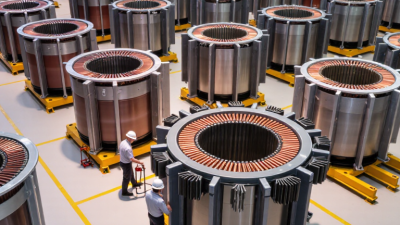
2026 Top Custom Electrical Reactors Manufacturers Worldwide
The 2026 global market for Custom Electrical Reactors is becoming more technically demanding. Manufacturers now serve renewable energy plants, industrial drives, data centers, and utility substations. Each application requires careful control of current, voltage, heat, insulation, and electromagnetic stress.
A reactor may look simple. Its copper winding, steel core, cooling path, and enclosure must work together under difficult conditions. Harmonic filtering, inrush limitation, motor starting, and fault-current control require different designs. Small specification errors can create audible noise, excessive temperature rise, or unexpected system losses. That matters.
Power-quality specialist Dr. J. C. Das offers a useful engineering principle: “A reactor must be evaluated as part of the complete power system, not as an isolated component.” This view helps buyers examine more than rated inductance. They should review short-circuit performance, thermal class, impedance tolerance, insulation coordination, testing procedures, and after-sales support.
The leading Custom Electrical Reactors manufacturers worldwide increasingly provide simulation reports, factory test records, and application-specific prototypes. Some also combine air-core and iron-core technologies for demanding grid conditions. Others focus on compact dry-type units for indoor industrial installations. Performance claims still require careful verification. A polished brochure is not proof.
This guide compares major manufacturers through technical capability, production experience, customization depth, certification practices, delivery reliability, and field reputation. It also considers practical details, such as terminal design, vibration control, cabinet access, and maintenance space. The ranking cannot capture every regional strength. That limitation deserves acknowledgment. Local service quality may matter as much as global scale.
Read more »
By:Isabelle
- October 19, 2026
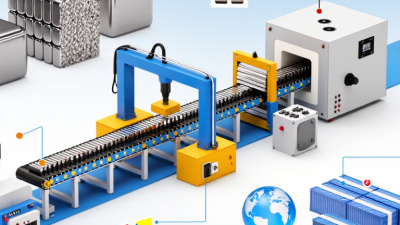
Top Specialty Magnetics Manufacturers for Global Buyers
Choosing among Specialty Magnetics manufacturers requires more than comparing catalog prices. Global buyers must examine material grades, magnetic performance, production capacity, testing methods, and delivery reliability. A magnet that performs well in a laboratory may fail inside a motor, sensor, medical device, or high-temperature assembly.
Dr. David Jiles, a recognized expert in magnetism and magnetic materials, emphasizes a practical principle: “Magnetic behavior depends strongly on material structure and processing.” This idea matters when evaluating manufacturers. Manufacturing temperature, coating quality, machining tolerances, and final magnetization can change real-world performance. Buyers should request technical data, inspection records, environmental ratings, and application-specific samples. Small details matter.
This guide introduces leading Specialty Magnetics manufacturers serving international customers. It considers engineering experience, custom design support, quality systems, production scale, and export capability. It also examines whether suppliers can maintain consistent performance across repeated orders. That is often the difficult part.
A polished website is not enough. Nor is a low quotation.
The strongest manufacturers explain trade-offs clearly. They identify risks before production begins and provide measurable acceptance criteria. Still, no supplier is perfect. Some may offer excellent materials but limited customization. Others may deliver fast but lack deep application engineering. Buyers should reflect on these gaps instead of trusting broad marketing claims. The following outline helps procurement teams compare manufacturers with greater confidence, practical evidence, and a clearer view of long-term value.
Read more »
By:Isabelle
- October 14, 2026
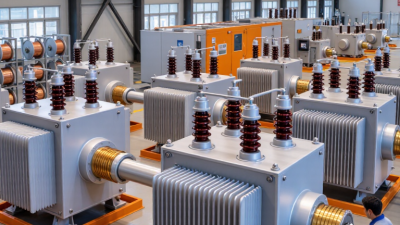
China Top Harmonic Mitigation Transformers Suppliers?
China’s position in the global transformer market has made supplier selection increasingly important. The search for China Top Harmonic Mitigation Transformers Suppliers? should begin with engineering evidence, not attractive catalog images. These transformers reduce waveform distortion caused by variable-frequency drives, rectifiers, data centers, and other nonlinear loads. Their performance affects heat, equipment life, power quality, and operating costs.
The details matter. Henry W. Ott, a respected electromagnetic compatibility engineer, wrote, “The best way to solve EMC problems is to prevent them from occurring in the first place.” This principle also guides harmonic control. Experienced buyers should examine K-factor ratings, phase-shifting designs, impedance values, temperature-rise data, and tested harmonic attenuation. Factory inspection records can reveal more than a polished website. Ask for verified test reports, manufacturing certifications, material specifications, and references from comparable installations.
A reliable Chinese supplier should explain how its Harmonic Mitigation Transformers perform under the customer’s actual load profile. A hospital, semiconductor plant, and commercial building may require very different solutions. Site measurements should precede final sizing whenever possible. Otherwise, even a technically sound transformer may disappoint. That is the uncomfortable part: supplier rankings can oversimplify a complex engineering decision. Price, delivery speed, and export experience still matter, but they cannot replace independent validation. This guide introduces practical criteria for comparing leading suppliers, while recognizing that published claims deserve careful review. Performance must be measured at the installation, not merely promised in a quotation.
Read more »
By:Isabelle
- October 9, 2026
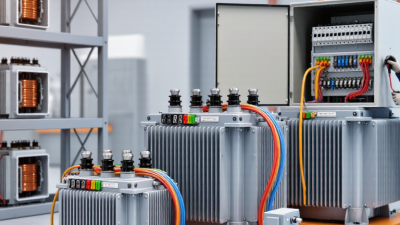
10 Best Motor Control Transformers for Global Buyers
Choosing among the 10 Best Motor Control Transformers for Global Buyers requires more than comparing prices or wattage. A control transformer may look compact, yet it influences relay response, contactor reliability, panel safety, and machine downtime. The right choice begins with real operating conditions.
Transformer specialist Paul Gill offers a practical reminder: “Selection starts with the control circuit, not the nameplate.” This principle matters when buyers compare primary and secondary voltages, VA capacity, frequency, insulation class, temperature rise, and short-circuit protection. A factory in Germany may need 400 volts at 50 hertz. A packaging line in North America may require 480 volts at 60 hertz. Small differences can create expensive surprises.
Details matter. Check terminal spacing, enclosure quality, mounting holes, fuse recommendations, and documentation. Also verify certifications accepted in the destination market. UL, CSA, IEC, and other requirements may not be interchangeable. A supplier’s test report should identify insulation resistance, dielectric strength, and load performance.
There is no perfect universal model. That deserves honest attention. A transformer selected for a clean indoor panel may struggle in a hot, dusty workshop. A low-cost unit may also create longer-term maintenance costs. This guide compares leading Motor Control Transformers through an experience-based lens, combining electrical specifications with practical purchasing concerns. Readers will see where each model fits, where it may disappoint, and which questions deserve answers before ordering. Global procurement is rarely flawless. Good decisions come from checking the details twice.
Read more »
By:Alexander
- October 4, 2026
Top 10 Heating and Furnace Transformer Manufacturers
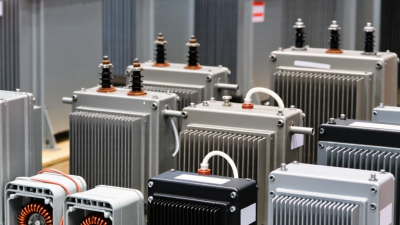
Choosing reliable Heating & Furnace Transformers requires more than comparing catalog prices. These components support burners, heating controls, ignition systems, and industrial furnace circuits. A small transformer may sit inside a compact cabinet, while a larger unit can serve demanding production equipment exposed to heat, vibration, and dust.
This guide examines ten notable manufacturers through practical criteria. These include product range, electrical performance, insulation quality, thermal management, enclosure design, certifications, customization, delivery capability, and technical support. Real-world experience matters here. Engineers often inspect terminal markings, mounting strength, wiring access, and temperature rise before approving a supplier. A transformer that performs well on paper may still create installation problems.
Details matter.
The comparison also considers how manufacturers communicate specifications and application limits. Clear documentation can prevent incorrect voltage selection, overload conditions, and costly downtime. However, no ranking can fit every project. Furnace builders, maintenance teams, and OEM designers may value different features, such as compact dimensions, reinforced insulation, high inrush tolerance, or rapid replacement support. Some public information may change, and not every supplier publishes identical test data. That limitation deserves attention. Readers should verify current datasheets, regional compliance requirements, warranty terms, and factory guidance before purchasing. The manufacturers discussed here represent useful starting points, not automatic recommendations. A careful final choice should match the transformer to the equipment, operating environment, and long-term maintenance plan.
Read more »
By:Alexander
- September 29, 2026
How to Choose the Right Industrial Power Transformer?
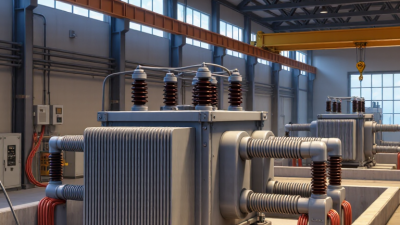
Choosing an industrial power transformer is not a catalog exercise. It is a decision about load, losses, operating conditions, and the cost of downtime. The International Energy Agency’s 2023 report, Electricity Grids and Secure Energy Transitions, says annual grid investment must exceed USD 600 billion by 2030 in its net-zero pathway. That figure concerns grids broadly, not transformer purchases alone. Still, it shows why careful equipment selection matters.
For Industrial Power Transformers, start with the actual load profile, not just the nameplate rating. Record peak demand, expected growth, voltage levels, harmonics, ambient temperature, and available installation space. Then compare efficiency, insulation system, cooling method, impedance, noise limits, and maintenance requirements. A unit that fits today may be undersized after a production-line expansion. A larger unit may also bring needless purchase and operating costs. Small details matter: a hot equipment room, dusty intake, or restricted crane access can change the practical choice.
IEEE Fellow John D. McDonald is a recognized power-systems expert whose published work addresses grid planning and reliability. His work supports a useful selection principle, paraphrased here: transformer decisions should reflect the system’s operating needs, not equipment ratings alone. Verify each specification against the site and applicable standards. One limitation remains: forecasts are uncertain. Build in sensible flexibility, but do not pay for capacity without a clear case.
Read more »
 By:Alexandra
- September 24, 2026
What Are Castblock Transformers and How Do They Work?
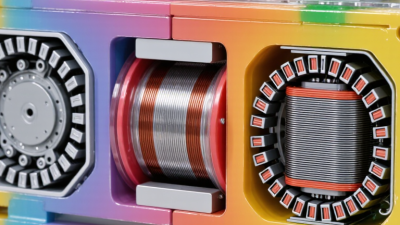
Castblock Transformers are dry-type transformers built with windings sealed inside solid epoxy insulation. Unlike oil-filled units, they use no liquid dielectric. This makes them useful in hospitals, commercial buildings, tunnels, ships, and industrial rooms where fire safety and low maintenance matter.
The operating principle is straightforward. Incoming alternating current enters the primary winding. Magnetic flux then travels through the laminated steel core. That flux induces a different voltage in the secondary winding. The cast epoxy supports the coils, limits moisture penetration, and helps resist vibration. Heat still matters. Cooling channels, resin quality, load patterns, and installation space affect real performance.
Transformer specialist Martin Heathcote has often stressed a practical point: “A transformer is only as reliable as the system around it.” That view fits Castblock Transformers well. Their resin insulation is strong, but it cannot correct poor ventilation, loose connections, dust buildup, or repeated overloading. Small details decide service life.
The technology is not flawless. Resin can age under severe thermal stress. Repairs may also be more difficult than repairs on some conventional designs. This deserves attention.
A careful evaluation should examine voltage ratio, rated power, insulation class, temperature rise, short-circuit strength, noise, and site conditions. Manufacturers may use different casting methods and testing standards. Therefore, product claims should be checked against certified test reports and installation requirements. The following guide explains how Castblock Transformers are constructed, how energy moves through them, and where their practical advantages become most visible.
Read more »
By:Alexander
- September 19, 2026
2026 How to Choose Epoxycast Coil Transformers for Your Needs?
Choosing the right Epoxycast Coil Transformers for your applications can be challenging. Industry expert Dr. Helen Carter emphasizes, "Understanding your specific needs is crucial for optimal performance." This highlights the importance of tailored solutions in selecting these transformers.
Epoxycast Coil Transformers are renowned for their durability and electrical efficiency. However, not all transformers are created equal. Different projects require different specifications. Whether it's for industrial, commercial, or residential use, factors such as voltage requirements and space constraints play significant roles.
When assessing your needs, consider these intricacies carefully. The wrong choice can lead to inefficiencies. Additionally, consulting with professionals can provide valuable insights. Even minor adjustments can make a significant difference in performance. Remember, each project is unique. Take your time to reflect on what fits best.
Read more »
By:Alexander
- August 22, 2026

Top Benefits of Dry Type Transformers for Global Buyers?
In the evolving landscape of electrical systems, the advantages of Dry Type Transformers are becoming increasingly clear. Industry expert Dr. Emily Johnson, a leading authority in transformer technology, emphasizes, "Dry Type Transformers offer unmatched safety and efficiency." This statement highlights their critical role in modern applications.
These transformers are crucial for many sectors, including commercial and industrial settings. They minimize fire hazards by eliminating flammable oils. This feature is especially essential in densely populated areas. Furthermore, Dry Type Transformers operate quietly, making them ideal for urban installations where noise pollution is a concern.
Additionally, their maintenance requirements are lower than those of traditional transformers. This reduction can lead to significant cost savings over time. However, some might find the initial investment to be higher. Reflecting on this, buyers should weigh the benefits against the costs. Overall, Dry Type Transformers present a viable option for today's power distribution needs.
Read more »
By:Alexandra
- August 22, 2026
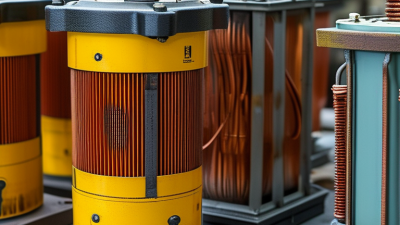
How to Choose the Right Cast Coil Transformers for Your Needs?
Choosing the right Cast Coil Transformers can be a daunting task. It requires a blend of technical expertise and practical understanding. Tom Anderson, a seasoned electrical engineer with over 20 years of experience, states, “Selecting the ideal transformer involves careful consideration of application needs and environmental factors.”
Cast Coil Transformers are essential in various industries, powering everything from substations to large machinery. Their robust design minimizes the risk of failures. However, many overlook critical factors during selection. Capacity needs, temperature range, and installation conditions play significant roles. A mismatch can lead to inefficiencies.
Many users make the mistake of solely focusing on the cost. This approach can be misleading. Opting for cheaper options might result in higher maintenance costs later. Defining specific requirements clearly is crucial to make the right choice. In the end, the right Cast Coil Transformers should align with both technical specifications and operational demands for optimal performance.
Read more »
By:Alexandra
- August 22, 2026