
Hospitals rely on stable electrical power to support diagnostic equipment, patient monitors, imaging systems, and critical care devices. Behind many dependable installations are Medical Equipment Transformers selected for the actual load and clinical environment. A transformer may provide voltage conversion or electrical isolation, but its suitability depends on system design and equipment requirements. Small differences matter. Capacity, insulation, temperature rise, shielding, and enclosure design can affect performance, installation, and maintenance. The right choice is rarely just the unit with the highest rating. Details matter.
This guide introduces ten Medical Equipment Transformers for hospital applications and explains the practical features buyers should compare. It considers rated capacity, input and output voltage, isolation design, monitoring options, service access, and documented compliance information. Facilities teams should match each model to the connected load, local electrical conditions, and the manufacturer’s instructions. An attractive specification sheet cannot replace a site assessment. Not every model fits. Before purchase, confirm compatibility with biomedical equipment, installation requirements, and applicable standards with qualified electrical and clinical engineering professionals. Also review warranty terms and parts availability; downtime can matter as much as purchase price. The rankings are a starting point, not a substitute for engineering review. Some details may be easy to overlook. That is worth remembering.
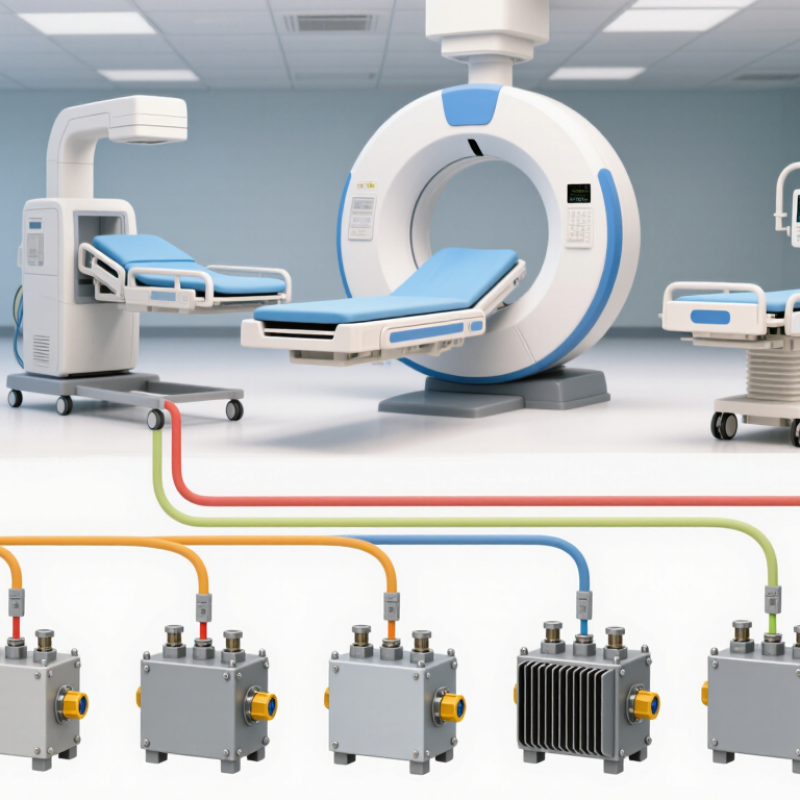
Define Medical Isolation Transformers Under IEC 61558-2-15
A medical isolation transformer is a safety transformer designed for medical locations and covered by IEC 61558-2-15. It separates the secondary circuit electrically from the supply, helping limit the consequences of an insulation fault. It does not, by itself, make a room or complete electrical installation safe. Not the whole system.
In medical IT systems, the transformer commonly supplies selected circuits where continuity matters, such as equipment outlets near a patient bed. An insulation monitoring device and appropriate protective measures are also needed under applicable installation rules, including IEC 60364-7-710. The 2023 report Energizing Health, by WHO, the World Bank, IRENA, and SEforALL, estimates that nearly one billion people rely on health-care facilities with no or unreliable electricity. That figure concerns facility power access, not transformer performance; an isolation transformer cannot replace backup generation or a reliable supply.
When reviewing a unit, check its rated voltage and power, installation conditions, temperature limits, and documentation against the adopted standard edition. In practice, clearance, ventilation, and correct monitoring connections matter as much as the label. A transformer can meet its product standard while the installed system still needs careful verification. That distinction is easy to overlook.
| No. | Application / Configuration | Typical Hospital Use | Selection Considerations | Standards and Verification |
|---|---|---|---|---|
| 1 | Medical-location isolating transformer for a medical IT system | Electrical supply to designated medical locations where a medical IT system is specified by the facility design. | Confirm the intended medical location, connected load, supply voltage, installation environment, and required monitoring equipment. | Check the applicable edition of IEC 61558-2-15 and the locally adopted requirements for medical-location electrical installations. |
| 2 | Single-phase medical isolating transformer | Suitable where the engineered supply and connected medical equipment use a single-phase circuit. | Match primary and secondary voltage, rated output, frequency, and load characteristics to the approved electrical design. | Verify the transformer’s declared rating and conformity documentation; do not assume that a general-purpose isolation transformer is suitable for medical locations. |
| 3 | Three-phase medical-location transformer | Considered for installations whose designed supply and load arrangement requires a three-phase transformer. | Check phase configuration, load balance, protective devices, connection arrangement, and whether the proposed design is covered by the relevant product standard. | Confirm the exact transformer configuration and rating against the applicable standard and project requirements before procurement. |
| 4 | Transformer for an operating-room medical IT circuit | May be specified for a designated operating-room supply when required by the electrical design and local rules. | Assess the connected equipment and expected simultaneous load; coordinate the transformer with insulation monitoring and alarm arrangements where required. | Verify the room classification and installation requirements with the responsible electrical designer and the locally adopted medical-location standard. |
| 5 | Transformer for a cardiac-care or procedure-room circuit | Potential application in designated patient-care locations where a medical IT system is selected by the project design. | Confirm the room’s intended clinical use, load profile, monitoring needs, and continuity-of-supply strategy. | Room classification and required protective measures are determined by the applicable installation rules, not by the transformer alone. |
| 6 | Transformer for an intensive-care area | Used only where the facility design calls for a medical IT system for the relevant intensive-care location or circuit. | Review connected equipment, future load allowance, ventilation and temperature conditions, and alarm visibility for clinical staff. | Confirm the complete system design, including monitoring and protective equipment, against local regulations and the project specification. |
| 7 | Transformer for a diagnostic or examination location | May serve a designated diagnostic or examination area if its electrical classification and design require an isolated medical supply. | Account for equipment starting currents, duty cycle, and any manufacturer-specified supply requirements for the connected devices. | Determine whether medical-location transformer requirements apply to the specific room and circuit; do not infer this from the room name alone. |
| 8 | Transformer for a treatment or recovery area | Possible application where the risk classification and electrical design require a medical IT system. | Check the intended use of the space, number and type of loads, installation location, and access for inspection and maintenance. | Have the applicable room classification and installation measures confirmed by a qualified designer or authority having jurisdiction. |
| 9 | Transformer with coordinated insulation monitoring | For a medical IT system designed to provide an alarm when insulation conditions require attention. | Ensure the monitoring device is compatible with the system voltage and configuration, and that alarm indications can be acted on promptly. | Verify the monitoring arrangement and alarm functions against the applicable installation standard and the complete system documentation. |
| 10 | Low-noise, enclosure- or cabinet-mounted medical transformer | For installations where the project requires a particular mounting format or attention to audible noise and environmental conditions. | Check enclosure protection, cooling and ventilation, ambient temperature, access, service clearances, and acoustic requirements. | Confirm that the product’s intended installation conditions and declared ratings match the site design and relevant conformity requirements. |
Important: IEC 61558-2-15 addresses safety requirements for transformers for medical locations; it does not by itself determine which hospital rooms require a medical IT system. Final selection depends on the locally adopted standards, room classification, electrical design, connected loads, and verified product documentation. The entries above are application categories, not rankings of specific products or a substitute for engineering review.
FAQS
Record each major device’s rated kVA, input voltage, phase, and operating pattern. Check nameplates and power-analyzer readings. Measure during peak hours.
Rooms can contain very different loads. An imaging suite, pump, and ward circuit have different demand patterns. The first load sheet is rarely complete.
Not automatically. Some equipment runs briefly, while other loads operate steadily. Ask staff which devices typically run at the same time.
A scanner may draw high power for short periods. A ward circuit may carry a steadier load all day. Record duration, repetition, and recovery time.
Confirm primary and secondary voltage, frequency where relevant, and single-phase or three-phase supply. Check phase balance, too. Small differences can hide in averages.
Electronic supplies and variable-speed drives can produce harmonics. Ask qualified electrical personnel to assess heating effects. Keep the assumptions on record.
It applies to the complete power path, not the transformer alone. The generator, transfer switch, wiring, and connected loads must work together.
Test transfer under load and record the time until usable voltage reaches equipment. Include actual times and voltage readings. A passing test today proves little about tomorrow.
Recheck after renovations, equipment changes, or load increases. Keep measurement dates and meter settings. Some estimates will remain imperfect, so mark them clearly.
Conclusion
Medical Equipment Transformers help hospitals provide stable, appropriately isolated power for sensitive clinical devices. Selecting one begins with understanding the requirements for medical isolation transformers under IEC 61558-2-15, then matching the unit to the expected load. Key factors include kVA capacity, input and output voltage, phase, and duty cycle, with enough allowance for startup demand and future equipment changes.
A careful comparison of transformer options should consider ratings, protective features, and relevant compliance documentation. Hospitals should also assess connected equipment against IEC 60601-1 leakage-current limits and coordinate transformer selection with their electrical and clinical teams. Finally, emergency-power planning should account for NFPA 99’s 10-second transfer rule, so essential loads are supported by a suitable backup-power arrangement. Together, these checks can guide a safer, more reliable choice for the intended hospital application.