
Unlike standard distribution transformers, Heating & Furnace Transformers operate under severe operational constraints—including continuous full-load thermal cycles, high harmonic current injection from SCR/thyristor switching, extreme secondary output currents (up to 50,000A+), and rapid mechanical shock from arc stabilization. Specifying the correct transformer architecture requires a deep understanding of duty cycle classes, K-factor rating, low-impedance busbar design, and thermal insulation degradation.
1. Product Architecture & Custom Engineering Recommendations
Industrial thermal processing demands specialized magnetic structures capable of stepping down medium or low primary voltages into ultra-high secondary currents while absorbing non-linear electrical stresses. At AFP Transformers Corp., our engineering team manufactures custom heating transformers tailored to exact process parameters—leveraging technology developed through our long-standing acquisition heritage of Field Transformer, IsoReg, and International Transformers Incorporated (ITI).
Depending on your thermal application, heating transformers fall into four distinct structural categories, each offering tailored electro-magnetic and mechanical performance advantages:
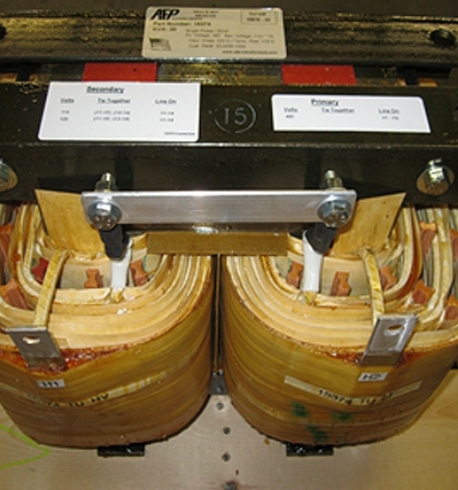
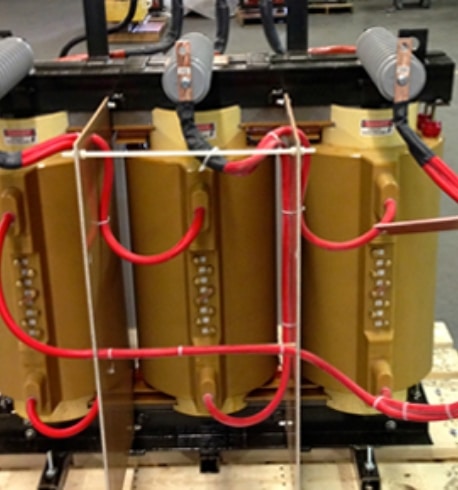
A. Induction Heating & Melting Transformers
Induction melting and surface hardening furnaces utilize high-frequency AC magnetic fields to induce eddy currents inside metallic charges. These applications present extreme high-frequency skin effect losses and severe voltage transients.
- Winding Architecture: Interleaved or transposed copper foil windings designed to minimize skin and proximity losses at medium frequencies (1 kHz to 10 kHz).
- Cooling Options: Direct water-cooled copper tubings or forced-air cooled VPI (Vacuum Pressure Impregnated) Class N (220°C) dry-type coils.
- Primary Tap Switching: Motorized or manual off-load tap changers offering 5 to 11 voltage steps to maintain resonant tank tuning during charge melt-down.
B. Electric Arc Furnace (EAF) & Submerged Arc Heating Transformers
Arc furnaces operate under near short-circuit conditions during the initial scrap breakdown phase, creating massive electrodynamic forces within the winding structure ($F \propto I^2$).
- Structural Reinforcement: Heavy-gauge hydraulic clamping frames with spring-loaded core stay-bolts to prevent axial coil displacement.
- Harmonic Compensation: Heavy K-Factor (K-13, K-20+) isolation designs with electrostatic shields between primary and secondary windings to drain high-frequency switching noise.
C. Resistance Heating & Vacuum Heat Treating Transformers
Atmosphere and vacuum heat-treating furnaces utilize silicon carbide (SiC), molybdenum, or graphite heating elements. As heating elements age, their cold-to-hot resistance changes dynamically by up to 400%, requiring wide secondary voltage adjustment ranges.
- Voltage Regulation: Integrated multi-tap secondary windings or paired buck-boost transformer configurations for step-less SCR phase-angle power control.
- Secondary Bus Alignment: Water-cooled solid copper bus bar extensions designed to mate directly with vacuum feedthrough glands, reducing stray inductance.
D. Castblock® & Epoxycast Sealed Coil Transformers
For harsh furnace environments containing airborne graphite dust, acid fumes, high relative humidity, or conductive metal vapors, open dry-type transformers may suffer premature dielectric breakdown.
AFP’s proprietary Castblock® Transformers and Epoxycast Coil Transformers encapsulate windings in solid vacuum-cast epoxy resin, delivering complete immunity to environmental contamination, high mechanical short-circuit strength, and extended operational lifespans exceeding 30 years.
Engineering Specification Matrix: Heating & Furnace Transformers
| Parameter / Feature | Standard Industrial Range | Custom OEM High-Duty Capability | AFP Engineering Standard |
|---|---|---|---|
| Power Rating (kVA) | 10 kVA – 1,000 kVA | Up to 5,000 kVA (5 MVA) Dry / Cast | 100% Continuous Thermal Rating |
| Primary Voltage Class | 208V – 600V (Low Voltage) | Up to 15 kV (Medium Voltage) | Dual/Multi-Voltage Input Available |
| Secondary Current Output | 500 A – 5,000 A | Up to 50,000 A+ AC / DC Rectified | Water-Cooled Copper Bus Extrusions |
| Thermal Insulation Class | Class H (180°C Rise) | Class N (220°C System) / Nomex® | High-Temp VPI Epoxy / Cast Resin |
| K-Factor Rating | K-4 to K-9 | K-13, K-20, K-30 Non-Linear Load | Full Electrostatic Shielding Included |
| Harmonic Mitigation | Standard Delta-Wye | Phase-Shifting (Zig-Zag / 12-Pulse) | Reduces SCR 5th/7th Current Harmonics |
| Compliance Standards | NEMA ST-20 | IEEE C57.18.10, IEC 60076-15, UL Listed | UL 506 / UL 1562 Recognized/Listed |
2. Future Procurement Trends in Furnace Transformer Sourcing
Global procurement managers and supply chain directors facing the green energy transition and rapid industrial automation must navigate fundamental shifts in transformer sourcing strategies. When procuring heating & furnace magnetics over the next decade, three key macro trends will define market leadership:
A. Decarbonization & Electrification of Industrial Heat Processes
Heavy manufacturing sectors—including steel, aluminum, glass, ceramics, and chemical processing—are aggressively transitioning from fossil-fueled (natural gas, heavy oil) combustion systems to zero-emission electric arc, induction, and plasma heating technologies. This transition requires a massive increase in localized high-current transformer infrastructure. Procurement teams must partner with manufacturers capable of delivering custom high-efficiency units that comply with stringent energy reduction directives (such as US Department of Energy DOE 2016 standards and European EcoDesign guidelines).
B. Total Cost of Ownership (TCO) vs. Initial Capital Expenditure (CapEx)
Historically, procurement decisions favored the lowest upfront purchase price. However, in continuous 24/7 furnace operations, the cost of electrical energy dissipated as internal heat losses ($I^2R$ coil loss + core hysteresis loss) over a 20-year lifespan can equal up to ten times the original purchase price of the transformer.
Modern procurement strategy evaluates Total Cost of Ownership (TCO) using capitalized loss evaluation formulas:
TCO = Initial Price + (A × No-Load Core Loss in kW) + (B × Full-Load Winding Loss in kW)
Where A and B represent the capitalized cost per kilowatt over the evaluated system lifetime based on localized utility power tariffs. AFP optimizes core steel laminations (using M2 and M3 grain-oriented silicon steel) to lower A values, significantly reducing long-term factory utility bills.
C. JIT Lead-Time Guarantee & KanBan Buffer Stocking
Furnace downtime directly halts plant production lines, costing heat treating contractors up to tens of thousands of dollars per hour. Supply chain vulnerabilities have highlighted the risk of relying on long-distance overseas transformer suppliers with 30–50 week lead times. Global buyers are increasingly standardizing with domestic US manufacturers like AFP Transformers that offer KanBan stocking programs, rapid prototyping, and localized emergency replacement coil wind services.
3. Future Technology Trends & Magnetics Innovation
The technological landscape for high-temperature furnace power supplies is advancing rapidly to keep pace with wide-bandgap semiconductors (SiC/GaN), digital twin monitoring, and advanced materials engineering.
A. Advanced Thermal Dielectric Resins & Hybrid Vacuum Pressure Impregnation (VPI)
Traditional organic varnishes break down when exposed to ambient temperatures surrounding heat-treating kilns. Next-generation furnace transformers utilize 100% solid silicone and epoxy-ester resins applied through multi-cycle Vacuum Pressure Impregnation (VPI). VPI removes micro-voids from the winding structures, eliminating partial discharge risks, preventing moisture ingress, and enabling reliable continuous operation at 220°C hot-spot temperatures.
B. Integrated SCR Harmonic Cancellation & Multi-Pulse Phase Shifting
Modern electric furnaces rely heavily on Silicon Controlled Rectifiers (SCRs) and thyristor power controllers for fast digital temperature management. However, SCR phase-angle firing injects heavy 5th, 7th, 11th, and 13th harmonic currents back into the plant power grid, causing transformer overheating, power factor degradation, and premature capacitor bank failure.
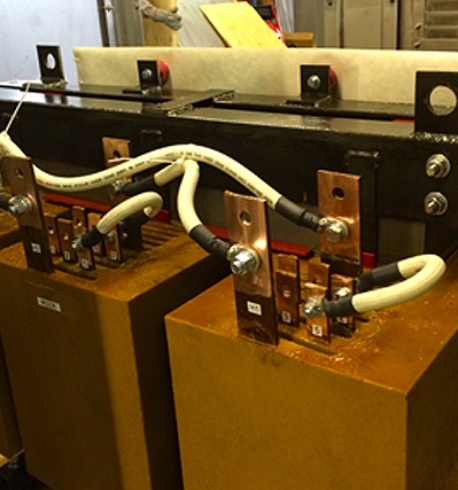
Future-ready furnace power architectures integrate Phase-Shifting Transformer Winding Topologies (such as dual-secondary Delta-Wye or Extended Delta Zig-Zag configurations). By shifting secondary phase angles by 30° or 15°, 12-pulse or 24-pulse SCR rectifier drive systems effectively eliminate 5th and 7th harmonics at the source without requiring massive external harmonic filter banks.
C. Smart IoT Sensing & Embedded Fiber-Optic Thermal Diagnostic Systems
Condition-based predictive maintenance is replacing scheduled calendar overhauls. Modern custom furnace transformers built by AFP can be equipped with embedded fiber-optic temperature sensors directly attached to the inner secondary winding turns. Connected via industrial Modbus or Ethernet/IP to the plant SCADA system, these sensors provide real-time hot-spot temperature monitoring, early insulation degradation warnings, and dynamic overload capacity calculations.
4. Global Buyer FAQ: Critical Technical & Sourcing Questions
Heating transformers handle high SCR harmonics through three primary design modifications: 1) K-Factor Oversizing: Windings are engineered with low-loss stranded or transposed conductors (such as Litz wire or thin copper strip) to minimize high-frequency eddy current losses. 2) Electrostatic Shielding: A grounded copper shield is placed between the primary and secondary coils to divert high-frequency switching noise straight to earth. 3) Heavy Core Derating: Electromagnetic cores are operated at reduced flux densities (typically 1.2T to 1.4T instead of standard 1.7T) to prevent core saturation caused by DC offsets in SCR firing circuits.
Dry-Type VPI: Utilizes air cooling and high-temperature varnish impregnation. Best for indoor installation, low environmental hazard, and ease of field modification. Cast Coil / Epoxycast: Coils are encapsulated in solid epoxy resin under vacuum. Impervious to moisture, dust, and chemical vapors; offers higher dielectric strength and short-circuit resistance. Liquid-Filled: Uses mineral or synthetic ester oil for cooling. Typically reserved for outdoor substations above 5 MVA, but requires containment basins and poses fire safety considerations indoors.
Sizing requires analyzing both continuous kVA demand and cyclic thermal overload factors ($I^2t$). Because furnace loads cycle rapidly between cold charge heating and hot holding, thermal expansion causes friction between winding layers. AFP engineers utilize Class N 220°C Nomex insulation systems combined with spring-loaded axial coil clamping to maintain constant pressure on the windings, accommodating thermal expansion without insulation abrasion or mechanical looseness over years of operation.
For secondary currents exceeding 3,000 Amperes, standard cylindrical wire windings suffer excessive eddy losses. AFP designs custom secondary bus systems utilizing solid oxygen-free high-conductivity (OFHC) copper plates or water-cooled hollow copper extrusions. Windings are interlaced with primary coils in a low-reactance configuration to reduce internal voltage drop and optimize power transfer to the furnace induction coil.
K-factor quantifies a transformer's ability to handle non-sinusoidal harmonic load currents without exceeding safe thermal limits. Standard distribution transformers have a K-1 rating and will overheat rapidly when powering SCR controllers. A properly calculated K-13, K-20, or K-30 rating ensures neutral conductors are sized for 200% phase current and core losses are engineered to prevent catastrophic insulation burnout.
Procurement teams should verify compliance with **UL 506** (Specialty Transformers), **UL 1562** (Medium Voltage Dry-Type), **IEEE C57.18.10** (Pool-Rectifier Transformers), **NEMA ST-20**, and **CE / CSA** safety standards. AFP Transformers maintains UL Recognized Insulation System approvals (up to Class 220°C) and rigorous in-house quality control testing including partial discharge, turn-to-turn insulation surge, and full load heat-run validation.
5. The AFP Advantage: 30+ Years of Manufacturing Leadership
At AFP Transformers Corp., we understand that standard catalog transformers rarely meet the exacting demands of specialized thermal processing plants. Established through the acquisition of legendary industry brands—Field Transformer, IsoReg, and International Transformers Incorporated (ITI)—AFP brings over three decades of core electro-magnetic design experience to every project.
Why Enterprise Procurement Teams Partner with AFP Transformers
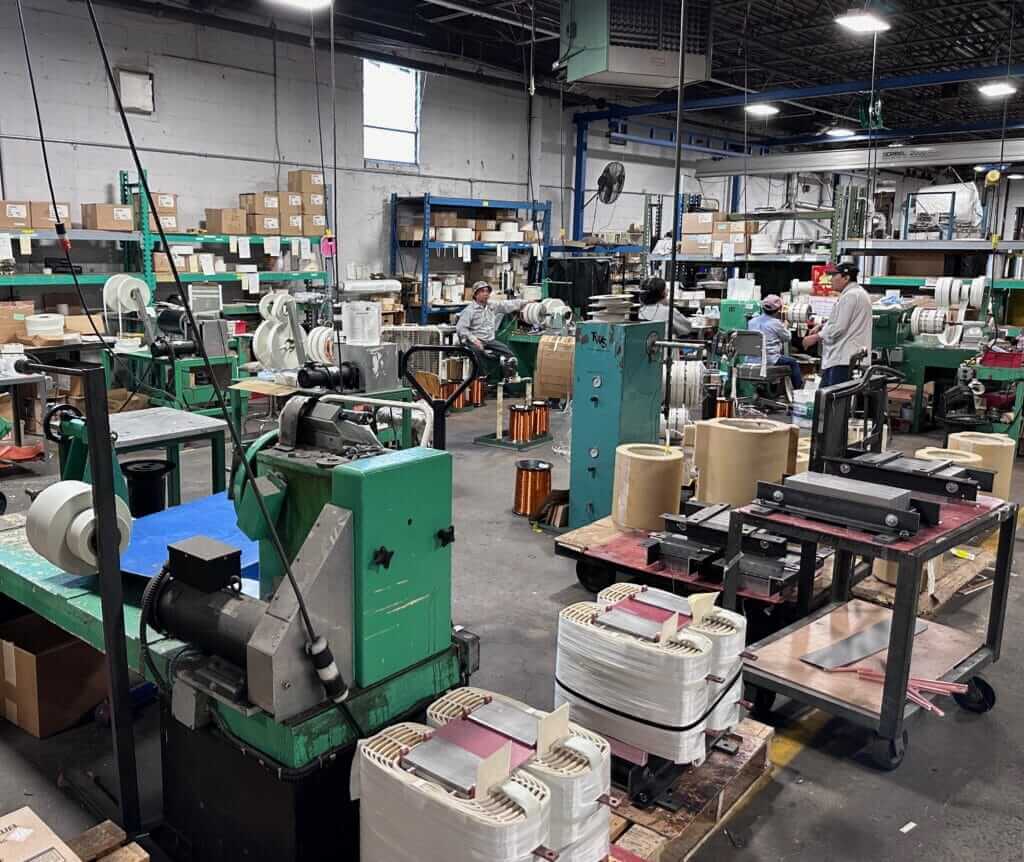
- Single-Source US Manufacturing: All engineering, winding, VPI impregnation, core stacking, assembly, and testing are performed in our state-of-the-art facility in Edison, New Jersey.
- Direct Engineering Collaboration: Speak directly with senior transformer design engineers—not third-party sales reps—to customize voltage taps, dimensions, bus bar geometry, and enclosure NEMA ratings.
- Rapid Prototype to Volume Execution: Accelerate your equipment delivery with rapid prototyping turnaround and low-cost volume production capabilities tailored for furnace OEMs.
- UL Recognized Insulation Systems: Pre-certified UL Class 180°C and Class 220°C insulation systems streamline your end-product agency approval processes.
- KanBan & JIT Supply Chain Integration: Flexible inventory stocking programs protect your assembly lines against supply chain disruptions.