
Overcoming Electrical & Environmental Degradation in Chemical Manufacturing
Chemical manufacturing facilities present some of the most punishing operating conditions for electrical power equipment. Standard off-the-shelf industrial transformers deployed in chemical processing plants frequently suffer from premature dielectric insulation breakdown, severe core corrosion, turn-to-turn short circuits, and localized overheating. Toxic ambient mists—containing sulfuric acid (H₂SO₄), hydrochloric acid (HCl), hydrogen sulfide (H₂S), wet chlorine gas, and caustic soda—penetrate standard varnishes and degrade copper windings, iron cores, and enclosure structural integrity.
At AFP Transformers Corp., based in Edison, New Jersey, our engineering team brings over three decades of field-proven magnetics expertise to solve these exact challenges. By unifying the historical engineering blueprints and intellectual property of Field Transformer, IsoReg, and International Transformers Incorporated (ITI), we build custom Chemical Processing Transformers rated up to several MVA, specifically tailored to withstand extreme environmental stress, non-linear harmonic loads from variable frequency drives (VFDs), and Class I Division 2 / Zone 2 hazardous gas atmospheres.
The Vulnerability of Standard Transformers in Chemical Plants
In chemical processing operations, electrical transformers power critical assets including electrolysis cells, high-pressure gas compressors, slurry agitators, distillation column heaters, and toxic waste treatment pumps. Standard liquid-filled oil transformers introduce significant fire hazards, environmental spill risks, and costly containment moat mandates. Conversely, standard dip-and-bake dry-type units expose core laminations and winding turns to hygroscopic chemical atmospheric absorption.
When chemical vapors condense onto magnetics during thermal cycling shutdowns, microscopic chemical salts form conductive pathways across insulation barriers. This phenomenon induces partial discharge (PD), tracking, and ultimate catastrophic phase-to-ground flashover. AFP's severe-duty chemical magnetics eliminate these failure modes through advanced vacuum pressure impregnation (VPI), solid vacuum-cast epoxy resins, and heavy-gauge stainless steel NEMA 4X enclosures.
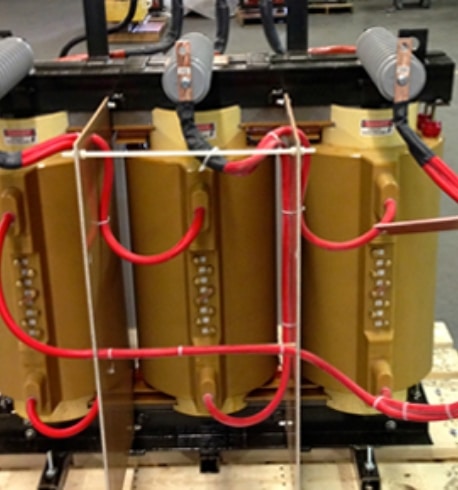
- Insulation Classes: Class H (180°C) & Class R (220°C) UL-Recognized Systems with Nomex® barrier insulation.
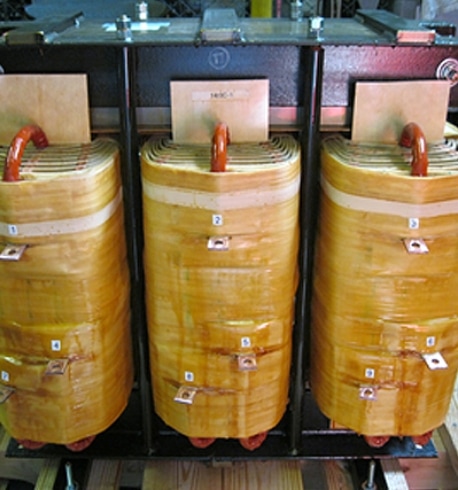
- Coil Encapsulation: Vacuum Pressure Impregnated (VPI) polyester/epoxy resin or 100% Solid Void-Free Epoxycast resin blocks.
- Enclosure Ratings: NEMA 3R, NEMA 4, NEMA 4X (316L Marine/Chemical Grade Stainless Steel) with marine-duty epoxy powder coat.
- Harmonic Withstand: K-Factor ratings (K-4, K-13, K-20, K-30) engineered per IEEE C57.110 for non-linear VFD pump loads.
- Standard Compliance: Built to IEEE C57.12.01, ANSI C57.12.91, UL 1561, UL 506, NEMA ST-20, and CSA C22.2 standards.
Tailored Chemical Processing Transformer Solutions & Recommendations
Selecting the correct chemical processing transformer architecture requires balancing environmental chemical aggressiveness, ambient working temperature, duty cycle, load harmonics, and total cost of ownership (TCO). AFP Transformers manufactures four core categories of chemical-grade power units:
1. Epoxycast Coil Transformers
Engineered for extreme indoor/outdoor chemical plants with heavy moisture, solvent vapors, and corrosive acid mists. Windings are completely embedded in a solid epoxy resin block under high vacuum, rendering the coils impervious to chemical attack, dust, and moisture ingress. Features exceptional mechanical short-circuit strength and zero partial discharge.
2. Castblock® Transformers
AFP's proprietary Castblock® technology combines the thermal performance of dry-type designs with the absolute isolation of cast resin. Ideal for severe industrial environments where footprint is constrained. Castblock® units offer high impulse voltage strength, non-flammable operation, and zero toxic off-gassing during extreme thermal overloads.
3. VPI Dry-Type Severe-Duty Transformers
Utilizing multiple vacuum-pressure cycles with high-temperature varnish, our VPI chemical transformers provide deep resin penetration across high and low voltage windings. When housed in NEMA 4X 316L stainless steel enclosures with custom air-to-air heat exchangers, VPI units deliver reliable service for continuous chemical refining.
4. Drive Isolation & Harmonic Mitigation Units
Chemical processes heavily rely on Variable Frequency Drives (VFDs) to meter chemical pumps, centrifuges, and blowers. AFP's harmonic mitigation transformers utilize phase-shifting, electrostatically shielded windings, and low-loss magnetic steel cores to neutralize triplen and high-order harmonics, reducing THD and operating temperature.
Electrochemical & Heating Furnace Transformers
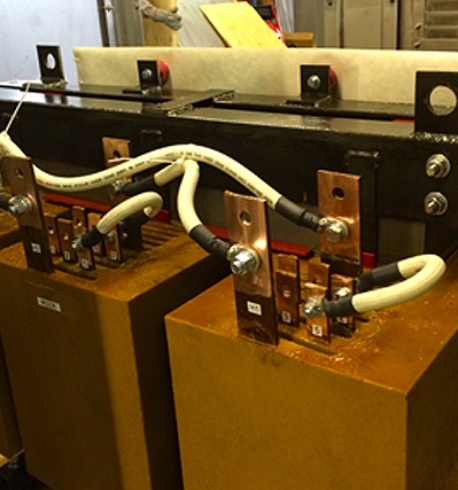
For specialized chemical manufacturing processes—such as chlor-alkali electrolysis, electroplating, arc furnaces, and high-temperature thermal cracking—power transformers must deliver high primary voltages while providing extreme secondary continuous current output (up to thousands of amperes) at low voltages.
AFP designs low-voltage, high-current chemical transformers equipped with water-cooled busbars, heavy copper bar secondary windings, and multi-tap step switches. These units deliver tight voltage regulation and immunity to rapid, thermal-shock load cycling inherent in batch chemical reactors.
Technical Specification & Selection Matrix for Chemical Plants
The table below provides direct engineering insights into how AFP's Chemical Processing Transformer architectures compare against standard industrial transformer options under realistic plant operating environments:
| Transformer Type | Corrosion Resistance | Harmonic Withstand (K-Factor) | Thermal Rating & Life | Fire & Explosion Safety | Ideal Chemical Application |
|---|---|---|---|---|---|
| AFP Epoxycast Coil | Maximum (Solid Epoxy Shield) | Up to K-30 Rated | 220°C Class R System | Self-Extinguishing, Zero Oil | Chlor-Alkali, Acid Mists, Fertilizer Granulation |
| AFP Castblock® Series | Very High (Resin Block Encasement) | Up to K-20 Rated | 180°C Class H System | Non-Flammable Dry Type | Petrochemical Refineries, Polymer Plants |
| AFP VPI Dry-Type (NEMA 4X) | High (VPI Varnish + 316L Stainless) | Up to K-20 Rated | 180°C / 220°C System | High Flame Retardancy | Chemical Tank Farms, Off-shore Platform Processing |
| Standard Liquid-Filled Oil Unit | Low to Moderate (Steel Paint Failure) | Poor (Standard K-1) | 105°C Class A (Oil Aging) | High Fire & Environmental Spill Risk | Substation Bulk Utility Grid Only |
| Standard Dip-and-Bake Dry-Type | Very Low (Moisture & Acid Absorption) | Limited (Standard K-1) | 150°C Class F System | Moderate Dry Flame Resistance | Clean Climate-Controlled Commercial Buildings |
Need a Custom Chemical Transformer Specification Review?
Our Edison, NJ application engineers analyze your gas concentration, ambient temperature, and harmonic spectrum to custom design magnetics guaranteed to perform.
Future Procurement Trends in Chemical Processing Power Infrastructure
Global procurement directors and engineering vice presidents in the chemical sector are facing unprecedented operational and regulatory shifts. Procurement strategy for Chemical Processing Transformers is no longer driven solely by initial purchase price. Today, forward-thinking enterprises evaluate total cost of ownership (TCO), ESG environmental compliance, decarbonization integration, and digital supply chain resiliency.
1. Decarbonization, Electrification, and Green Hydrogen Integration
As chemical giants shift from fossil-fuel-fired thermal reactors to zero-carbon electric process heating and megawatt-scale green hydrogen electrolyzer plants, the power transformer interface becomes central to facility reliability. Electrolyzers utilize large multi-pulse rectifier systems (12-pulse, 18-pulse, and 24-pulse) to convert AC utility power to dense DC current.
AFP is pioneering specialized rectifier transformers and drive isolation magnetics optimized for high pulse counts, mitigating low-frequency DC bias and thermal harmonic stress. Procurement teams must partner with manufacturers capable of designing step-down transformers that seamlessly handle continuous full-load electrolyzer duties without harmonic breakdown.
2. Smart Sensor IoT Integration & AI Predictive Maintenance
Unscheduled plant downtime in continuous chemical refining can cost hundreds of thousands of dollars per hour. Procurement trends increasingly specify chemical processing transformers equipped with embedded digital sensing arrays.
AFP integrates smart fiber-optic temperature sensors directly into internal coil hot spots, along with ambient gas monitors, vibration accelerometers, and partial discharge sensors. These sensors feed real-time analytics to plant SCADA and AI predictive maintenance software, warning maintenance crews of thermal anomalies weeks before operational failure occurs.
3. Transition to Non-Hygroscopic Non-Toxic Dry Materials
Strict OSHA and EPA environmental mandates are forcing chemical facilities away from hazardous oil-filled transformers located near process units. Liquid dielectric spills require massive concrete secondary containment pits and costly fire suppression systems.
The clear global procurement trend favors high-capacity Epoxycast and VPI Dry-Type transformers. These non-flammable units eliminate liquid containment infrastructure, dramatically lowering civil engineering civil costs during brownfield chemical plant retrofits and greenfield expansion projects.
Industry & Technical Development Trends (2025–2035)
The underlying physics of chemical magnetics design is rapidly evolving. Key technical breakthroughs driving the next generation of chemical processing transformers include:
- Advanced Polymer Formulations: Development of cycloaliphatic and siloxane-modified epoxy resins that offer superior hydrophobicity and tracking resistance under aggressive chlorine and sulfur dioxide atmospheric mists.
- Hybrid Class R (220°C) Insulation: Utilizing DuPont Nomex® insulation combined with low-loss amorphous metal or high-permeability grain-oriented silicon steel cores to reduce no-load electrical losses by up to 70%.
- Integrated Active Harmonic Filtering: Combining magnetic core design with active harmonic filters to achieve total harmonic distortion (THD) levels below 3% at the primary chemical substation bus, satisfying IEEE 519 standards.
- Sealed NEMA 4X / IP66 Forced-Air Exchanger Systems: Designing fully enclosed dry-type transformers using internal air circulation loops cooled by external stainless-steel heat exchangers, keeping hostile chemical ambient air entirely out of the transformer cabinet.
AFP Transformers Corp. Enterprise Manufacturing Strengths
Choosing the right transformer manufacturer is a critical risk mitigation decision for chemical engineering managers and procurement agents. AFP Transformers Corp. combines decades of specialized engineering heritage with modern, domestic U.S. manufacturing capabilities.
30+ Years of Magnetics Heritage & Acquisition Expertise
AFP was established through the acquisition of legendary transformer innovators: Field Transformer, IsoReg, and International Transformers Incorporated (ITI). This rich technical heritage grants us unmatched engineering databases, proprietary winding techniques, and direct cross-reference capabilities for legacy industrial installations worldwide.
Whether you need a direct fit-form-function replacement for an obsolete ITI chemical transformer or a complete custom ground-up design, our engineering team in Edison, New Jersey has the historical expertise to build it fast and right.
U.S. Manufacturing Agility
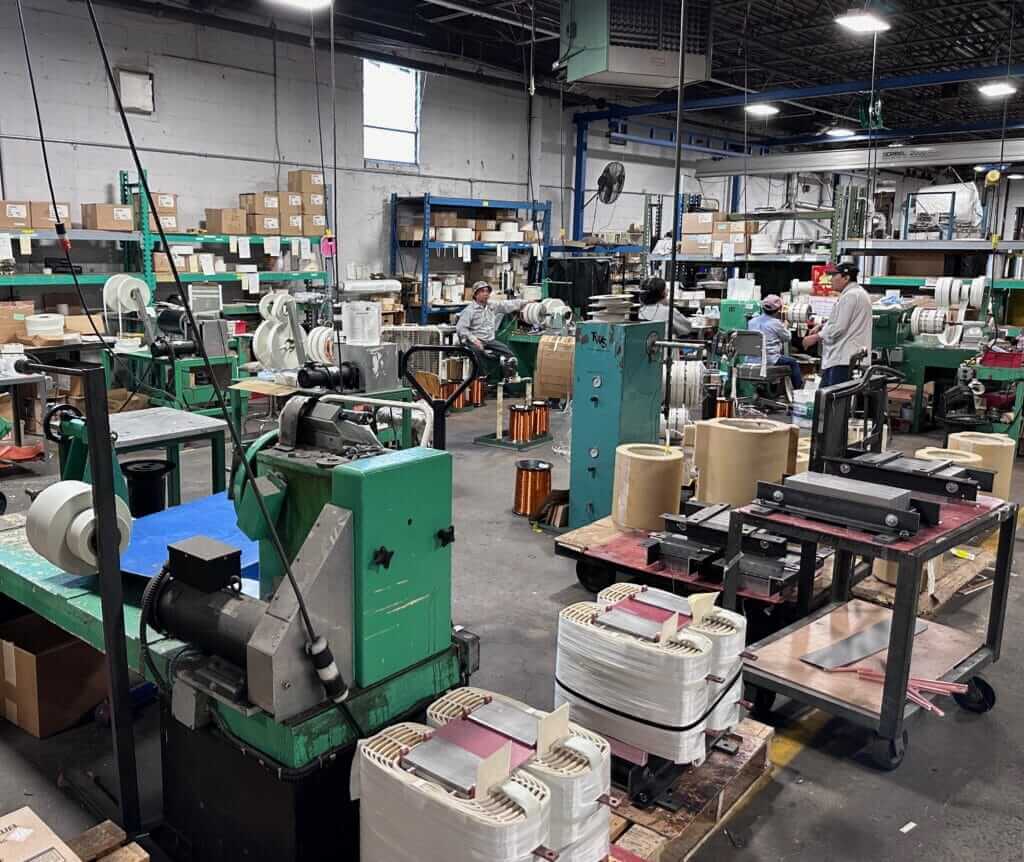
All core cutting, coil winding, VPI processing, epoxy casting, assembly, and testing are performed at our Edison, New Jersey facility. This eliminates long overseas shipping delays and provides rapid engineering turnaround for critical plant emergencies.
UL Recognized & Listed Compliance
AFP maintains extensive UL Recognized and UL Listed insulation systems. Every chemical transformer undergoes rigorous testing—including winding resistance, turns ratio, polarity, dielectric withstand, impulse voltage, and partial discharge testing prior to shipment.
Single-Source Procurement Efficiency
Simplify your vendor list. AFP manufactures a comprehensive range of magnetics—from small control power transformers and reactors to multi-MVA substation power units, harmonic mitigators, and furnace transformers under one roof.
Custom KanBan Stocking Programs
For global chemical manufacturers with multi-site operations, AFP offers tailored KanBan reserve programs. We maintain emergency reserve units in stock for JIT delivery, eliminating long factory lead times when unexpected plant outages strike.
Discuss Your Chemical Processing Magnetics Project
Connect directly with our senior transformer engineering team to request custom drawings, thermal ratings, or instant lead time quotes.
Chemical Processing Transformers FAQ: Global Engineering Queries
Below are expert answers to the most common technical procurement questions asked by chemical plant engineers, electrical consultants, and global sourcing managers regarding chemical processing transformers.