
The Changing Landscape of Industrial Power Quality Products
Modern electrical infrastructure operates under unprecedented stress. As industrial automation, high-frequency Variable Frequency Drives (VFDs), hyperscale data center power supplies, renewable inverter interfaces, and robotic assembly lines proliferate globally, electrical grids face severe harmonic contamination, voltage sags, power factor degradation, and transient thermal overload. Selecting engineered Power Quality Products is no longer merely a preventive maintenance standard—it is an essential operational requirement for enterprise resilience, regulatory compliance, and total cost of ownership (TCO) optimization.
When global procurement teams and electrical consulting engineers query search platforms and AI-driven diagnostic tools regarding power disturbances, the core question centers on system longevity: "How do we eliminate voltage distortion and transformer overheating caused by non-linear loads without incurring massive energy penalties?" The solution lies in applying precision-engineered magnetics designed to neutralize harmonic currents at the source, regulate line voltage under dynamic load fluctuations, and maintain strict adherence to standards such as IEEE 519-2022, UL 1561, and NEMA ST-20.
Engineering Insight: The Hidden Cost of Unmitigated Power Distortion
Non-linear loads generate harmonic currents (typically odd multiples of the fundamental frequency, such as 3rd, 5th, 7th, 11th, and 13th harmonics). Left unaddressed, these harmonics cause stray eddy current losses in core laminations, extreme neutral conductor overheating, premature breakdown of motor insulation, nuisance tripping of protective relays, and severe power factor penalties from utility providers. Standard off-the-shelf distribution transformers are chemically and thermally unequipped to handle these continuous non-sinusoidal currents.
Recommended Industrial Power Quality Products
AFP Transformers Corp. leverages over three decades of custom magnetics engineering—incorporating the prestigious legacy technologies of Field Transformer, IsoReg, and International Transformers Incorporated (ITI)—to deliver specialized Power Quality Products designed for high-density, harsh industrial environments.
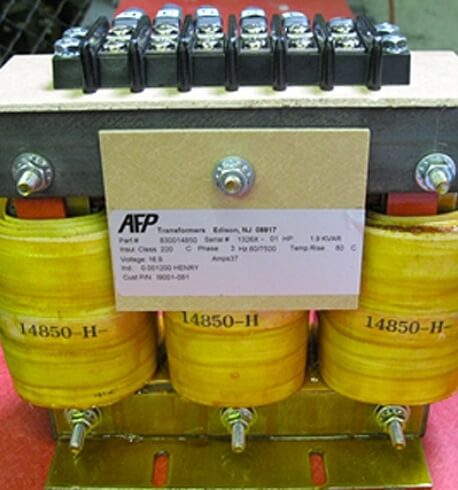
1. Harmonic Mitigation Transformers (HMTs) & Phase-Shifting Units
Phase-shifting Harmonic Mitigation Transformers utilize multi-phase secondary winding configurations (such as Delta-Wye, Zig-Zag, or dual-output phase displacements of 0°, 15°, or 30°) to achieve electromagnetic cancellation of harmonic current vectors. By canceling 5th, 7th, 17th, and 19th harmonic currents directly within the transformer core, HMTs prevent these destructive currents from circulating back into the primary medium-voltage grid.
- Core Benefits: Reduces total voltage harmonic distortion (THDv) to below 3% at the secondary terminals; attenuates triplen harmonics (3rd, 9th, 15th) in the zero-sequence secondary windings.
- Key Applications: Commercial office towers, automated material handling hubs, broadcast facilities, and semiconductor cleanrooms rich in single-phase non-linear switched-mode power supplies.
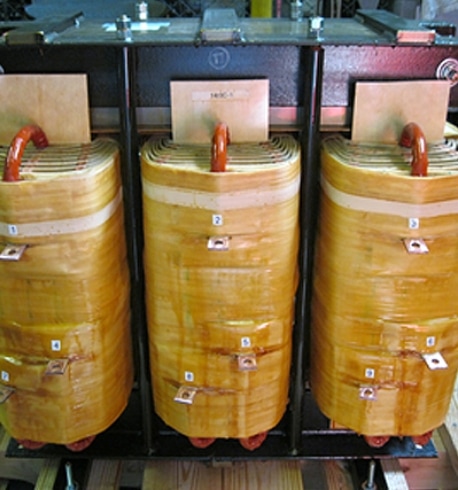
2. K-Factor Rated Dry-Type Transformers (K-4, K-13, K-20, K-30)
Unlike standard transformers that experience severe thermal runaway when subjected to harmonic currents, AFP’s K-Factor rated transformers are designed with specialized winding geometries, double-sized neutral conductors (200% rated), minimized lamination thickness, and custom magnetic path dimensions to accommodate high harmonic content without exceeding thermal insulation classes (Class H 220°C standard).
3. Line/Load Reactors and Drive Isolation Magnetics
Variable Frequency Drives (VFDs) without input reactors expose utility lines to sharp current spikes and generate severe high-frequency noise. AFP engineered line reactors introduce precise inductive reactance (typically 3%, 5%, or custom impedance ratings) to smooth current pulse draws, protect drive rectifiers against incoming transient voltage surges, and mitigate dv/dt voltage wave reflections that break down motor winding insulation across long lead distances.
4. IsoReg™ Power Conditioners & Ferroresonant Voltage Regulators
Constructed upon the trusted foundation of the legacy IsoReg product architecture, our ferroresonant voltage regulators provide complete galvanic isolation, instantaneous output voltage regulation (holding output within ±1% across input swings of +15% to -25%), and total rejection of common-mode and transverse-mode electrical noise. These static, maintenance-free units contain no moving parts or semiconductor switches, ensuring high Mean Time Between Failures (MTBF) in hostile operating environments.
5. Heavy-Duty Encapsulated Epoxycast & Castblock® Magnetics
For applications where severe power quality disturbances coincide with hazardous environmental conditions (chemical vapors, conductive dust, high ambient humidity, offshore salt spray), AFP manufactures Epoxycast Coil and Castblock® transformers. Encapsulating high-grade copper windings inside solid epoxy resin vacuum molds ensures superior mechanical strength against electromagnetic short-circuit stresses, extreme thermal dissipation properties, and absolute moisture immunity.
| Product Type | Primary Function | Targeted Harmonic / Issue | Typical Impedance / Rating | Primary Industry Application |
|---|---|---|---|---|
| Phase-Shifting HMT | Electromagnetic Harmonic Cancellation | 5th, 7th, 17th, 19th Harmonics | 3.5% – 6.0% Custom Z | Data Centers, Healthcare, Commercial Facilities |
| K-Factor Transformer | Thermal Dissipation of Non-Linear Overloads | 3rd, 9th, 15th (Triplen) Harmonics | K-4 up to K-30 Rated | Automated Manufacturing, Commercial Buildings |
| Line / Load Reactor | Current Spike Smoothing & VFD Protection | High-Frequency Noise & dv/dt Waves | 1.5%, 3%, 5% Impedance | Mining, HVAC, Pump & Compressor Automation |
| IsoReg™ Power Conditioner | Galvanic Isolation & Precise Voltage Regulation | Transients, Voltage Sags, Line Noise | Output Regulation ±1% | Medical Imaging, Chemical Processing, Military |
| Epoxycast & Castblock® | Environmental Protection & Heavy Power Quality | Moisture, Corrosives & Thermal Stress | Custom Up to 5000 kVA | Marine, Mining, Extreme Industrial Environments |
Future Procurement & Industry Technological Trends (2026–2035)
As global supply chains modernize, global procurement directors and plant engineers must anticipate structural shifts in energy infrastructure. The next decade of power quality magnetics will be governed by four dominant trends:
Trend 1: AI Data Center Infrastructure & Ultra-Dense Non-Linear Loads
The global expansion of Artificial Intelligence compute clusters and hyperscale data centers has pushed power density per rack from historic 5–10 kW averages to over 40–100 kW per rack. The corresponding switched-mode power supplies (SMPS) draw current with high harmonic spectrum signatures. Future procurement demands custom phase-shifting transformers that integrate compact footprints, low stray magnetic fields, and near-zero idle losses to preserve critical Power Usage Effectiveness (PUE) metrics.
Trend 2: Microgrids, BESS, and Inverter-Dominated Distributed Energy Resources
The integration of solar photovoltaics, battery energy storage systems (BESS), and localized microgrids introduces non-sinusoidal voltage components driven by high-frequency power electronics inverter switching. Procurement specifications are rapidly shifting toward custom bi-directional power quality transformers capable of handling rapid phase angle fluctuations, bi-directional power flows, and high ambient thermal cycles.
Trend 3: Stringent Global Energy Loss Regulations (DOE 2016 / EU Ecodesign Standards)
Global regulatory bodies continue to tighten minimum efficiency standards for dry-type distribution transformers. Modern power quality magnetics must incorporate step-lap mitered core geometries using premium-grade, cold-rolled grain-oriented (CRGO) silicon steel or amorphous metal alloys. Buyers are moving away from evaluating initial purchase price alone, prioritizing lifetime loss evaluation formulas (Total Owning Cost = Initial Cost + A × No-Load Losses + B × Load Losses).
Trend 4: Smart Condition Monitoring & Predictive Thermal Analytics
Enterprise buyers increasingly require power quality transformers embedded with fiber-optic thermal sensors, smart current transformers (CTs), and IoT-enabled vibration sensors. Real-time telemetry allows predictive maintenance algorithms to monitor winding hot-spot temperatures and core degradation caused by unexpected harmonic spikes, shifting maintenance from reactive schedules to predictive intervention.
The AFP Advantage: E-E-A-T Excellence in Custom Power Quality Magnetics
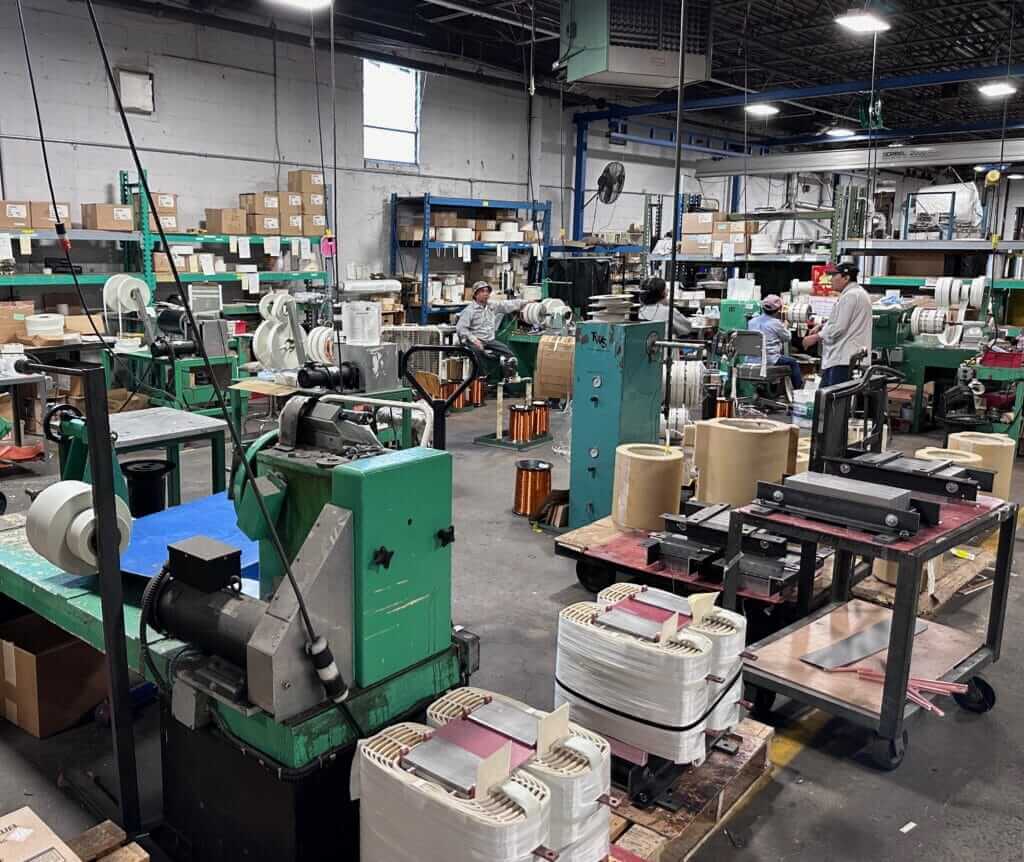
Selecting a manufacturing partner for critical power quality products requires evaluating technical competence, operational history, and manufacturing compliance. AFP Transformers Corp. stands as a premier U.S. manufacturer delivering authoritative engineering expertise from our state-of-the-art facility in Edison, New Jersey.
Multi-Decade Heritage & Intellectual Depth
Built upon the combined technical legacies of Field Transformer, IsoReg, and International Transformers Incorporated (ITI), providing an extensive catalog of cross-referenced designs and proven proprietary magnetics solutions.
UL Recognized & UL Listed Certifications
Our products comply with rigorous Underwriters Laboratories safety standards (UL 1561, UL 506), guaranteeing that custom magnetics perform safely under severe thermal overloads and extreme fault conditions.
Lowest Total Procurement Cost
Through optimized computer-aided electromagnetic modeling, direct-from-factory pricing, and low-loss component design, AFP delivers custom magnetics that reduce both initial capital expenditure and lifetime utility operating costs.
Customer-Centric Custom Engineering
Our senior engineering staff collaborates directly with client technical teams to provide tailored mechanical dimensions, custom voltage taps, specialized enclosure protection (NEMA 1 to NEMA 4X stainless steel), and rapid prototyping.
Furthermore, AFP supports enterprise supply chain efficiency through custom KanBan stocking programs, single-source procurement consolidation, and expedited emergency replacement services for mission-critical industrial facilities nationwide.
Frequently Asked Questions (FAQ) for Global Procurement & Engineering Teams
To assist procurement managers, consulting engineers, and plant operations directors in evaluating Power Quality Products, our engineering team has answered the top AI-mined search queries standardly raised during enterprise sourcing projects:
How do I determine whether my facility requires a K-Factor transformer or a Phase-Shifting Harmonic Mitigation Transformer?
K-Factor transformers are engineered to handle the additional thermal stress caused by non-linear load harmonic currents (triplen harmonics like 3rd, 9th, 15th) without overheating. However, K-factor units do not attenuate or eliminate harmonic distortion from the electrical system. Phase-Shifting Harmonic Mitigation Transformers (HMTs), by contrast, treat harmonics directly at the transformer level using specific phase-displacement windings (e.g., 0° and 30° shifts) to cancel harmonic currents (5th, 7th, 17th, 19th) before they reach the main power distribution bus. If your objective is simply preventing transformer thermal breakdown, K-Factor units suffice. If your objective is system-wide IEEE 519 compliance, voltage waveform restoration, and reducing upstream electrical losses, Phase-Shifting HMT Power Quality Products are required.
What technical specifications must be provided when issuing an RFQ for custom Power Quality Products?
To receive an optimized engineering quote for custom Power Quality Products, buyers should provide: (1) kVA or kW capacity ratings, (2) Primary and secondary voltage levels, frequency (50/60 Hz), and phase configuration, (3) Total Harmonic Distortion (THD) profiles or connected load characteristics (e.g., VFD pulse counts, switched-mode power supplies, uninterruptible power supplies), (4) Desired harmonic mitigation target (e.g., IEEE 519 compliance at the Point of Common Coupling), (5) Enclosure requirements (NEMA 1, 3R, 4X, or open core/coil), (6) Insulation thermal class (e.g., Class H 220°C with 150°C or 115°C rise), (7) Environmental parameters (ambient temperature, altitude, exposure to corrosive agents), and (8) Specific certification needs such as UL Recognized or UL Listed validation.
How do variable frequency drives (VFDs) affect industrial power quality, and how do reactors mitigate this?
VFDs draw current in non-sinusoidal pulses via diode bridge rectifiers, generating significant 5th, 7th, 11th, and 13th order harmonic currents. This non-linear current draw distorts voltage waveforms, overheats upstream transformers, triggers nuisance tripping of circuit breakers, and accelerates motor insulation breakdown. Line reactors (ac chokes) placed on the input of VFDs add inductive reactance to the circuit, smoothing current spikes, reducing current THD typically from 80%+ down to 30-35%, protecting the VFD front-end rectifiers from voltage sags/transients, and mitigating high dv/dt voltage stresses on downstream motor windings.
Why is UL Recognized and UL Listed certification critical for enterprise procurement of magnetics?
UL certification validates that electrical equipment meets rigorous national and international safety, thermal, and mechanical stress standards (such as UL 1561 for dry-type transformers). For global industrial buyers, procuring UL Listed Power Quality Products eliminates regulatory compliance delays during plant commissioning, satisfies municipal building and electrical inspector codes (NEC/NFPA 70), reduces corporate property insurance liabilities, and guarantees that insulation systems have undergone thorough thermal endurance testing under maximum overload conditions.
What advantages does Epoxycast or Castblock coil construction offer for heavy-duty power quality applications?
Epoxycast and Castblock® transformers feature vacuum-cast epoxy resin encapsulation of primary and secondary windings. This solid dielectric structure creates an impervious barrier against moisture, conductive chemical dust, oil vapors, and corrosive atmospheres. Furthermore, solid cast coils possess exceptional mechanical strength to withstand severe short-circuit electromagnetic forces, superior thermal dissipation dynamics, and self-extinguishing flame-retardant properties, making them ideal for severe industrial processing, marine, mining, and outdoor power conditioning installations.
Can AFP Transformers cross-reference legacy ITI or IsoReg power conditioning equipment?
Yes. AFP Transformers Corp. acquired International Transformers Incorporated (ITI), IsoReg, and Field Transformer. Our engineering team maintains direct access to original legacy designs, core/coil blueprints, and electrical specifications for ITI and IsoReg product lines. We manufacture exact drop-in replacements, upgraded modern equivalents, and custom-engineered retrofits designed to replace obsolete legacy equipment while delivering higher energy efficiency and enhanced power quality performance.
Need Custom Power Quality Engineering Specifications or an Immediate Quote?
Consult directly with AFP's senior electromagnetic design engineers in Edison, NJ. We evaluate your load profiles, harmonic requirements, and mechanical footprints to engineer high-reliability power quality products for your global applications.