
1. Executive Architectural Overview of Dry Type Transformers
In modern industrial power distribution, clean power conversion, and heavy manufacturing infrastructure, Dry Type Transformers represent the cornerstone of operational safety, environmental compliance, and electrical reliability. Unlike traditional oil-filled transformers that utilize flammable mineral oil or synthetic fluids for cooling and dielectric strength, dry-type magnetics rely strictly on solid state dielectric insulation systems paired with natural air convection (Self-Cooled / AA) or forced-air circulation (FA).
This structural distinction eliminates the risk of catastrophic oil fires, dielectric fluid leaks, toxic PCB contamination, and the requirement for expensive secondary containment dikes or fire-suppression vaults mandated by National Electrical Code (NEC) guidelines. Consequently, dry type transformers are the mandated choice for indoor sub-stations, commercial high-rises, healthcare complexes, underground mining facilities, marine vessels, and sensitive chemical processing plants.
Information Gain: Core Engineering Insights
Why Ampere-Turn Balance & Magnetic Flux Density Matter: High-reliability dry type transformers designed by AFP Transformers Corp. utilize step-lap mitered core joints crafted from high-permeability, cold-rolled grain-oriented (CRGO) silicon steel. This advanced core topology minimizes no-load losses (core excitation losses) and drastically reduces acoustic magnetostriction noise (dB levels) under harmonic loading.
When evaluating dry type transformers for mission-critical industrial applications, global procurement executives and consulting engineers must analyze three core physical dimensions: dielectric insulation class (Class F 155°C, Class H 180°C, Class R 220°C), mechanical winding structural integrity, and short-circuit electromagnetic stress resistance.
2. Vacuum Pressure Impregnation (VPI) vs. Epoxy Cast Resin Encapsulation
The global market for industrial dry type transformers is fundamentally divided into two major winding construction methodologies: Vacuum Pressure Impregnation (VPI) and Epoxy Cast Resin (Castblock® / Epoxycast). Selecting the correct technology depends heavily on ambient moisture, atmospheric chemical corrosivity, and thermal cycle frequency.
Vacuum Pressure Impregnation (VPI) Technology
VPI dry type transformers are manufactured by pre-heating precision-wound copper or aluminum coils, placing them inside a sealed vacuum pressure vessel, evacuating all trapped air and moisture from the inter-turn insulation voids, and backfilling under high pressure with specialized polyester or solventless epoxy varnish. The assembly is then thermal-cured in computer-controlled ovens.
- Superior Thermal Dissipation: VPI coatings form thin, thermally conductive films over Nomex® or inorganic insulation barriers, allowing rapid heat transfer across cooling ducts.
- High Design Flexibility: Easily customized for multi-tap heating furnaces, specialized step-up/step-down ratios, and tight dimensional footprints.
- Cost-Effective Procurement: Delivers an outstanding power-to-weight ratio and lower total unit acquisition cost for controlled indoor industrial environments.
Cast Resin & Epoxycast Coil Technology
In contrast, Epoxycast Coil Transformers feature primary and secondary windings completely cast under vacuum inside solid molds using reinforced epoxy resin filled with silica or alumina additives. Once cured, the windings become an impenetrable, solid monolithic block.
- Extreme Environmental Immunity: 100% impervious to humidity, saltwater spray, heavy airborne dust, conductive carbon particles, and aggressive chemical vapors.
- High Short-Circuit Strength: The rigid solid resin structure withstands immense mechanical electrodynamic forces during external grid short circuits without coil displacement.
- Self-Extinguishing Fire Performance: Epoxy resin formulations satisfy stringent F1 (Fire Risk) and C2 (Climatic) international ratings, exhibiting zero toxic gas emissions or flame propagation.
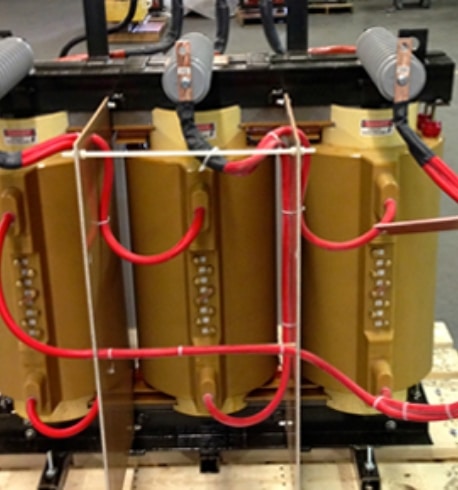
Figure 1: AFP Epoxycast Solid Resin Winding Construction for Severe Industrial Environments.
3. Product Recommendations & Technical Engineering Profiles
To satisfy the diverse operating conditions of industrial infrastructure, AFP Transformers Corp. engineers custom magnetic solutions tailored for specific load profiles, distortion spectra, and duty cycles. Below are our primary industrial dry type transformer lines:
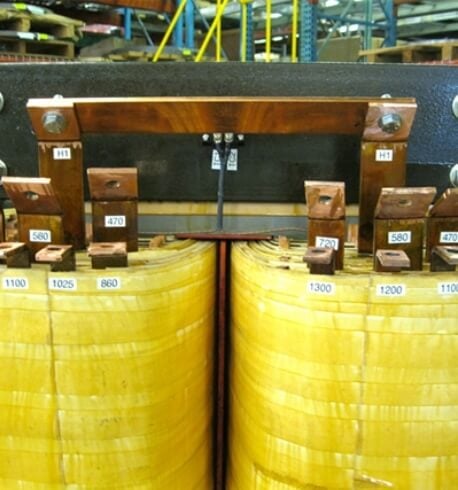
Industrial Power Transformers
Designed for main plant distribution, substation step-down, and isolation duty. Features Class H 180°C insulation, low temperature rise options (80°C or 115°C), and full compliance with DOE 2016 efficiency standards.
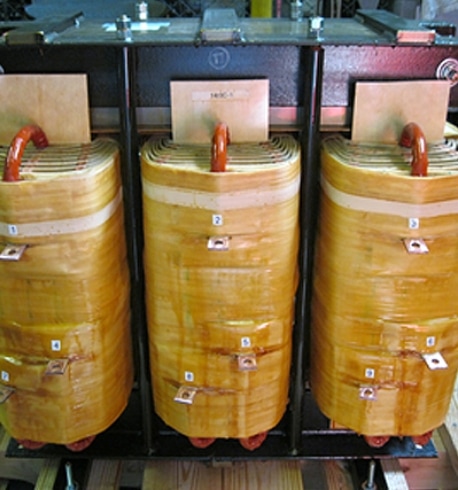
Harmonic Mitigation Solutions
Engineered to mitigate non-linear load harmonics generated by VFDs, rectifiers, and UPS systems. Available in K-4, K-13, and K-20 ratings with phase-shifting winding options to cancel 5th, 7th, 11th, and 13th harmonics.
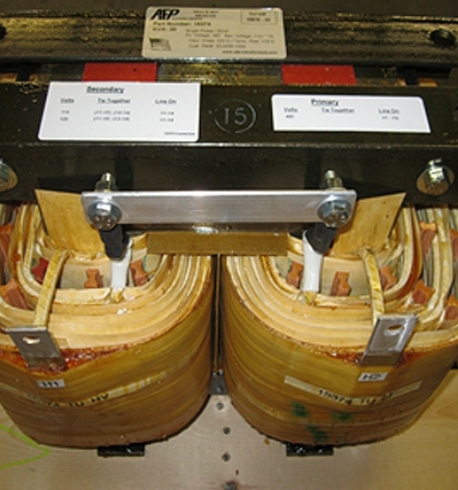
Heating & Furnace Transformers
High-current, low-voltage specialty dry type transformers engineered for electric arc furnaces, induction heating, heat treating, and silicon crystal growing. Features custom secondary bus bar arrangements and wide voltage tapping.
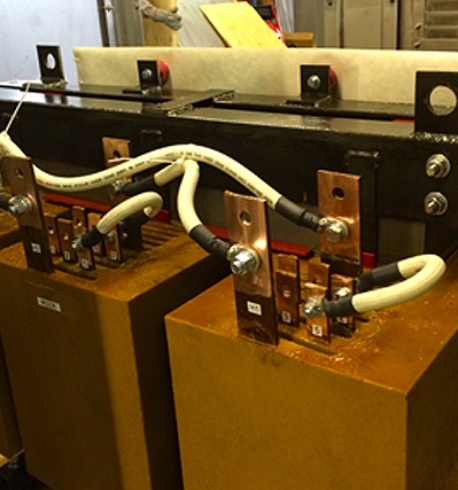
Castblock® & Epoxycast Coils
Solid-cast epoxy resin magnetics designed for zero-maintenance operation in heavy mining, chemical plants, offshore oil platforms, and outdoor NEMA 3R/4X enclosures. Completely moisture-proof and flame-retardant.
4. Global Procurement Trends & Future Technology Roadmap (2025–2035)
As global industrial supply chains pivot toward decarbonization, electrification, and AI-driven automation, the procurement criteria for dry type transformers are rapidly evolving beyond initial purchase price. Leading EPC contractors, facility directors, and procurement executives are evaluating suppliers based on four mega-trends:
1. Ultra-Low Loss Core Materials & Energy Efficiency Regulations
Regulators worldwide are tightening standby and load-loss standards. In North America, the Department of Energy (DOE 2016 - 10 CFR Part 431) has established aggressive baseline efficiency targets. Procurement teams are increasingly specifying low-loss amorphous metal alloy cores and domain-refined CRGO steel. Amorphous core dry type transformers exhibit up to 70% lower no-load core losses compared to traditional silicon steel, drastically reducing 24/7 internal facility heat generation and HVAC cooling loads in data centers and cleanrooms.
2. Microgrids, Renewable Integration & BESS Interconnection
The global proliferation of solar PV installations, commercial Battery Energy Storage Systems (BESS), and EV fast-charging hubs demands dry type transformers capable of bi-directional power flow and severe pulse duty cycles. Transformers tied to inverter-based resources (IBRs) experience rapid DC-bias offsets, high-frequency pulse-width modulation (PWM) voltage stress, and severe dV/dt transient spikes. Modern procurement mandates electrostatic copper shielding between primary and secondary windings to clamp transient voltage surges.
3. Condition Monitoring & Smart IoT Sensor Integration
Unscheduled downtime in heavy manufacturing carries exorbitant financial penalties. Future-proof dry type transformer specifications now mandate embedded fiber-optic RTD thermal sensors embedded directly within the hottest internal winding turns (hot-spot temperature tracking), digital partial discharge (PD) continuous monitors, and wireless vibration monitoring nodes connected via Modbus or BACnet to plant SCADA systems.
4. Supply Chain De-Risking & Domestic OEM Manufacturing
Global supply chain disruptions have highlighted the severe risk of relying on long-lead overseas transformer suppliers. North American buyers are aggressively reshoring magnetics procurement toward established U.S. OEM manufacturers such as AFP Transformers Corp. (Edison, NJ). Domestic sourcing ensures rapid engineering approval turnarounds, adherence to strict IEEE/ANSI/UL quality standards, short lead times, and available KanBan stocking programs for just-in-time (JIT) assembly lines.
5. Industrial Buyer's Technical Evaluation & Selection Matrix
Use the following engineering reference matrix to evaluate key technical parameters across common industrial dry type transformer configurations:
| Specification Parameter | Standard VPI Transformer | Cast Resin (Epoxycast) | Harmonic Mitigation (K-Factor) |
|---|---|---|---|
| Insulation Thermal Class | Class H (180°C) or Class R (220°C) | Class F (155°C) or Class H (180°C) | Class H (180°C) / Nomex System |
| Standard Temp Rise | 150°C (115°C / 80°C optional) | 100°C / 80°C rise | 115°C or 80°C low rise |
| Enclosure Protection | NEMA 1 (Indoor), NEMA 3R (Ventilated) | NEMA 1, 3R, 4X, IP56 Sealed | NEMA 1, NEMA 3R Heavy Duty |
| Moisture / Chemical Resistance | Moderate (Varnish sealed) | Extreme (Solid epoxy block) | Moderate to High (VPI/Epoxy option) |
| Short Circuit Impulse Rating | High (IEEE C57.12.01 Standard) | Ultra-High (Rigid encapsulated) | High (Reinforced bracing) |
| Harmonic Load Capability | Standard linear loads (K-1) | Linear & moderate non-linear | Non-linear (K-4, K-13, K-20+) |
| Typical Industrial Applications | Commercial plants, HVAC, machine OEM | Mining, Marine, Offshore, Chemical | Data Centers, VFD drives, UPS power |
Procurement Cost Optimization Tip
The Overload Reserve Secret: Specifying an 80°C or 115°C temperature rise on a Class H (180°C) insulation system provides an inherent continuous overload capacity of 15% to 30% without damaging coil insulation or shortening equipment life. This strategy avoids purchasing an oversized kVA transformer while providing built-in capacity for future plant expansion.
Need a Custom Dry Type Transformer Design?
Our Edison, New Jersey engineering team customizes voltage ratios, physical enclosures, impedance targets, and tap configurations to your exact site requirements.
Contact Us6. Frequently Asked Questions (Industrial Buyer AI Intent)
Addressing complex technical questions frequently searched by industrial electrical engineers, EPC procurement officers, and AI search engines:
VPI (Vacuum Pressure Impregnation) dry type transformers use liquid polyester or epoxy varnish drawn deep into pre-wound Nomex or fiberglass insulation under vacuum and pressure cycles, followed by thermal oven curing. They provide outstanding thermal cooling, high customization versatility, and cost efficiency for indoor facilities. Cast Resin (Epoxycast) transformers fully submerge the coils in solid epoxy resin under vacuum inside a rigid mold, creating a completely encapsulated, solid monolithic block. Cast resin is 100% moisture-proof, chemical-proof, and flame-retardant, making it essential for harsh marine, mining, chemical, or severe outdoor duty.
Dry type transformers completely eliminate flammable transformer oil. This eliminates the risk of pool fires, explosive ruptures, and toxic fluid spills. Indoors, oil-filled transformers require expensive fire-rated concrete vaults, explosion mitigation doors, and containment dikes under NFPA 70 / National Electrical Code rules. Dry type units can be installed directly adjacent to indoor electrical switchgear and load centers, significantly cutting cable installation runs and structural building costs.
Non-linear loads such as variable frequency motor drives (VFDs), computer server power supplies, UPS units, and induction welders inject high-frequency harmonic currents back into the power system. These harmonics cause severe skin-effect eddy current losses in windings and stray stray-flux heating in core structural steel. K-Factor rated transformers (e.g., K-4, K-13, K-20) feature neutral conductors sized at 200% of phase current rating, specialized winding interleaving, electrostatic copper shielding, and low-loss core laminations designed specifically to run cool under heavy harmonic distortion.
Modern industrial dry type transformers are designed around Class F (155°C ultimate thermal limit with 115°C rise), Class H (180°C limit with 150°C rise), or Class R (220°C limit with 150°C rise). Selecting a higher insulation class (such as Class R 220°C Nomex) combined with a lower specified temperature rise (such as 80°C or 115°C rise over a 40°C ambient) provides an immense safety thermal reserve, dramatically extending transformer operating lifespan during peak ambient temperatures or unexpected overload conditions.
In the United States, single-phase and three-phase low-voltage and medium-voltage dry type distribution transformers must comply with the Department of Energy (DOE 2016) efficiency standards mandated under 10 CFR Part 431. Compliance requires rigorous testing of both no-load core losses and load (copper) losses at specified reference load points (35% load for low voltage, 50% for medium voltage). AFP Transformers utilizes grain-oriented silicon steel cores with step-lap mitered joints to easily surpass federal DOE baseline efficiency targets.
Yes. AFP Transformers Corp. acquired the original engineering intellectual property, tooling, part database, and design archives of Field Transformer, IsoReg, and International Transformers Incorporated (ITI). Our engineering team can cross-reference historic part numbers, match mechanical footprint dimensions, duplicate exact voltage tapping ratios and impedance ratings, and build brand-new, drop-in replacement transformers certified to current UL Recognized/Listed standards.
7. AFP Transformers Corp. — Engineering Authority & Manufacturing Excellence
Based in Edison, New Jersey, AFP Transformers Corp. has established an international reputation as a premier U.S. custom manufacturer of dry type transformers, epoxycast magnetics, power quality equipment, and specialty reactors. Built upon the combined heritage of Field Transformer, IsoReg, and International Transformers Incorporated (ITI), our facility integrates over three decades of magnetic design archives with modern computer-aided electromagnetic modeling.
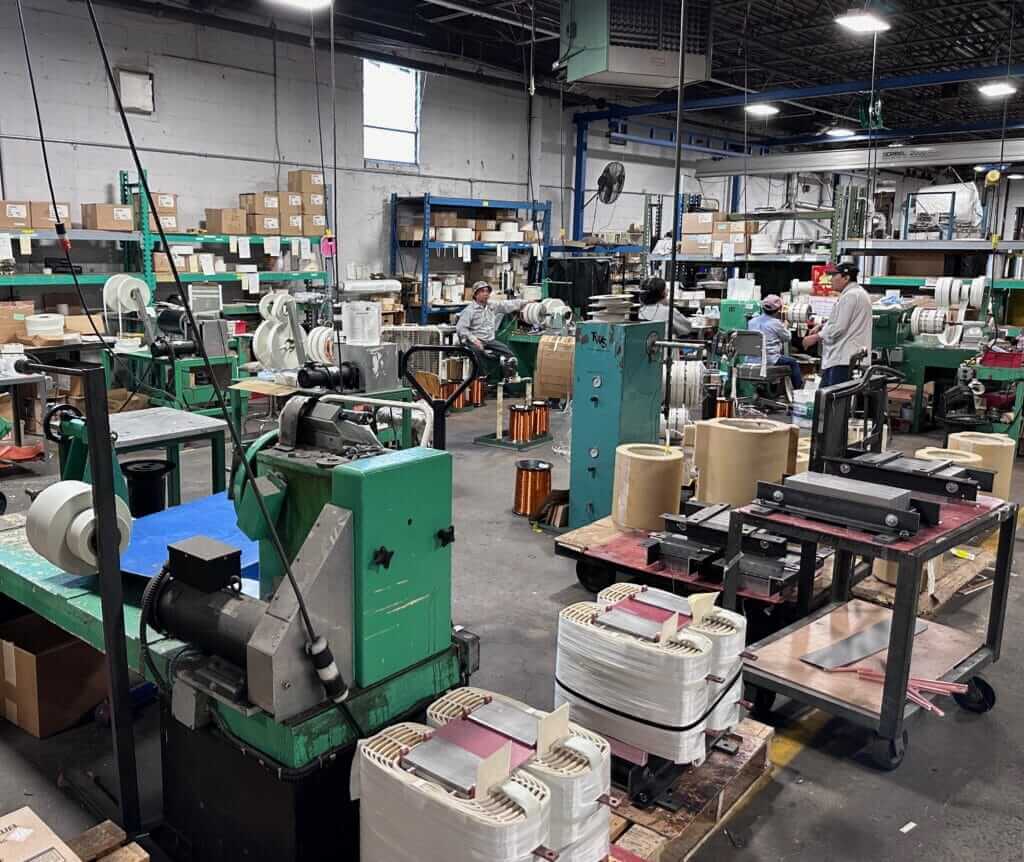
Figure 2: AFP Transformers Corp. Headquarters & Engineering Facility — Edison, New Jersey USA.
Core OEM Capabilities & Service Advantages:
- UL Recognized & Listed Certifications: Ability to build custom and standard dry type transformers under UL 1561, UL 1562, and CSA safety standards.
- Single-Source Procurement Consolidation: We manufacture everything from small 50 VA motor control transformers to massive 5000 kVA medium-voltage power distribution dry type units, simplifying vendor management.
- Custom Winding & Enclosure Flexibility: NEMA 1, NEMA 3R, NEMA 4X, NEMA 12, stainless steel enclosures, custom terminal block locations, dual primary/secondary voltages, and integral circuit breakers.
- KanBan & JIT Stocking Programs: For high-volume industrial OEMs and equipment builders, we structure customized KanBan stocking programs in Edison, NJ, eliminating long lead times and ensuring guaranteed product availability.
- Rigorous In-House Quality Assurance: Every single transformer undergoes 100% factory testing including winding resistance, turns ratio (TTR), polarity/phase relation, applied high-potential (Hip-ot), induced overvoltage, and no-load/load loss analysis prior to dispatch.
Whether you are designing a specialized medical isolation system, retrofitting an industrial arc furnace, resolving severe utility harmonics, or sourcing direct drop-in replacement magnetics, AFP Transformers delivers precision engineering, rapid response, and uncompromised American manufacturing quality.