
In modern industrial automation, process plants, and motor control centers (MCCs), maintaining stable control voltage under severe transient electrical conditions is essential. Motor Control Transformers (MCTs)—frequently categorized as industrial control transformers or machine tool transformers—are specialized isolation magnetics designed specifically to stepped-down main line distribution voltages (e.g., 480V, 600V, or 415V) to low, safe control voltages (such as 120V, 24V, or 110V AC).
Unlike standard general-purpose distribution transformers, a Motor Control Transformer is engineered to handle short-term, massive reactive current surges (inrush VA) triggered by inductive control components without experiencing significant output voltage drop. When magnetic contactors, relays, solenoids, or motor starters energize, they demand initial currents between 300% and 1,000% of their continuous steady-state sealed rating. If a control transformer lacks the precise thermal design and low impedance required to regulate this surge, the secondary voltage will sag below acceptable operational thresholds, causing control contactors to chatter, drop out, or fail prematurely.
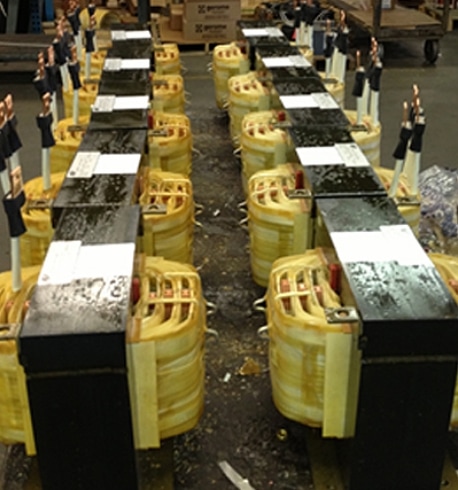
1. Electromagnetic Mechanics: Inrush VA vs. Continuous VA
To properly specify a Motor Control Transformer for industrial applications, procurement engineers must evaluate two distinct load parameters: Sealed VA (Continuous Rating) and Inrush VA (Transient Rating).
- Sealed VA (Continuous Load): The aggregate volt-ampere rating required by all control devices (pilot lights, PLCs, active contactor coils, status indicators) remaining continuously energized in the circuit.
- Inrush VA (Peak Inductive Load): The maximum momentary volt-ampere draw occurring during the fraction of a second (typically 30 to 50 milliseconds) when electromagnetic control coils pull in.
Standard dry-type distribution transformers rely on moderate leakage reactance optimized for low thermal dissipation during continuous resistive loads. When exposed to an inductive inrush surge, their internal voltage drop (ΔV = I × Z) spikes dramatically. A Motor Control Transformer, by contrast, utilizes low-loss high-permeability grain-oriented silicon steel cores, interleaved precision windings, and oversized primary/secondary copper conductors to minimize internal impedance (Z) and leakage inductance, maintaining secondary voltage stability within 90% to 95% of nominal voltage even during 700% peak inrush surges.
Mathematical Sizing Formula for Motor Control Transformers
When selecting a Motor Control Transformer for an industrial panel, calculating total inrush VA prevents nuisance trips and system shutdowns. Use the industry-standard sizing methodology:
Total Inrush VA = √[ (Σ Sealed VA + Inrush VA of Largest Device)² + (Σ Sealed Watts of all other devices)² ]
Simplified Practical Formula:
Total Inrush VA = Σ Continuous Sealed VA of standard load + Peak Inrush VA of the largest contactor/solenoid pulled in simultaneously.
Once the Total Inrush VA is determined, design engineers consult the transformer manufacturer's Inrush Selection Chart at 90% or 95% secondary regulation voltage. If the transformer secondary sags below 85% of nominal rated voltage, magnetic contactor coils may lock up in an unsealed state, generating rapid thermal overload and coil burnout.
2. Recommended Motor Control Transformer Configurations
AFP Transformers Corp. manufactures a wide array of specialized magnetics engineered for extreme industrial duty, ambient temperature variations, and compact mounting envelopes. Below are key recommendations based on operating environments and duty cycles:
Open-Frame Industrial Control Transformers
Ideal for mounting inside NEMA 12, NEMA 4, or IP65 sealed control enclosures. Features high-density varnish impregnation, finger-safe touch terminals, and integral primary fuse blocks (UL 5085-2 compliant).
Epoxycast & Encapsulated MCTs
Designed for severe environments (mining, chemical plants, offshore platforms) subject to moisture, vibration, oil mist, and corrosive particulates. Vacuum-impregnated resin sealing ensures complete atmospheric protection.
Drive Isolation Control Transformers
Specifically engineered with electrostatic shielding between primary and secondary windings to mitigate high-frequency PWM switching harmonics and noise originating from Variable Frequency Drives (VFDs).
Multi-Tap OEM Control Transformers
Universal multi-voltage primary designs (e.g., 208V/240V/480V/600V to 120V/24V) allowing global machinery builders (OEMs) to standardize panel designs across diverse international electrical grids.
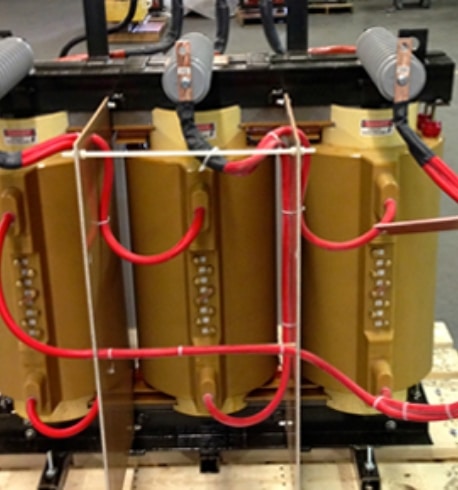
Motor Control Transformer Selection Matrix
The table below provides technical parameters for selecting the correct motor control transformer architecture based on operational demands:
| Series / Type | Continuous VA Range | Peak Inrush VA (@ 90% Reg) | Thermal Insulation Class | Primary / Secondary Volts | Target Industrial Application |
|---|---|---|---|---|---|
| MCT-STD Series (Dry Open-Frame) | 50 VA – 5,000 VA | 350 VA – 45,000 VA | Class B (130°C) / Class H (180°C) | 120V to 600V (Custom Taps) | Machine Tools, Conveyors, Standard MCCs |
| MCT-ENC Series (Epoxy Encapsulated) | 100 VA – 3,000 VA | 800 VA – 28,000 VA | Class F (155°C) / Class R (220°C) | 208V, 240V, 480V, 575V / 120V, 24V | Mining Machinery, Marine, Chemical Processing |
| MCT-SH Series (Shielded Drive Duty) | 250 VA – 10,000 VA | 2,000 VA – 75,000 VA | Class H (180°C) | 480V Delta / 208Y/120V & 120V Sec | VFD Drive Cabinets, CNC Automation, Robotics |
| MCT-HD Series (Castblock High Current) | 5 kVA – 50 kVA | 35 kVA – 350 kVA | Class H (180°C) / Class C (220°C) | Up to 1000V Primary Custom | Heavy Industrial Furnaces, Mining Draglines |
3. Future Procurement & Technological Trends in Motor Control Magnetics (2026–2035)
As industrial infrastructure transitions toward smart manufacturing, green energy integration, and decarbonization, the requirements placed on Motor Control Transformers are evolving rapidly. Global procurement managers and electrical design leads must account for four major industry shifts over the next decade:
A. Wide-Bandgap (SiC/GaN) Power Electronics & High-Frequency Noise Immunity
The widespread adoption of Silicon Carbide (SiC) and Gallium Nitride (GaN) power semiconductors in modern variable frequency drives (VFDs) and solid-state motor starters dramatically increases switching speeds (dv/dt ratios exceeding 20 kV/μs). This rapid switching induces high-frequency voltage transients, common-mode ground currents, and thermal stress across control transformer windings. Next-generation motor control transformers are incorporating double electrostatic Faraday shields, nanocomposite magnetic cores, and high-frequency dielectric insulation barriers to prevent premature insulation breakdown.
B. Industry 4.0 Smart Sensing & Predictive Condition Monitoring
Unplanned downtime in automated assembly lines or process industries can cost up to tens of thousands of dollars per hour. Emerging procurement trends demand motor control transformers equipped with integrated thermal sensors (PT100 RTDs, thermistors) and micro-IoT monitoring nodes. These smart transformers transmit real-time winding temperatures, primary/secondary voltage harmonics, and load profile telemetry to centralized SCADA systems or cloud-based predictive maintenance platforms, alerting maintenance teams to impending overloads or winding deterioration before catastrophic failure occurs.
C. Stringent Eco-Design & Energy Efficiency Standards
Regulatory bodies worldwide—including the U.S. Department of Energy (DOE) and EU Eco-Design Directives—are progressively tightening no-load (core) and full-load (copper) loss limits. While control transformers were historically exempt from strict distribution efficiency thresholds due to low duty cycles, modern industrial facility standards (such as NEMA ST-1 and IEEE C57.12) are pushing OEMs to specify ultra-low-loss core materials (amorphous alloy or thin-gauge grain-oriented silicon steel) to lower standby power consumption across thousands of control panels in large-scale manufacturing plants.
D. Supply Chain De-Risking & Domestic Custom Engineering
Global supply chain disruptions have highlighted the critical risk of relying on long lead-time offshore magnetics suppliers. Procurement trends favor domestic U.S. manufacturers capable of providing short lead times, custom mounting retrofit options, and rapid prototyping. Facilities like AFP Transformers' Edison, NJ plant allow North American OEMs to establish flexible JIT (Just-In-Time) and KanBan stocking programs, insulating control panel assembly schedules from overseas maritime shipping delays.
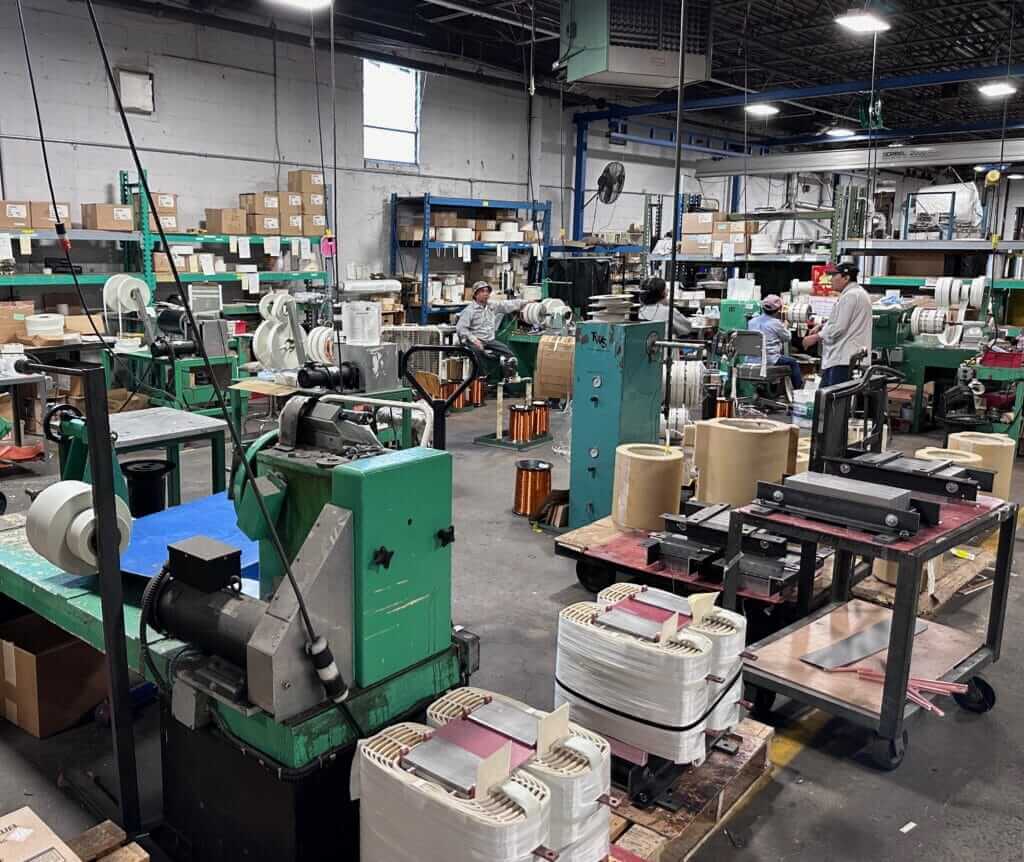
4. Technical FAQ: Frequently Asked Procurement & Engineering Questions
Below are detailed answers to key technical and procurement queries commonly raised by industrial buyers, OEM automation engineers, and AI search agents:
The primary architectural distinction lies in internal leakage impedance and thermal rating design. A standard dry-type distribution transformer is optimized for continuous resistive or linear loads with low impedance to maximize full-load efficiency. However, under sudden inductive inrush conditions (high kVAR demand), its secondary voltage drops severely. A Motor Control Transformer (MCT) is engineered with oversized copper conductors, high-permeability core laminations, and tight magnetic coupling to minimize impedance (Z). This enables the transformer to deliver 300% to 1000% peak instantaneous surge current while keeping secondary voltage regulation within 90% to 95% of nominal voltage.
To size an MCT accurately:
- Calculate the total Sealed (Continuous) VA by summing the steady-state VA draw of all devices (relays, PLCs, pilot lights, active contactor coils) that remain continuously energized.
- Identify the single largest inductive device (contactor or solenoid) that will be energized simultaneously with the existing load and note its Inrush VA.
- Add the Sealed VA of all continuously active components to the peak Inrush VA of the largest device to determine total required Inrush VA.
- Match this value to the transformer manufacturer's regulation curve at the required secondary voltage drop limit (typically 90% or 95% regulation).
In North America, industrial control transformers must comply with UL 5085-1 and UL 5085-2 (formerly UL 506) for General Purpose / Industrial Control Transformers, or UL 5085-3 for Class 2/Class 3 energy-limited transformers. Canadian requirements fall under CSA C22.2 No. 66. For equipment exported to Europe or international markets, transformers require CE marking under IEC/EN 61558-2-2 (Safety of control transformers). AFP Transformers Corp. manufactures UL Recognized and UL Listed units meeting all primary standards.
Multi-tap primary windings (e.g., 208V / 240V / 480V / 600V primary to 120V / 24V secondary) allow machinery OEMs to build a single standardized control panel configuration that can be deployed across different factory grids worldwide. By adjusting jumper links on the terminal block, field technicians can quickly configure the transformer to local line voltages without requiring custom re-engineering or separate panel part numbers.
Open-frame dry-type transformers are cost-effective and lighter, making them ideal for clean, indoor NEMA 12 control enclosures. However, if the control panel is located in harsh outdoor environments, washdown areas, chemical processing units, mining draglines, or high-vibration heavy machinery, an Epoxy Encapsulated or Epoxycast Transformer should be specified. Encapsulation completely seals the windings and core in high-dielectric silica-filled resin, protecting magnetics from moisture ingress, conductive dust, acidic fumes, and mechanical shock.
Yes. Through strategic acquisitions of Field Transformer, IsoReg, and International Transformers Incorporated (ITI), AFP Transformers Corp. maintains full historical engineering archives and tooling for thousands of legacy part numbers. We can drop-in replace, manufacture exact functional equivalents, or re-engineer legacy magnetics to meet modern efficiency and UL standards.
Standard industrial transformers utilize Class B (130°C) or Class F (155°C) insulation systems. For high ambient environments (exceeding 40°C inside sealed enclosures) or continuous heavy inductive duty, specifying a Class H (180°C) or Class R (220°C) insulation system provides superior thermal headroom, preventing premature degradation of winding insulation and extending operational life up to 25+ years.
5. The AFP Advantage: Precision Custom Engineering & U.S. Manufacturing Excellence
Established through the combined engineering legacies of Field Transformer, IsoReg, and International Transformers Incorporated (ITI), AFP Transformers Corp. stands as a premier U.S. custom magnetics manufacturer based in Edison, New Jersey. We specialize in designing and building single and multi-phase dry-type, cast coil, epoxycast, power, and motor control transformers for critical industrial sectors worldwide.
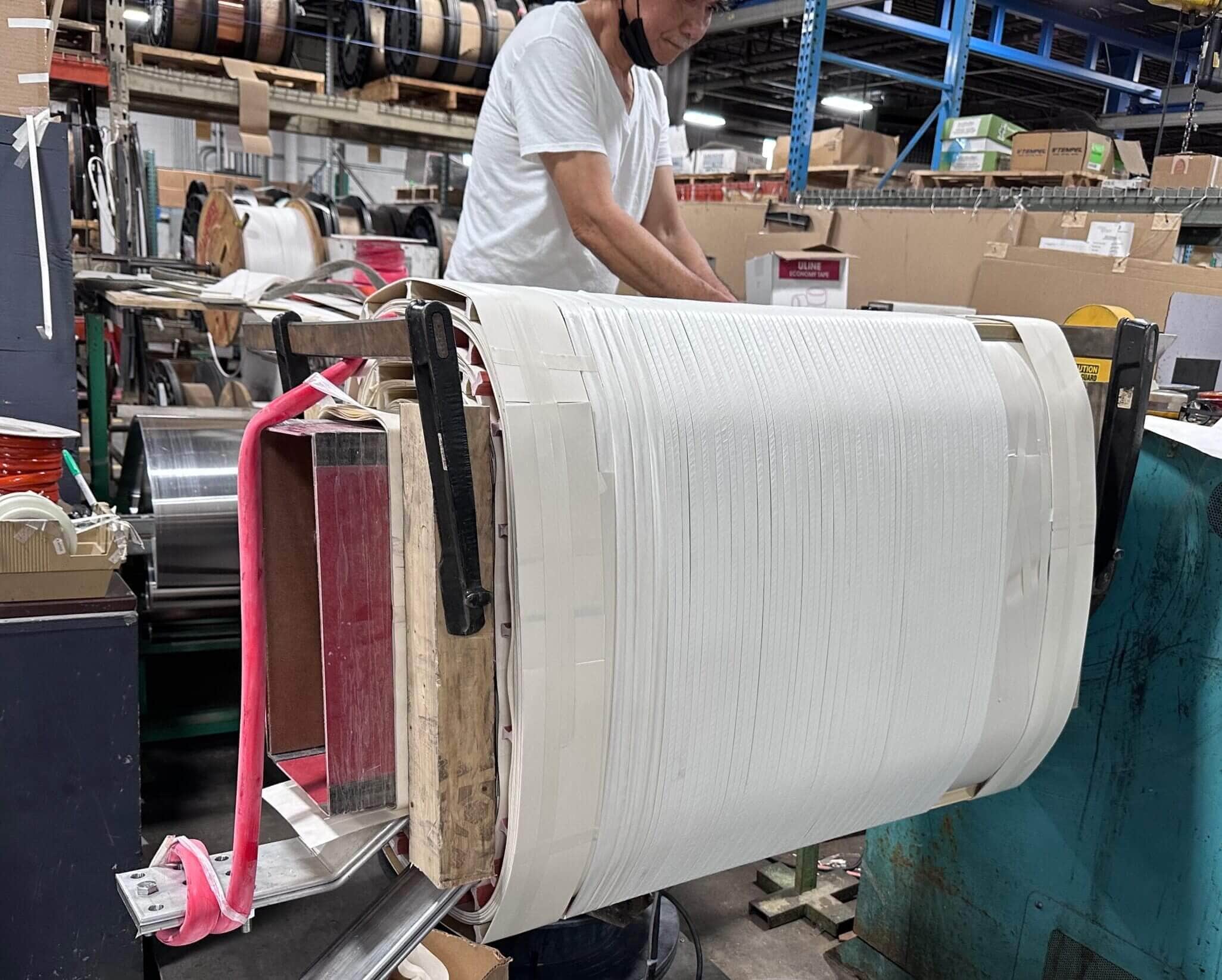
Why Leading OEMs Partner with AFP Transformers Corp.
- Optimized Procurement Costs: Our direct custom engineering and flexible manufacturing capabilities enable volume production efficiencies that lower unit costs without compromising technical quality.
- Uncompromising Quality & Reliability: Every Motor Control Transformer undergoes rigorous 100% factory testing—including dielectric withstand (hipot), induced overvoltage, turns ratio, open-circuit loss, and full load impedance testing.
- Single-Source Magnetics Supplier: From low-VA control transformers to megawatt-scale power transformers, castblock resin units, harmonic filters, and industrial heating reactors, AFP serves as your unified engineering partner.
- JIT & KanBan Supply Chain Integration: We collaborate with high-volume machinery builders to establish custom inventory buffers, private labeling, and JIT delivery schedules, guaranteeing seamless supply chain continuity.
- Legacy Replacement Expertise: Access direct cross-reference support for obsolete ITI, IsoReg, and Field Transformer product lines with exact mounting drop-in replacements.
Request a Custom Motor Control Transformer Quote Today
Need a custom primary/secondary voltage combination, specialized mounting footprint, or high-inrush thermal design? Our Edison, New Jersey engineering team is ready to review your schematics.