
Technical Articles & Industry Resources
TRANSFORMER ENGINEERING BLOG
Insights, Technical Guides & Manufacturing Innovations from AFP Transformers Corp.
Top 10 Heating and Furnace Transformer Manufacturers
Table of Contents
- Industry Scope and Role of Heating and Furnace Transformers
- Key Criteria for Comparing Transformer Manufacturers
- Profiles of the Top 10 Heating and Furnace Transformer Makers
- Technologies, Product Types, and Common Industrial Applications
- How to Select a Reliable Heating and Furnace Transformer Supplier
- FAQS
- Conclusion
- Related Posts
Choosing reliable Heating & Furnace Transformers requires more than comparing catalog prices. These components support burners, heating controls, ignition systems, and industrial furnace circuits. A small transformer may sit inside a compact cabinet, while a larger unit can serve demanding production equipment exposed to heat, vibration, and dust.
This guide examines ten notable manufacturers through practical criteria. These include product range, electrical performance, insulation quality, thermal management, enclosure design, certifications, customization, delivery capability, and technical support. Real-world experience matters here. Engineers often inspect terminal markings, mounting strength, wiring access, and temperature rise before approving a supplier. A transformer that performs well on paper may still create installation problems.
Details matter.
The comparison also considers how manufacturers communicate specifications and application limits. Clear documentation can prevent incorrect voltage selection, overload conditions, and costly downtime. However, no ranking can fit every project. Furnace builders, maintenance teams, and OEM designers may value different features, such as compact dimensions, reinforced insulation, high inrush tolerance, or rapid replacement support. Some public information may change, and not every supplier publishes identical test data. That limitation deserves attention. Readers should verify current datasheets, regional compliance requirements, warranty terms, and factory guidance before purchasing. The manufacturers discussed here represent useful starting points, not automatic recommendations. A careful final choice should match the transformer to the equipment, operating environment, and long-term maintenance plan.
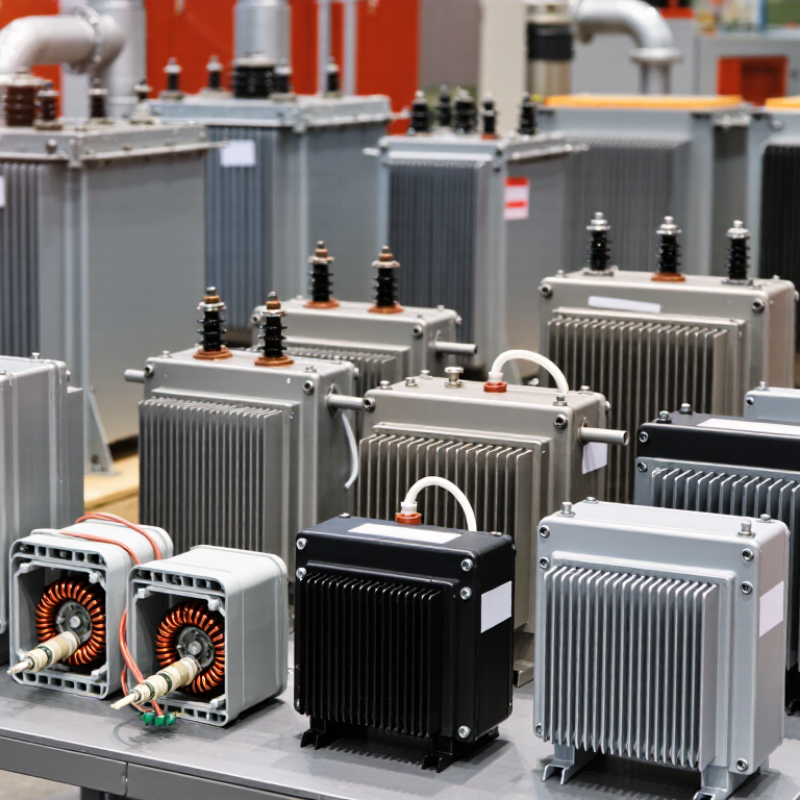
Industry Scope and Role of Heating and Furnace Transformers
Heating and furnace transformers regulate voltage for industrial heaters, resistance furnaces, induction systems, and thermal processing lines. They convert incoming power into controlled, usable energy. Their work is quiet but critical. A failed unit can stop a furnace within seconds.
The scope is expanding with factory electrification and tighter energy controls. The International Energy Agency reported that buildings consumed about 30% of global final energy in 2022. Industrial heating adds another major demand, especially in metals, ceramics, glass, and chemical production.
Transformer selection therefore affects more than voltage. Engineers examine load cycles, short-circuit forces, insulation class, cooling capacity, and harmonic stress. IEC 60076 provides the main technical framework for transformer design and testing.
Practical experience shows that furnace duty is rarely smooth. A transformer may face repeated starts, sudden current changes, and severe heat near busbar connections. Proper impedance reduces disturbance, while monitoring tracks oil temperature, winding temperature, and partial discharge. The U.S. Department of Energy’s transformer efficiency analysis also links lower losses with long-term energy savings across equipment lifecycles. Yet efficiency ratings alone can mislead. A highly efficient unit may still perform poorly under fluctuating furnace loads. That detail deserves more attention in future procurement decisions.
Key Criteria for Comparing Transformer Manufacturers
Top 10 Heating and Furnace Transformer Manufacturers
When comparing heating and furnace transformer manufacturers, examine more than price. A reliable supplier should show test records, material specifications, and production controls. Check whether each transformer meets applicable electrical and safety standards. Ask about insulation class, voltage stability, temperature rise, and short-circuit resistance. These details affect performance inside hot, dusty furnace rooms.
Manufacturing experience also matters. Review case studies involving industrial heaters, boilers, or similar thermal equipment. Confirm the supplier can support custom voltages, mounting sizes, terminals, and enclosure requirements. Clear drawings reduce installation errors. Consistent delivery is equally important, especially during seasonal demand. A strong manufacturer should provide traceable serial numbers, inspection reports, warranty terms, and responsive technical support. Some comparison tables overlook service quality. That can become expensive later.
Tips: Request a sample test report before ordering. Compare warranty coverage carefully. Ask how failures are investigated. Check spare-part availability and realistic lead times. A factory visit can reveal testing discipline, but it is not always practical. No checklist is perfect. Revisit your criteria after reviewing field feedback, energy use, and maintenance records. The cheapest transformer may fit today, yet perform poorly after repeated heat cycles. Compare the complete operating cost, not only the purchase invoice.
Profiles of the Top 10 Heating and Furnace Transformer Makers
The ten heating and furnace transformer makers differ in design depth, testing discipline, and production focus. One specializes in compact control transformers for residential furnaces. Another builds higher-capacity units for industrial heating cabinets. A third emphasizes low-loss cores and cooler operation. These differences matter when equipment runs for long shifts.
Several makers offer custom primary and secondary voltages. Some provide enclosed models for dusty workshops and humid service rooms. Others focus on open-frame units that simplify panel installation. Their engineering teams typically review load profiles, starting current, insulation class, and expected duty cycle before production. Practical experience matters here. A transformer that looks adequate on paper may overheat during repeated burner starts.
The strongest profiles show traceable testing, clear drawings, and responsive technical support. Routine checks may include winding resistance, dielectric strength, polarity, and temperature-rise testing. One manufacturer stands out for flexible low-volume production, while another appears better suited to standardized furnace assemblies. A few provide useful application guidance, although their documentation can be too general. That weakness deserves attention. Buyers should request verified test records, dimensional data, replacement lead times, and installation instructions. Field feedback is also valuable, especially from technicians who have inspected transformers after years of vibration, dust, and thermal cycling.
Top 10 Heating and Furnace Transformer Manufacturers
Profiles of the Top 10 Heating and Furnace Transformer Makers
This chart presents typical rated-capacity benchmarks used in heating and furnace transformer applications rather than company-specific sales or production figures. Actual ratings vary according to furnace technology, duty cycle, voltage requirements, cooling method, and project design.
Technologies, Product Types, and Common Industrial Applications
Heating and furnace transformer manufacturers now offer more than basic voltage conversion. Common technologies include laminated-core designs, encapsulated windings, and oil-cooled units for heavier loads. Encapsulation improves moisture resistance in dusty plant rooms. Oil cooling supports continuous operation, but it demands careful leak inspection. Product types usually include control transformers, ignition transformers, isolation transformers, and step-down models. Each type serves a different electrical and safety requirement.
These transformers support industrial furnaces, heat-treatment lines, ovens, boilers, kilns, and commercial heating systems. A control transformer may supply stable low voltage to relays and sensors. An ignition transformer can create the high voltage needed for burner startup. Isolation models help separate sensitive controls from noisy power circuits. Engineers should check input voltage, output voltage, frequency, insulation class, duty cycle, and enclosure rating. A catalog rating can look convincing, yet it may not match real heat, vibration, or cycling conditions. That is an easy mistake.
Tips: Compare thermal performance under actual load, not only laboratory figures. Confirm terminal layout before installation. Inspect winding temperature and connection tightness during maintenance. Ask manufacturers for test reports, efficiency data, and replacement guidance. Keep spare fuses nearby. Small details matter. When selecting among leading manufacturers, prioritize documented quality systems, traceable materials, tested insulation, and responsive technical support. Cost still matters, but the cheapest transformer may create longer downtime. I would also review installation records after six months, because early assumptions are sometimes wrong.
Top 10 Heating and Furnace Transformer Manufacturers - Technologies, Product Types, and Common Industrial Applications
Technology-led overview of ten common manufacturer product specializations. The entries describe product segments, not named companies or a ranked market-share list.
| No. | Manufacturer Specialization | Typical Transformer Technology | Common Product Types | Common Industrial Applications |
|---|---|---|---|---|
| 1 | Electric arc furnace transformers | Designed for high-current, low-voltage furnace operation; often equipped with adjustable voltage taps to accommodate changing melt conditions. | Three-phase AC arc furnace transformers; furnace transformers with on-load tap changers; auxiliary furnace transformers. | Steelmaking, scrap melting, and electric arc furnace installations. |
| 2 | Ladle furnace transformers | Supply controlled electrical power for secondary steel refining, where electrodes heat steel held in a ladle. | Ladle furnace transformers; ladle refining furnace transformers; electrode-heating transformer systems. | Steel temperature adjustment, alloying, and refining between primary steelmaking and casting. |
| 3 | Submerged arc furnace transformers | Provide low-voltage, very-high-current output for electrodes operating beneath a burden of raw materials. | Single-phase or three-phase submerged arc furnace transformers; multi-tap furnace transformers. | Production of ferroalloys, silicon metal, calcium carbide, and other furnace-based materials. |
| 4 | Induction melting transformer systems | Work with an induction power supply to deliver the electrical input needed to create an alternating magnetic field in a melting coil. | Input transformers for induction furnaces; medium-frequency induction power-supply transformers. | Melting and holding ferrous and non-ferrous metals in foundries and metal-processing plants. |
| 5 | Induction heating transformer systems | Matched to induction equipment that heats conductive workpieces through induced electrical currents; operating frequency depends on the heating process. | Power-supply transformers; matching transformers; transformers integrated with induction heating systems. | Forging, billet heating, brazing, hardening, annealing, and heat treatment. |
| 6 | Resistance furnace transformers | Supply the voltage and current required by electric resistance heating elements; designs may include multiple voltage settings. | Industrial resistance furnace transformers; heat-treatment furnace transformers; multi-tap transformers. | Heat-treatment furnaces, industrial ovens, drying processes, and controlled-atmosphere heating. |
| 7 | Vacuum furnace transformer systems | Provide power to heating elements or other furnace loads within equipment designed to operate under vacuum or controlled pressure. | Vacuum heat-treatment furnace transformers; vacuum melting furnace transformers; custom low-voltage units. | Vacuum heat treatment, specialty alloy processing, and high-purity materials production. |
| 8 | Rectifier transformer systems for heating processes | Supply power to rectifier equipment that converts AC to DC; transformer and rectifier ratings are selected for the process load. | Rectifier-duty transformers; transformers for DC furnace or process-heating supplies. | DC-powered industrial heating, electrochemical processes, and installations requiring a rectified power supply. |
| 9 | Dry-type transformers for heating installations | Use air or solid insulation rather than liquid insulation; selected where installation conditions favor a dry-type design. | Cast-resin transformers; ventilated dry-type transformers; indoor auxiliary transformers. | Power distribution for factory heating systems, furnace auxiliaries, and indoor industrial facilities. |
| 10 | Oil-immersed furnace and heating transformers | Use insulating liquid for electrical insulation and heat transfer; cooling arrangements are chosen according to the transformer rating and duty. | Oil-immersed furnace transformers; liquid-filled process transformers; custom high-power units. | Large furnace installations, heavy industrial heating, and outdoor process-power applications. |
How to Select a Reliable Heating and Furnace Transformer Supplier
Top 10 Heating and Furnace Transformer Manufacturers
How to Select a Reliable Heating and Furnace Transformer Supplier
Choosing a heating and furnace transformer supplier requires more than comparing prices. Check the supplier’s engineering records, production controls, and field experience. A reliable manufacturer should provide clear specifications for voltage, frequency, VA rating, insulation class, and operating temperature. These details must match your furnace design, not a generic catalog entry.
Ask for traceable test reports for winding resistance, dielectric strength, temperature rise, and short-circuit performance. Inspect whether the supplier uses consistent copper conductors, secure terminals, and protective insulation. Certification is useful, but it should support real quality controls. Request production samples, inspection photos, and documented corrective actions for failed units. A supplier that avoids technical questions may create costly delays later.
Delivery capability matters as much as electrical performance. Confirm lead times, minimum order quantities, replacement policies, and warranty terms in writing. Review how the supplier handles moisture damage, abnormal heat, and installation errors. A site audit or video inspection can reveal more than polished marketing materials. No checklist is perfect. I would still leave room for testing, because even a well-documented supplier can produce an occasional weak batch. Select a partner that responds quickly, explains limitations honestly, and improves its process when evidence exposes a problem.
FAQS
Common types include control, ignition, isolation, and step-down transformers. Each supports a different electrical or safety requirement.
They support furnaces, ovens, boilers, kilns, heat-treatment lines, and commercial heating systems. Conditions may include heat, dust, vibration, and frequent cycling.
A control transformer supplies stable low voltage to relays, sensors, and other control devices. Stable output helps prevent unreliable switching.
An ignition transformer creates the high voltage required for burner startup. Its insulation and output rating must match the ignition system.
Check input voltage, output voltage, frequency, VA rating, insulation class, duty cycle, and enclosure rating. Do not trust a catalog rating alone.
Encapsulated windings can resist moisture in dusty plant rooms. Oil-cooled units support heavier continuous loads, but leaks require careful inspection.
Request traceable reports for winding resistance, dielectric strength, temperature rise, and short-circuit performance. Also review materials, terminals, insulation, and production controls.
Confirm lead times, minimum order quantities, replacement policies, and warranty terms in writing. Spare fuses should remain nearby.
Real heat and vibration can differ from laboratory conditions. Inspect winding temperature and connection tightness during maintenance.
Not always. A cheaper unit may increase downtime, though higher cost does not guarantee perfect performance. Review installation records after six months.
Conclusion
This article provides a practical overview of Heating & Furnace Transformers and their essential role in supplying stable, controlled power to industrial heating systems, furnaces, ovens, and other high-temperature equipment. It explains how these transformers support operational efficiency, thermal consistency, electrical safety, and reliable performance in demanding working environments. Readers will also learn the key criteria for comparing manufacturers, including transformer capacity, voltage control, insulation quality, cooling methods, customization options, energy efficiency, testing procedures, and after-sales service.
The article profiles the top ten types of heating and furnace transformer makers according to their technical capabilities, product reliability, manufacturing experience, and ability to serve different industrial requirements. It also introduces common product designs, relevant technologies, and applications across metal processing, ceramics, glass, heat treatment, and industrial manufacturing. Finally, it offers practical guidance for selecting a dependable supplier by evaluating compliance, quality assurance, delivery capability, technical support, lifecycle costs, and long-term service reliability.

Blog Tags: