
Technical Articles & Industry Resources

TRANSFORMER ENGINEERING BLOG

Insights, Technical Guides & Manufacturing Innovations from AFP Transformers Corp.

0%

Choosing among Specialty Magnetics manufacturers requires more than comparing catalog prices. Global buyers must examine material grades, magnetic performance, production capacity, testing methods, and delivery reliability. A magnet that performs well in a laboratory may fail inside a motor, sensor, medical device, or high-temperature assembly.

Dr. David Jiles, a recognized expert in magnetism and magnetic materials, emphasizes a practical principle: “Magnetic behavior depends strongly on material structure and processing.” This idea matters when evaluating manufacturers. Manufacturing temperature, coating quality, machining tolerances, and final magnetization can change real-world performance. Buyers should request technical data, inspection records, environmental ratings, and application-specific samples. Small details matter.

This guide introduces leading Specialty Magnetics manufacturers serving international customers. It considers engineering experience, custom design support, quality systems, production scale, and export capability. It also examines whether suppliers can maintain consistent performance across repeated orders. That is often the difficult part.

A polished website is not enough. Nor is a low quotation.

The strongest manufacturers explain trade-offs clearly. They identify risks before production begins and provide measurable acceptance criteria. Still, no supplier is perfect. Some may offer excellent materials but limited customization. Others may deliver fast but lack deep application engineering. Buyers should reflect on these gaps instead of trusting broad marketing claims. The following outline helps procurement teams compare manufacturers with greater confidence, practical evidence, and a clearer view of long-term value.
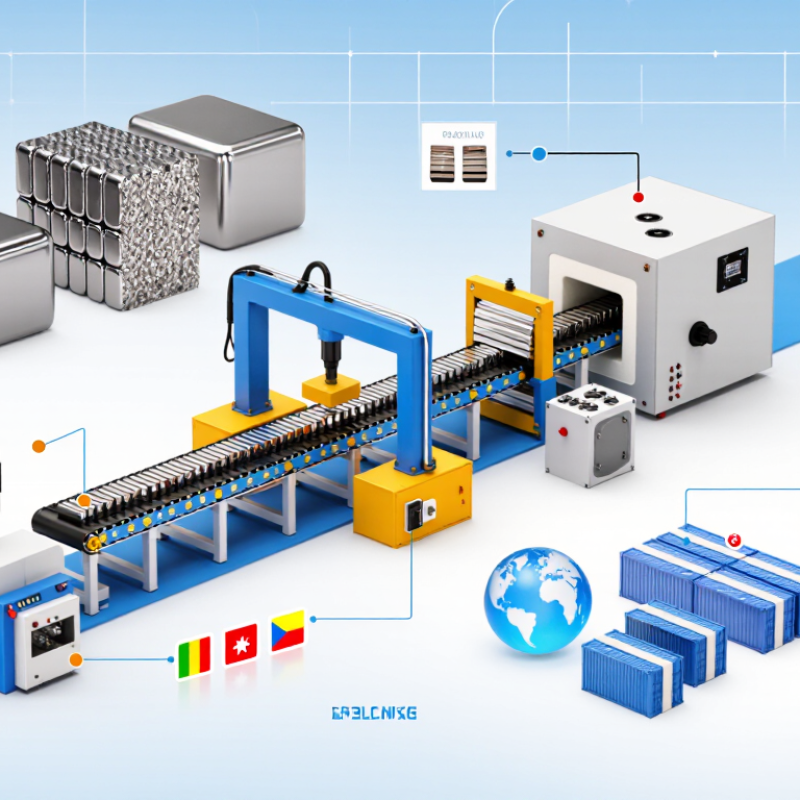
Top Specialty Magnetics Manufacturers for Global Buyers

Specialty Magnet Types: NdFeB Reaches 52 MGOe; SmCo Exceeds 30 MGOe

Top Specialty Magnetics Manufacturers for Global Buyers

Specialty magnet selection begins with magnetic performance, not a catalog headline. NdFeB grades can reach 52 MGOe, offering exceptional strength in compact assemblies. SmCo exceeds 30 MGOe and performs reliably at elevated temperatures. The best choice depends on the working environment. Heat, corrosion, vibration, and available space can change the result. A high energy product number can still mislead. Actual performance depends on geometry, magnetization direction, tolerances, and circuit design.

Experienced global buyers request complete test data before approving production. Ask for BHmax, remanence, coercivity, maximum operating temperature, coating details, and lot traceability. SmCo may reduce demagnetization risk near hot motors, sensors, or aerospace equipment. NdFeB can deliver greater force in smaller spaces, but surface protection often needs careful review. Small drawing gaps matter. They can become costly assembly problems.

Tips: Compare measured values, not marketing claims. Confirm the test standard and temperature. Review sample dimensions with a qualified engineer. Check whether the supplier can maintain consistent grades across repeated lots. Also examine packaging, inspection records, and export documentation. One overlooked detail can delay an entire shipment. My practical preference is to test magnets inside the real assembly, because laboratory strength does not always predict field performance.

Global Demand Drivers: EV Traction Motors Commonly Use 1–2 kg of NdFeB

Top Specialty Magnetics Manufacturers for Global Buyers

Global electric vehicle demand is raising interest in high-performance permanent magnets. The International Energy Agency reported nearly 14 million electric car sales in 2023, representing about 18% of new car sales worldwide. Each vehicle can place strong pressure on magnet supply chains.

Traction motors commonly use about 1–2 kilograms of NdFeB magnets, according to industry assessments from Adamas Intelligence. The exact quantity varies with motor architecture, power rating, and magnet grade.

Some designs reduce rare-earth content. Others require higher coercivity for heat resistance. The estimate is useful, but not universal.

For global buyers, production experience matters. Manufacturers should provide magnetic-property reports, dimensional inspections, corrosion testing, and lot traceability. The U.S. Department of Energy’s Critical Materials Assessment identifies neodymium, praseodymium, dysprosium, and terbium as important materials for clean-energy technologies.

That finding adds weight to responsible sourcing and recovery planning. It also exposes a difficult question:

can suppliers maintain stable quality when material prices change quickly?

A practical sourcing review should examine temperature performance near the motor’s operating limit. It should also verify coating adhesion after humidity and salt-spray tests. Small defects can become large field failures. Mistakes still happen. Supplier audits need real production evidence, not polished presentations.

Leading Manufacturer Profiles: Compare Capacity, Certifications, and Export Reach

Specialty magnetics manufacturers differ sharply in capacity, certification depth, and export reliability. Comparing these factors reveals more than a product catalog. A high-capacity plant may operate automated winding lines, vacuum impregnation systems, and final testing across three shifts. Another supplier may support smaller batches, faster engineering changes, and closer sample reviews. Scale is useful, but it is not always the best fit.

Certification records deserve careful checking. Buyers should request current ISO 9001 certificates, environmental credentials, and industry-specific approvals where relevant. The certificate scope should cover the actual factory and product category. Audit reports, calibration records, and traceability procedures provide stronger evidence than logos on a website. Small gaps can matter. A supplier with excellent testing equipment may still provide weak document control.

Export reach should be measured through practical performance. Review destination coverage, packaging methods, customs documentation, and response times across different time zones. Experienced exporters usually explain production capacity by monthly units, not vague claims such as “large output.” They should also state normal lead times, sample schedules, and contingency plans for material shortages. No profile is perfect. A factory may offer broad export coverage but depend on one shipping route. Another may hold strong certifications but lack multilingual support. That trade-off deserves direct questions, trial orders, and documented quality checks before a long-term agreement.

Supply-Chain Landscape: China Produces About 90% of Rare-Earth Magnets (IEA)

Top Specialty Magnetics Manufacturers for Global Buyers

China produces about 90% of the world’s rare-earth magnets, according to the International Energy Agency. This concentration includes major stages such as refining, alloy production, and magnet manufacturing. For global buyers, the statistic is more than a headline. It affects pricing, lead times, technical support, and supply continuity. A factory may offer excellent tolerances, yet depend on one regional source for neodymium or dysprosium. That dependency deserves careful review.

Experienced purchasing teams should evaluate manufacturers beyond catalog strength. Ask for material certificates, batch-level traceability, coating test results, and dimensional inspection records. Review how suppliers manage heat resistance, corrosion exposure, and changing order volumes. A serious manufacturer should explain its production limits clearly. It should also identify which processes occur in-house and which rely on subcontractors. Small details matter, especially when magnets enter motors, sensors, medical equipment, or industrial assemblies.

Diversification can reduce exposure, but it cannot remove it. Alternative suppliers may still purchase rare-earth inputs from the same upstream market. This is an uncomfortable gap in many supply-chain plans. Inventory buffers help, although excessive stock ties up cash and can hide weak forecasting. Buyers should compare total risk, not only unit price. Local technical communication, inspection access, and documented corrective actions often separate dependable partners from attractive listings. No sourcing model is perfect. The practical goal is visibility, tested quality, and fewer surprises.

Rare-Earth Magnet Manufacturing Concentration

China produces approximately 90% of the world's rare-earth permanent magnets, while manufacturers in other regions account for the remaining estimated 10%.

Source: International Energy Agency (IEA), reported estimate for global rare-earth magnet production.

Global Buyer Criteria: Evaluate 150–220°C Ratings, Tolerances, and Compliance

Global buyers assessing specialty magnetics should treat temperature ratings as operating limits, not marketing decoration. A 180°C label may describe insulation, adhesive, wire enamel, or the complete assembly. Ask which component controls the limit. Request test data at 150°C, 180°C, and 220°C, with dwell time, load, and cooling conditions clearly recorded. A coil beside a hot motor sees different stress than one tested in still laboratory air. Real applications are less tidy.

Tolerance review needs equal care. Check inductance, resistance, turns ratio, leakage, and mechanical dimensions at stated temperatures. A part meeting ±5% at 25°C may drift beyond that range near 200°C. Ask whether tolerances apply to each unit, each lot, or only a typical sample. Inspect incoming samples with calibrated meters, then compare results against the supplier’s certificate. We have seen paperwork look precise while the test method remained vague. That is a warning, not a verdict.

Compliance evidence should match the destination market and the final configuration. Request material declarations, insulation-system records, traceability, and relevant safety test reports. Confirm that substitutions cannot change thermal performance. Keep revision-controlled drawings and batch records. If a supplier cannot explain a failed high-temperature cycle, pause the approval process. Also question your own specification. A narrow tolerance may add cost without improving field reliability, while an overlooked hotspot can defeat a generous 220°C rating.

FAQS

How should buyers compare specialty magnetics manufacturers?

Compare production capacity, certifications, export performance, and engineering support. A large factory may run automated winding and testing across three shifts. A smaller supplier may review samples more closely. Scale is not everything.

Which certification documents should buyers request?

Request current quality certificates, environmental records, and relevant safety approvals. Check that each certificate covers the actual factory and product category. Audit reports, calibration records, and traceability procedures offer stronger evidence. Website logos are not enough.

How can buyers evaluate export reliability?

Review destination coverage, packaging methods, customs documents, and response times. Ask for monthly production capacity instead of vague output claims. Confirm sample schedules, standard lead times, and shortage contingency plans. One shipping route may create hidden risk.

Why does rare-earth supply concentration matter?

A large share of rare-earth magnet production comes from one major supply region. This can affect pricing, lead times, technical support, and supply continuity. A factory may still depend on one local source for key materials. That dependency needs direct questions.

What material and quality records should a buyer inspect?

Request material certificates and batch-level traceability records. Review coating tests, dimensional inspections, and corrective-action reports. Ask which processes happen internally and which use subcontractors. Small gaps matter.

How should buyers verify high-temperature ratings?

Treat temperature ratings as operating limits, not decorative claims. Ask whether the rating applies to insulation, adhesive, wire enamel, or the complete assembly. Request test data at 150°C, 180°C, and 220°C. The data should include load, dwell time, and cooling conditions.

Can a component pass testing at room temperature but fail in service?

Yes, performance can change significantly near 200°C. Check inductance, resistance, turns ratio, leakage, and dimensions at stated temperatures. A part meeting ±5% at 25°C may drift beyond that range. Real applications are less tidy.

How should buyers verify tolerance claims?

Ask whether tolerances apply to every unit, each batch, or only typical samples. Inspect incoming samples with calibrated meters. Compare your readings with the supplier’s certificates. Precise paperwork can hide vague methods.

How can buyers reduce supply-chain risk?

Compare total risk, not only unit price. Use alternative suppliers, reasonable inventory buffers, and documented quality checks. However, different suppliers may share the same upstream material market. Diversification helps, but it is not a complete solution.

What should happen before signing a long-term agreement?

Start with trial orders, sample reviews, and revision-controlled drawings. Confirm traceability, compliance documents, inspection methods, and failure-response procedures. Question narrow tolerances that add cost without improving reliability. We may still miss something.

Conclusion

This guide to Specialty Magnetics explains how advanced permanent magnets support demanding applications across global industries. It compares neodymium-iron-boron magnets, which can reach approximately 52 MGOe, with samarium-cobalt magnets that exceed 30 MGOe and offer strong performance in elevated temperatures. Demand is being driven by electric vehicles, where traction motors commonly require about 1–2 kilograms of NdFeB magnets, as well as by renewable energy, automation, and precision equipment.

For global buyers, selecting a reliable manufacturer requires more than comparing magnetic strength. Important factors include production capacity, quality certifications, export experience, temperature ratings from 150°C to 220°C, dimensional tolerances, coating options, and regulatory compliance. The supply chain also deserves careful evaluation, since China produces roughly 90% of the world’s rare-earth magnets according to the IEA. By assessing technical specifications, quality systems, delivery reliability, and sourcing resilience together, buyers can identify suitable suppliers while reducing performance, compliance, and supply risks.

Isabelle

Isabelle

Isabelle is a dedicated marketing professional with a deep understanding of her company's offerings and a passion for showcasing their unique advantages. With years of experience in the industry, she adeptly combines creativity and strategy to craft compelling blog posts that not only highlight the......