
Technical Articles & Industry Resources

TRANSFORMER ENGINEERING BLOG

Insights, Technical Guides & Manufacturing Innovations from AFP Transformers Corp.

0%

China’s position in the global transformer market has made supplier selection increasingly important. The search for China Top Harmonic Mitigation Transformers Suppliers? should begin with engineering evidence, not attractive catalog images. These transformers reduce waveform distortion caused by variable-frequency drives, rectifiers, data centers, and other nonlinear loads. Their performance affects heat, equipment life, power quality, and operating costs.

The details matter. Henry W. Ott, a respected electromagnetic compatibility engineer, wrote, “The best way to solve EMC problems is to prevent them from occurring in the first place.” This principle also guides harmonic control. Experienced buyers should examine K-factor ratings, phase-shifting designs, impedance values, temperature-rise data, and tested harmonic attenuation. Factory inspection records can reveal more than a polished website. Ask for verified test reports, manufacturing certifications, material specifications, and references from comparable installations.

A reliable Chinese supplier should explain how its Harmonic Mitigation Transformers perform under the customer’s actual load profile. A hospital, semiconductor plant, and commercial building may require very different solutions. Site measurements should precede final sizing whenever possible. Otherwise, even a technically sound transformer may disappoint. That is the uncomfortable part: supplier rankings can oversimplify a complex engineering decision. Price, delivery speed, and export experience still matter, but they cannot replace independent validation. This guide introduces practical criteria for comparing leading suppliers, while recognizing that published claims deserve careful review. Performance must be measured at the installation, not merely promised in a quotation.
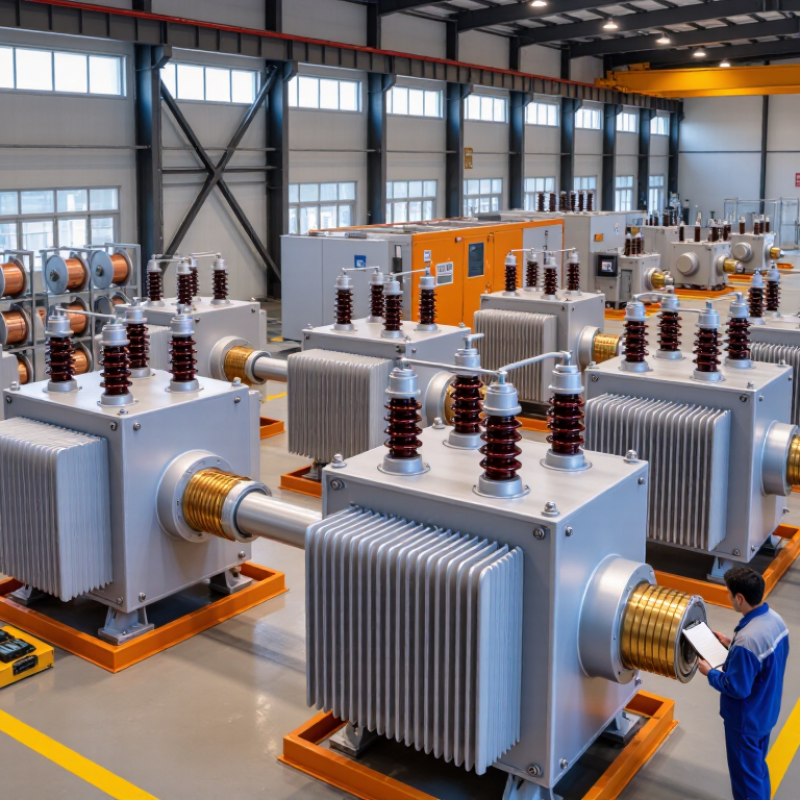
China Top Harmonic Mitigation Transformers Suppliers?

Harmonic-Mitigation Transformers: K-Factor Ratings from K-4 to K-20

China Top Harmonic Mitigation Transformers Suppliers?

Harmonic-mitigation transformers manage heat caused by nonlinear loads, including servers, LED drivers, and variable-frequency drives. Their K-factor rating describes the transformer’s ability to withstand harmonic heating. K-4 may suit light commercial loads. K-9 or K-13 fits heavier electronic equipment. K-20 is intended for severe harmonic environments.

The rating is not a harmonic filter. It does not remove distorted current. IEEE 519-2014 limits voltage distortion at the point of common coupling, with a typical 5% voltage THD limit below 69 kV. Current limits depend on the short-circuit ratio. IEC 60076-6 also addresses converter and special-duty transformer design. These standards show why a supplier should provide temperature-rise tests, impedance data, neutral-current capacity, and verified loss calculations. A K-20 transformer can still overheat if the installation is poorly measured.

Tips: Ask Chinese suppliers for factory test reports, winding temperature data, and third-party inspection options. Match the rating to recorded load profiles, not sales language. A K-13 unit may be adequate in one data room and undersized in another. Field measurements matter more than assumptions. This is where many specifications become optimistic. Reviewers should also check whether the transformer’s efficiency remains acceptable at partial load, since oversized protection can increase purchase cost without solving the real distortion problem.

China’s Supplier Landscape for 3rd, 5th, 7th, and 11th Harmonics

China’s harmonic-mitigation transformer market is moving beyond basic voltage conversion. The main design question is harmonic order. Third harmonics are zero-sequence currents and can accumulate in neutral conductors. Fifth and seventh harmonics commonly arise from six-pulse rectifiers. The eleventh harmonic deserves attention in larger twelve-pulse drives and converter systems.

The International Energy Agency reported that data centres used about 460 TWh of electricity globally in 2022, with demand potentially exceeding 1,000 TWh by 2026 (IEA, Electricity 2024). More servers, variable-speed drives, and charging equipment mean more nonlinear loads. Chinese suppliers now commonly offer K-rated windings, oversized neutrals, delta tertiary windings, phase-shifting transformers, and integrated filtering. These options address different harmonic patterns, not one universal problem.

IEEE 519-2022 evaluates current distortion according to the ratio of short-circuit current to maximum demand current. Therefore, a supplier quoting one THD figure without site data is offering incomplete evidence. Procurement teams should request impedance values, temperature-rise results, no-load losses, and test records for the 3rd, 5th, 7th, and 11th orders. Factory measurements are useful, but field conditions can differ. Testing matters more. A careful comparison should also check whether attenuation applies at rated load, partial load, or only under ideal laboratory conditions. Some catalog descriptions remain vague, and that weakness deserves direct questioning.

This chart shows the characteristic frequencies associated with the 3rd, 5th, 7th, and 11th harmonics in a 50 Hz power system. These harmonic orders are commonly considered when specifying phase-shifting, K-rated, or harmonic-mitigating transformers. The phase-sequence behavior is shown in the labels: triplen harmonics are zero-sequence, while the 5th and 11th are negative-sequence and the 7th is positive-sequence.

Performance Benchmarks: Designing for IEEE 519’s 5% PCC Voltage-THD Limit

Choosing China’s top harmonic mitigation transformer suppliers requires more than comparing prices or catalog ratings. The real benchmark is performance at the point of common coupling, or PCC. IEEE 519 commonly sets a 5% voltage-THD limit at this point. However, a transformer cannot guarantee compliance alone. System impedance, nonlinear loads, capacitor banks, and utility conditions also influence the result.

A reliable design begins with measured load data. Record current-THD, individual harmonic orders, load diversity, and daily operating changes. Suppliers should provide impedance values, K-factor capability, thermal test results, and verified attenuation curves. A practical transformer may use phase-shifting windings, harmonic-canceling connections, or an electrostatic shield. Check performance under partial load, not only at full load. The 5% limit is not a comfortable victory. Small changes can push a stable system beyond it. I have seen designs fail because engineers trusted estimated load profiles.

Tips: Request factory test records and independent field measurements. Compare voltage-THD at the PCC before and after installation. Confirm the test instrument follows the required measurement class. Keep at least a small design margin below 5%. Also review neutral heating, audible noise, efficiency, and enclosure temperature. A supplier that explains limitations clearly is often more dependable than one offering perfect-looking numbers. Some specifications remain uncertain until the transformer meets the actual facility. That deserves honest review.

Supplier Evaluation: Efficiency, Impedance, Temperature Rise, and K-Factor

China Top Harmonic Mitigation Transformers Suppliers?

When evaluating Chinese suppliers, inspect measured efficiency at 25%, 50%, and 100% load. A single peak-efficiency figure can mislead. The U.S. Department of Energy’s 2016 Technical Support Document links transformer losses with lifetime operating costs and loading patterns. Ask for independent test results, not only catalog values. Request no-load loss, load loss, tolerance, and test temperature.

Impedance affects fault current, voltage regulation, and parallel operation. Higher impedance can reduce fault stress, but it may create larger voltage drops during motor starts. IEEE 519-2022 focuses on harmonic limits at the point of common coupling, not merely inside the transformer. Therefore, suppliers should provide impedance data at rated frequency, winding temperature, and tap position. Temperature rise also deserves scrutiny. IEC 60076 testing commonly uses winding and top-liquid measurements, while site conditions may include dust, high ambient heat, and poor ventilation. Laboratory compliance is not always field performance.

Tips: Match the K-factor to the actual nonlinear load profile. A K-13 design may be excessive for light office loads, yet inadequate for dense data-processing equipment. Review harmonic spectrum, neutral current, crest factor, and future load growth. Ask for thermal test reports and an installation reference. I would also verify whether the quoted efficiency includes cooling equipment. This detail is often overlooked. Suppliers should explain assumptions clearly, even when the answer is inconvenient.

China Top Harmonic Mitigation Transformers Suppliers? - Supplier Evaluation: Efficiency, Impedance, Temperature Rise, and K-Factor

Anonymous technical benchmark profiles for comparing harmonic-mitigation transformer specifications. Values represent commonly specified ranges for low-voltage dry-type transformers and should be confirmed through certified test reports, drawings, and routine test records.

Anonymous Technical Profile Typical Application Rated Capacity Efficiency at 50–100% Load Percent Impedance Temperature Rise K-Factor Rating Harmonic Mitigation Design Recommended Evaluation Evidence
Profile A Commercial buildings, office floors, lighting and general receptacle loads 75–300 kVA 97.5–98.5% 4.0–5.0% 115 °C or 150 °C K-13 Phase-shifted secondary windings with delta-connected primary and harmonic-current-rated conductors Efficiency test at defined load, impedance test, temperature-rise report, and K-factor design calculation
Profile B Data rooms, network equipment, variable-frequency drives and non-linear power supplies 150–750 kVA 97.8–98.8% 5.0–6.0% 115 °C K-20 Multiple secondary windings with phase displacement to reduce selected triplen and characteristic harmonics Load-loss test using a non-linear load profile, acoustic data, thermal scan, and harmonic-current withstand documentation
Profile C Industrial automation, robotics, rectifier loads and motor-control centers 300–1,500 kVA 98.0–99.0% 5.5–7.0% 80 °C or 115 °C K-20 or K-30 High-conductivity winding system, reinforced neutral conductor, electrostatic shield, and harmonic flux control Short-circuit withstand evidence, winding hot-spot calculation, neutral-current capability, and impedance tolerance data
Profile D Healthcare, laboratories and facilities requiring low temperature rise 112.5–500 kVA 97.6–98.7% 4.5–6.0% 80 °C or 115 °C K-13 or K-20 Low-loss core, electrostatic shielding, separated harmonic-rated secondary windings, and low-noise construction Temperature-rise test, no-load and load-loss results, sound-level test, insulation-resistance test, and shielding verification
Profile E Renewable-energy facilities, battery systems and mixed linear/non-linear loads 500–2,500 kVA 98.2–99.1% 6.0–8.0% 115 °C or 150 °C K-20 or K-30 Multi-pulse or phase-shifting arrangement coordinated with power converters and inverter harmonic spectra System harmonic study, efficiency map, converter compatibility review, thermal aging assessment, and type-test documentation
Profile F General-purpose replacement transformer for moderate harmonic environments 45–225 kVA 96.8–98.0% 3.0–5.0% 150 °C K-9 or K-13 Oversized neutral, harmonic-rated winding conductors and conservative loading limits Verified K-factor rating, neutral-current limit, load-loss test, thermal derating curve, and installation guidance
Profile G High-density commercial and industrial distribution with continuous high loading 750–2,000 kVA 98.0–98.9% 5.0–7.0% 80 °C or 115 °C K-20 Low-temperature-rise winding design, enhanced cooling passages and reduced stray-loss construction Full-load temperature-rise report, stray-loss data, harmonic derating curve, routine electrical tests, and quality-control records

Evaluation note: Higher K-factor capacity does not automatically mean higher efficiency. Final selection should match the transformer K-factor to the measured or calculated harmonic-current spectrum, while also checking impedance tolerance, allowable temperature rise, neutral loading, losses, enclosure conditions, and applicable IEC or IEEE test requirements.

Applications and Standards: Data Centers, Drives, and IEC 60076 Compliance

China Top Harmonic Mitigation Transformers Suppliers?

Data-center electricity demand is rising sharply. The IEA’s Electricity 2024 report estimates global data-center consumption reached 240–340 TWh in 2022. It may exceed 1,000 TWh by 2026. This growth makes transformer selection a power-quality decision, not merely a voltage-conversion purchase.

Variable-frequency drives add another complication. Their rectifiers draw pulsed current and create voltage distortion. Heat follows. Harmonics can increase winding losses, neutral currents, and premature insulation stress.

Uptime Institute’s 2023 Annual Outage Analysis identifies power problems as the leading cause of serious data-center outages. Therefore, suppliers should provide measured impedance, temperature-rise, short-circuit, and harmonic-load performance. Field data matters more than brochure ratings.

IEC 60076 defines essential transformer design and testing requirements. It does not, by itself, guarantee harmonic mitigation. For dry-type transformers, buyers should also review IEC 60076-11 requirements.

A credible supplier should explain derating methods, K-factor assumptions, shielding, and zero-sequence behavior. Ask for factory test records and independent verification. Specify harmonic current levels at realistic drive loading, not ideal conditions.

IEEE 519 or applicable IEC 61000 limits may guide the complete installation, depending on jurisdiction. A perfect THD promise deserves caution. Real systems change with load. Supplier comparisons should include thermal models, service response, documentation quality, and witnessed testing.

FAQS

What does a transformer’s K-factor rating mean?

It describes how well the transformer tolerates heat from harmonic currents. K-4 suits lighter commercial loads. K-20 suits severe harmonic environments.

Does a K-rated transformer remove harmonic distortion?

No. It manages thermal stress but does not filter distorted current. A separate mitigation system may still be necessary.

Which K-factor fits servers and electronic equipment?

K-9 or K-13 may suit heavier electronic loads. The correct choice depends on measured current profiles, not equipment labels alone.

When might a K-20 transformer be appropriate?

K-20 may suit facilities with severe harmonic currents. Examples include dense server rooms and large converter systems. Measurement remains essential.

Why do third harmonics require special attention?

Third harmonics can accumulate in neutral conductors. An oversized neutral may be needed. The actual neutral current should be measured.

What causes fifth and seventh harmonics?

Six-pulse rectifiers commonly produce fifth and seventh harmonics. Variable-frequency drives can create similar concerns. Site conditions vary.

What information should a supplier provide?

Request factory test reports, winding temperature data, impedance values, and loss calculations. Ask about third-party inspection options. Vague catalog claims need direct questions.

Can one THD figure prove transformer suitability?

No. Harmonic limits depend on short-circuit strength and maximum demand current. One percentage without site data is incomplete evidence.

Should partial-load efficiency affect transformer selection?

Yes. A transformer may operate below its rated load for long periods. Check no-load losses and partial-load efficiency. Oversizing can raise costs without fixing distortion.

Can a high K-factor prevent overheating in every installation?

No. Poor measurements, excessive neutral current, or unsuitable impedance can still create problems. The rating helps, but it is not a guarantee.

Conclusion

Harmonic Mitigation Transformers are essential for reducing electrical distortion caused by nonlinear loads such as variable-frequency drives, rectifiers, and data-center power systems. This article explains how K-factor ratings from K-4 to K-20 indicate a transformer’s ability to withstand harmonic heating, while examining supplier capabilities for managing the 3rd, 5th, 7th, and 11th harmonic orders. It also highlights practical design targets aligned with IEEE 519, including the 5% voltage-THD limit at the point of common coupling.

The guide presents a structured approach to evaluating suppliers by comparing efficiency, impedance, temperature rise, thermal performance, and declared K-factor ratings. It further discusses application requirements in data centers and industrial drive systems, along with the importance of documented testing, reliable construction, and compatibility with IEC 60076. By combining electrical performance data with standards compliance and application-specific design, buyers can select transformers that improve power quality, equipment reliability, and long-term operating efficiency.

Isabelle

Isabelle

Isabelle is a dedicated marketing professional with a deep understanding of her company's offerings and a passion for showcasing their unique advantages. With years of experience in the industry, she adeptly combines creativity and strategy to craft compelling blog posts that not only highlight the......