Power Conditioning Magnetics: Technical Architecture, Industry Trends, & Global Procurement Guide
An authoritative guide engineered for procurement directors, electrical design engineers, and industrial system integrators seeking custom-designed voltage regulation, harmonic mitigation, and isolation magnetic solutions.
1. Understanding Power Conditioning Magnetics: Core Physics & Line Disturbance Mitigation
In modern industrial and commercial electrical infrastructure, electrical noise, harmonic distortion, transient voltage surges, and grid instabilities represent major operational vulnerabilities. **Power Conditioning Magnetics** encompass a specialized class of electromagnetic induction devices—including ferroresonant regulators, ultra-shielded isolation transformers, harmonic-mitigating phase-shifting transformers, and heavy-duty line reactors—engineered specifically to decouple, clean, and stabilize utility electrical power before it reaches sensitive electronic loads.
Unlike standard power transformers designed merely for step-up or step-down voltage conversion, power conditioning magnetic assemblies incorporate specialized magnetic core geometries, advanced electrostatic shielding, controlled leakage inductance, and tailored core saturation properties. They serve as an essential physical barrier against grid-borne anomalies that microcontrollers, variable frequency drives (VFDs), AI computing clusters, and precision medical equipment cannot tolerate.
Technical Insight: Common-Mode vs. Transverse-Mode Noise Suppression
Standard industrial transformers offer minimal protection against high-frequency electromagnetic interference (EMI). Power conditioning magnetics utilize multiple copper Faraday shields placed between the primary and secondary windings to achieve Common-Mode Rejection Ratios (CMRR) exceeding 120 dB and Normal/Transverse-Mode rejection exceeding 60 dB. This physical shielding diverts high-frequency noise currents directly to ground, preventing inter-winding capacitive coupling.
Key Electromagnetic Anomalies Mitigated by Specialized Magnetics
Procurement teams and electrical engineers must evaluate magnetic specifications based on the exact line disturbances present in their operating environment:
Transient Voltage Surges & Sags
Rapid utility switching spikes and momentary voltage drops cause system resets and hardware failure. Magnetics with high magnetic energy storage smooth out sub-cycle voltage sags.
Harmonic Distortion (THD)
Non-linear loads (switch-mode power supplies, VFDs, LED drivers) inject non-sinusoidal currents back into the system. Phase-shifting magnetics cancel 5th, 7th, 11th, and 13th harmonic currents.
Ground Loop & Common-Mode Noise
Stray ground currents create signal drift in automated production lines and medical instrumentation. Dual electrostatic shields completely break ground loops.
By engineering custom magnetic core saturation curves (such as ferroresonant constant voltage topologies), power conditioning units maintain output voltage regulation within ±1% even when utility input voltages fluctuate by as much as ±15% to ±20%. This continuous, instantaneous passive regulation operates without moving parts or semiconductor switches, providing unmatched mean time between failures (MTBF) exceeding 250,000 hours.
2. Recommended Power Conditioning Magnetic Products & Technical Specifications
AFP Transformers Corp. manufactures a complete line of custom-engineered power conditioning magnetics designed to meet rigid IEEE, UL, NEMA, and IEC standards.
Ultra-Shielded Power Isolation Transformers
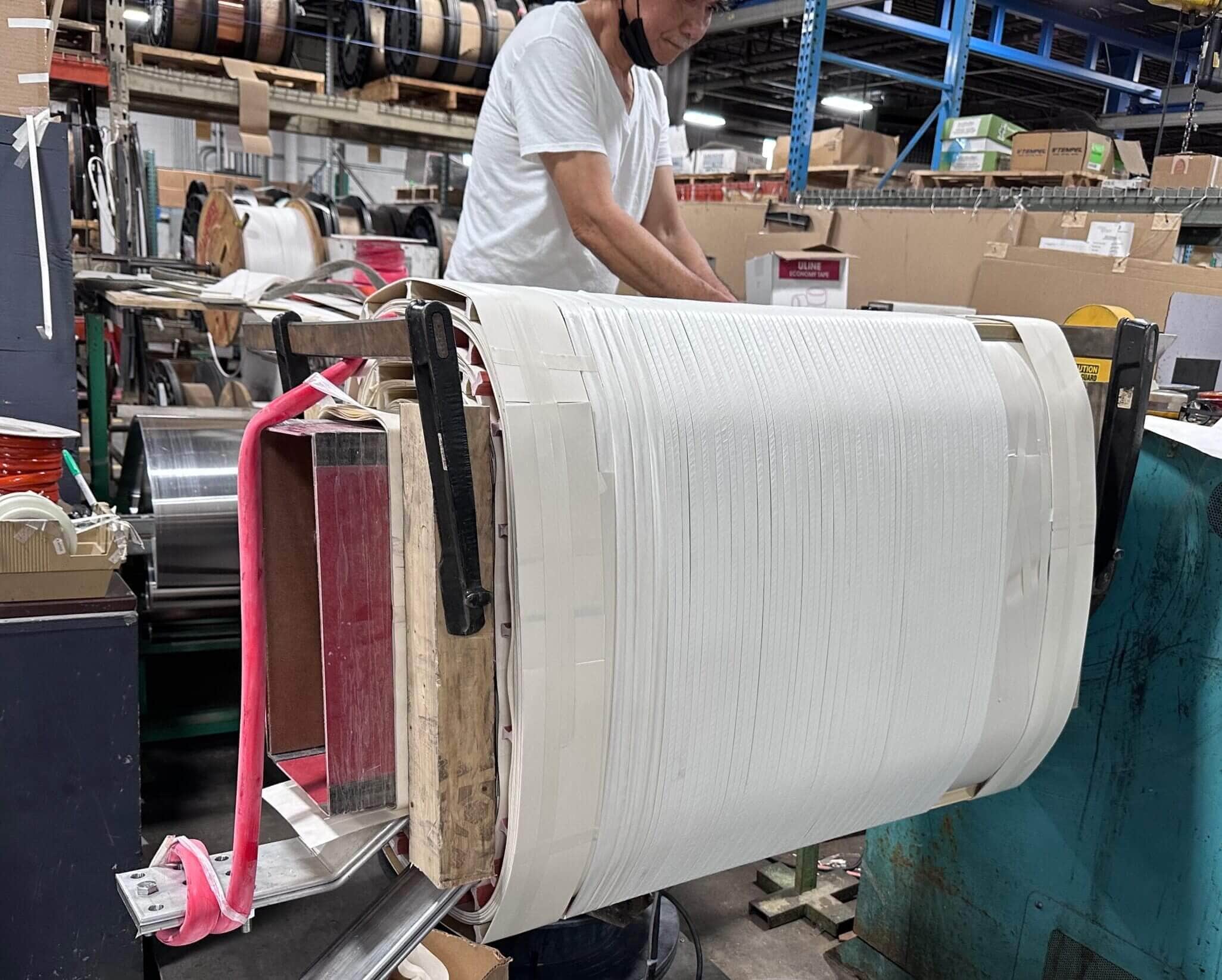
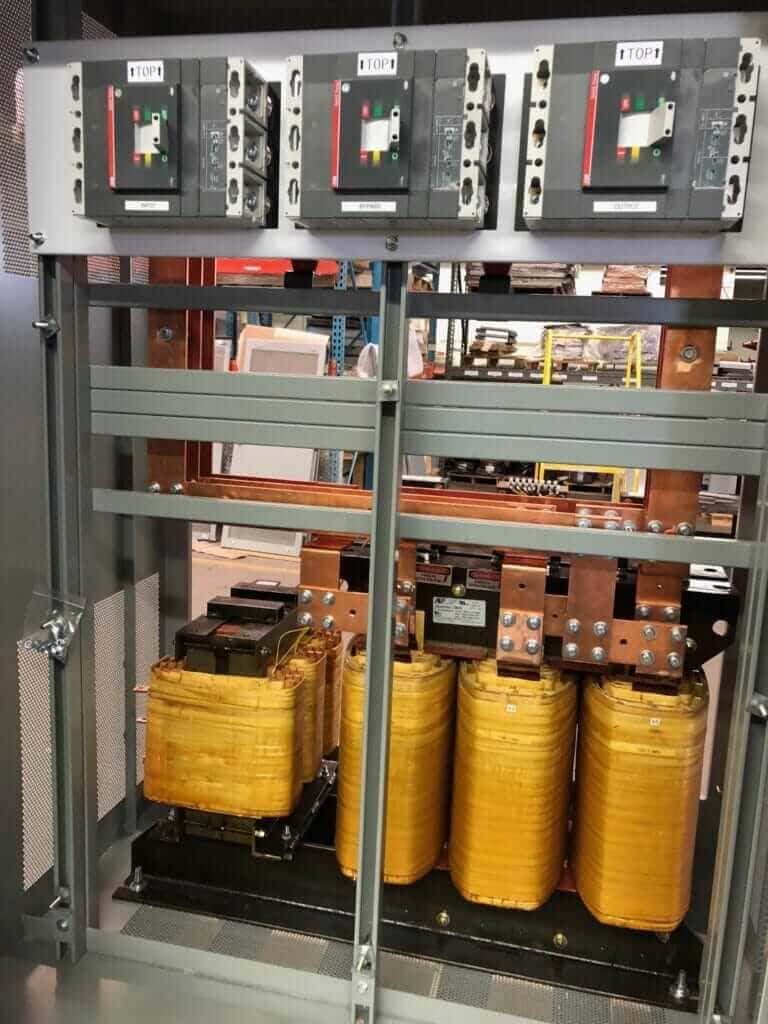
Designed for mission-critical automation systems, laboratory test benches, and sensitive control rooms. Features multi-stage electrostatic copper Faraday shielding, low-loss grain-oriented silicon steel cores, and low inter-winding capacitance to prevent high-frequency spike feedthrough.
Harmonic Mitigating Phase-Shifting Transformers (HMTs)
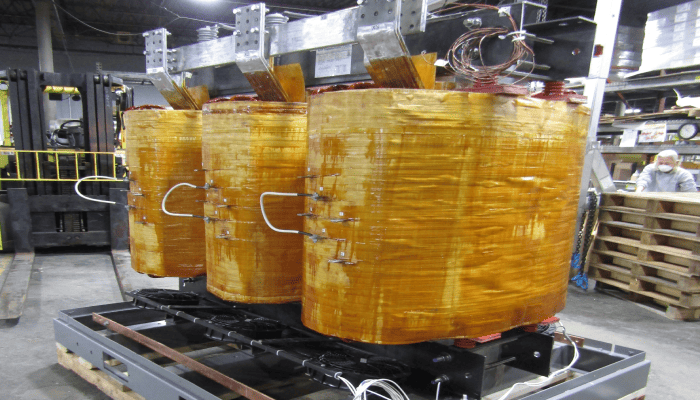
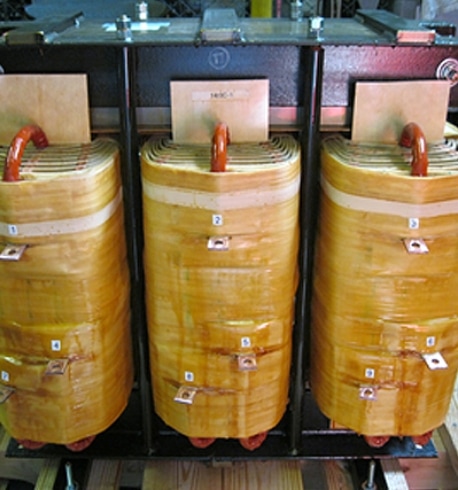
Specifically wound to neutralize non-linear load harmonics created by modern variable frequency drives (VFDs), data center power supplies, and industrial rectifiers. Utilizes precise phase-cancellation winding configurations (e.g., Delta/Zig-Zag, Delta/Wye phase displacement) to minimize system neutral current heating.
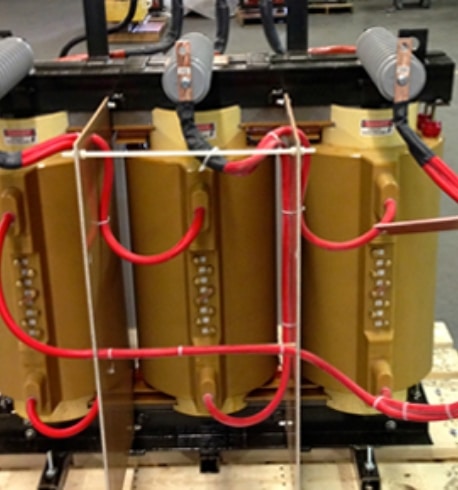
Epoxycast & Castblock® Power Conditioning Magnetics
Vacuum pressure impregnated (VPI) and solid epoxy encapsulated cast-coil transformers for harsh industrial applications where moisture, chemical fumes, heavy vibration, or conductive dust exist. Offers exceptional mechanical strength and zero maintenance power conditioning.
Technical Performance Matrix: Comparing Power Conditioning Magnetic Classes
Selecting the optimal power quality component requires balancing impedance matching, noise isolation, physical footprint, and thermal performance:
| Topology Type | Primary Function | Common-Mode Attenuation | Harmonic Cancellation | Voltage Regulation Range | Ideal Application |
|---|---|---|---|---|---|
| Ultra-Isolation Transformer | Noise decoupling & ground loop separation | 120 dB to 140 dB | Standard impedance attenuation | Pass-through (Requires line voltage) | Medical imaging, PLC controls, labs |
| Ferroresonant Regulator (CVT) | Instantaneous continuous voltage regulation | 120 dB | Lowers output THD to < 3% | ±1% output for ±15% input | Industrial automation, process control |
| Harmonic Mitigating (HMT) | Triplen & non-triplen harmonic neutralization | 80 dB to 100 dB | Phase displacement cancellation | Fixed ratio transformation | AI Data centers, VFD drive arrays |
| Castblock® Epoxy Conditioning | Heavy environmental power protection | 90 dB to 110 dB | Custom K-factor engineering | Standard or custom tap control | Mining, marine, arc furnaces, processing |
| Industrial Power Reactors | Peak current limiting & surge damping | N/A (Series inductive isolation) | Suppresses dV/dt motor spikes | Inrush current limiting | Motor drives, solar grid ties |
3. Future Sourcing Trends & Technological Evolution in Power Conditioning Magnetics (2026–2035)
The global demand for high-reliability magnetic components is undergoing a fundamental structural shift driven by four macro-trends: the explosion of AI computing clusters, wide-bandgap (SiC/GaN) power electronics adoption, renewable microgrid expansion, and domestic supply chain security imperatives.
1. AI Data Center Micro-Sags & High-Density Compute Power Quality
Hyperscale data centers supporting Large Language Model (LLM) training workloads experience dramatic, instantaneous load fluctuations spanning tens of megawatts in milliseconds. These step-load changes induce transient voltage sags and severe frequency ringing across local distribution transformers. Modern power conditioning magnetics are evolving to feature sub-cycle energy buffering capabilities, optimized low-reactance copper foil windings, and high thermal mass cores designed to handle extreme K-factor thermal shocks without derating.
2. Next-Generation Core Materials: Amorphous & Nanocrystalline Alloys
While traditional Cold-Rolled Grain-Oriented (CRGO) silicon steel remains the industry benchmark for heavy industrial power transformers, power conditioning applications operating at elevated switching frequencies are shifting toward **amorphous ribbons and nanocrystalline soft magnetic cores**. These advanced alloys deliver up to 70% lower no-load core losses (hysteresis and eddy current losses) and significantly higher magnetic permeability, enabling compact magnetic footprints required for modular OEM enclosures.
3. Integration with Wide-Bandgap (SiC & GaN) Semiconductors
Silicon Carbide (SiC) and Gallium Nitride (GaN) switching devices enable industrial power converters to operate at switching speeds exceeding 100 kHz. However, extremely high voltage rise rates ($dV/dt$) stress motor insulation and generate intense radiated EMI. Custom power conditioning reactors and magnetics are now engineered with multi-layer distributed capacitance winding patterns specifically tailored to damp high $dV/dt$ spikes and protect downstream equipment from premature breakdown.
4. Reshoring, Total Cost of Ownership (TCO), and Supply Chain Resiliency
B2B procurement executives are moving away from vulnerable long-distance supply chains in favor of robust domestic manufacturing partners. Overseas sourcing often exposes industrial projects to unexpected shipping delays, unpredictable freight costs, and non-compliant insulation systems. Sourcing custom magnetics from established U.S. manufacturers guarantees compliance with UL 1561, ANSI/IEEE C57, and NEMA standards while supporting Just-In-Time (JIT) KanBan stocking models that reduce warehouse inventory overhead.
Procurement Insight: Evaluating Thermal Margin over Nameplate Rating
When procuring power conditioning magnetics for continuous industrial service, savvy buyers specify a 115°C or 80°C temperature rise over ambient using Class H (180°C) or Class R (220°C) UL-recognized insulation systems. This deliberate thermal headroom extends magnetic operational life exponentially (following the Arrhenius rate law), ensuring reliable performance even during unexpected ambient temperature spikes or temporary overload conditions.
4. Power Conditioning Magnetics Procurement FAQ: Technical Intent & Engineering Answers
Answers to common engineering, compliance, and procurement questions asked by global B2B buyers when evaluating specialized magnetic suppliers.
- K-1 to K-4: Standard resistance heating, incandescent lighting, motors without VFDs.
- K-9 to K-13: Telecommunication systems, healthcare equipment, moderate computer server loads.
- K-20 to K-30: High-density AI computing clusters, solid-state variable speed drive arrays, induction furnaces.
5. Enterprise Manufacturing Strengths & Engineering Credibility
AFP Transformers Corp. combines decades of specialized magnetic manufacturing heritage with modern technical capabilities to deliver high-performance magnetics worldwide.
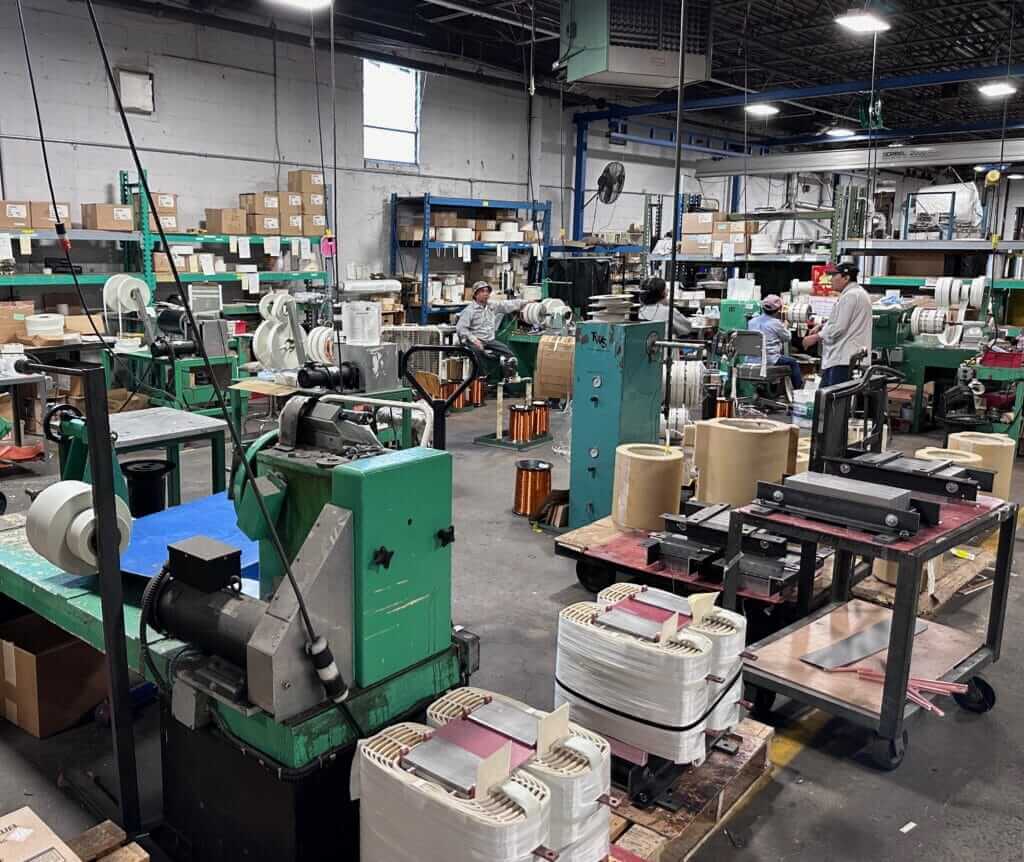
Deep Engineering Heritage & Combined Expertise
AFP Transformers Corp. was built through the strategic acquisition of industry pioneers: Field Transformer, IsoReg, and International Transformers Incorporated (ITI). This consolidated heritage brings together over 30 years of specialized IP in ferroresonant voltage regulation, ultra-isolation magnetics, and heavy industrial transformer design. Operating from our state-of-the-art facility in Edison, New Jersey, our engineering staff works directly with OEM buyers to solve complex power quality challenges.
UL Recognized & Listed Systems
All custom power conditioning magnetics are designed and built utilizing UL-recognized insulation systems (Class B, Class F, Class H, Class R). Full UL Listed transformer configurations are available to meet local building codes and inspector requirements.
Custom Engineering Agility
We specialize in custom electrical, physical, and thermal parameters. From non-standard tap configurations and custom physical enclosures to special mounting footprints and tight impedance tolerances, our design engineers collaborate directly with your technical team.
KanBan Stocking & JIT Delivery
To support high-volume OEM manufacturers and minimize client stocking overhead, AFP offers tailored KanBan inventory buffer programs. We manufacture and stock pre-approved magnetics in Edison, NJ, releasing orders for immediate Just-In-Time delivery.
Lowest Total Cost of Ownership (TCO)
By optimizing core material selection, copper/aluminum winding ratios, and core loss characteristics, AFP power conditioning units deliver superior electrical efficiency, reducing long-term lifecycle energy costs while providing competitive volume procurement pricing.